







Fern planter ideas are an easy way to add greenery, texture, and structure to your home without a lot of upkeep. Ferns stay full and soft, which helps balance harder surfaces like patios, balconies, and entryways. They also do well in shade, making them a great choice for low maintenance planters in spots where other plants may struggle.
They work just as well in a simple front door planter as they do in a larger fern garden setup. You’ll often see potted ferns on front porch spaces or used as fern planters for front porch styling because they hold their shape, stay consistently green, and are easy to care for. They also fit naturally into ferns in entryway designs, where you want something that looks fresh but doesn’t need constant attention.
Below are 21 low maintenance ways to style and arrange your fern planters so your space looks clean, intentional, and easy to maintain.
1. Frame Your Entry with Matching Fern Planters
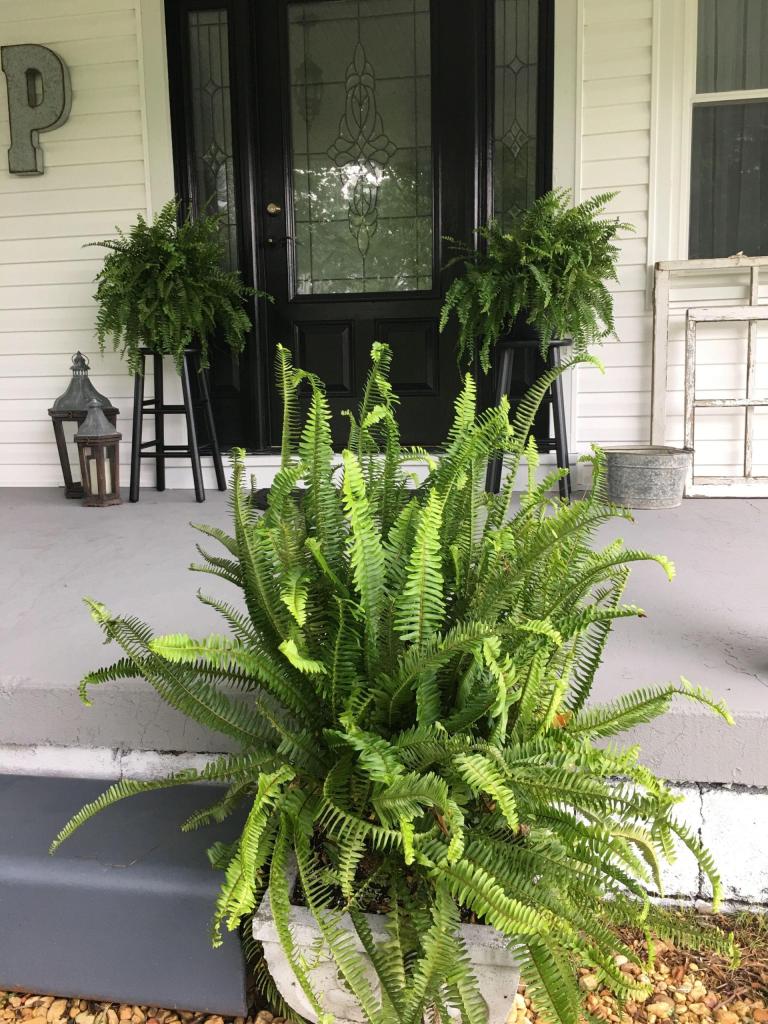
Image: Pinterest
Place two identical planters on either side of your front door to create a balanced, structured look.
Ferns are ideal here since they grow in a rounded, full shape that fills the planter evenly without looking messy.
Choose medium to large pots so they don’t get lost beside the doorway.
Materials like ceramic, stone, or concrete help ground the look and make the setup feel more permanent. This is one of the most effective fern planter ideas for improving curb appeal with minimal effort.
2. Mix Ferns with Petunias for Color Contrast
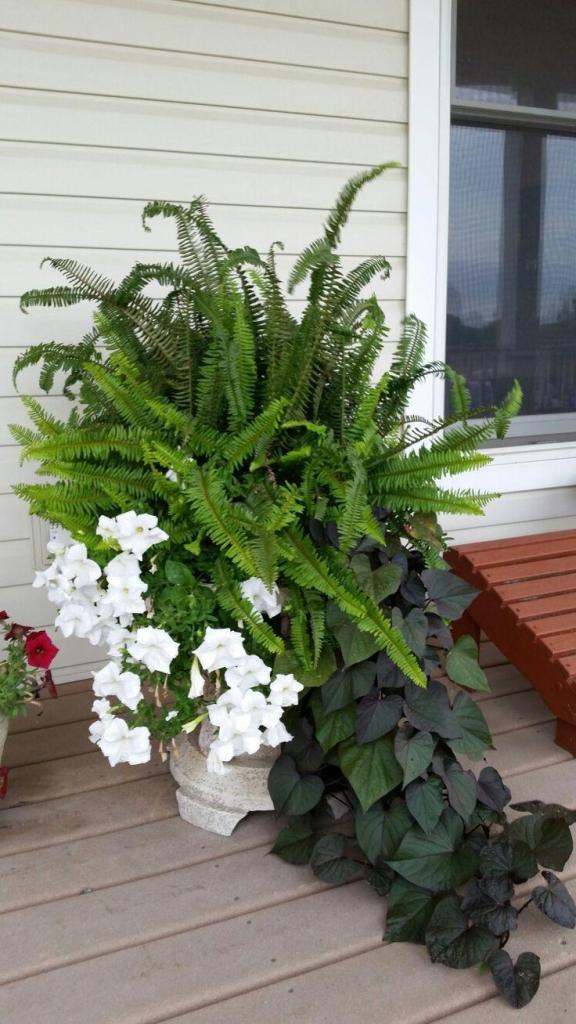
Image: Pinterest
Combine ferns with petunias to add color while keeping a strong green base.
Ferns provide density and structure, while petunias introduce seasonal color that draws attention. This mix works well because the soft fern fronds balance out the brighter, more delicate blooms.
Use trailing petunias so they spill slightly over the edge of the planter, adding depth and movement.
This pairing is especially useful in a front door planter where you want something noticeable but not overwhelming.
3. Use Hanging Fern Baskets to Save Floor Space
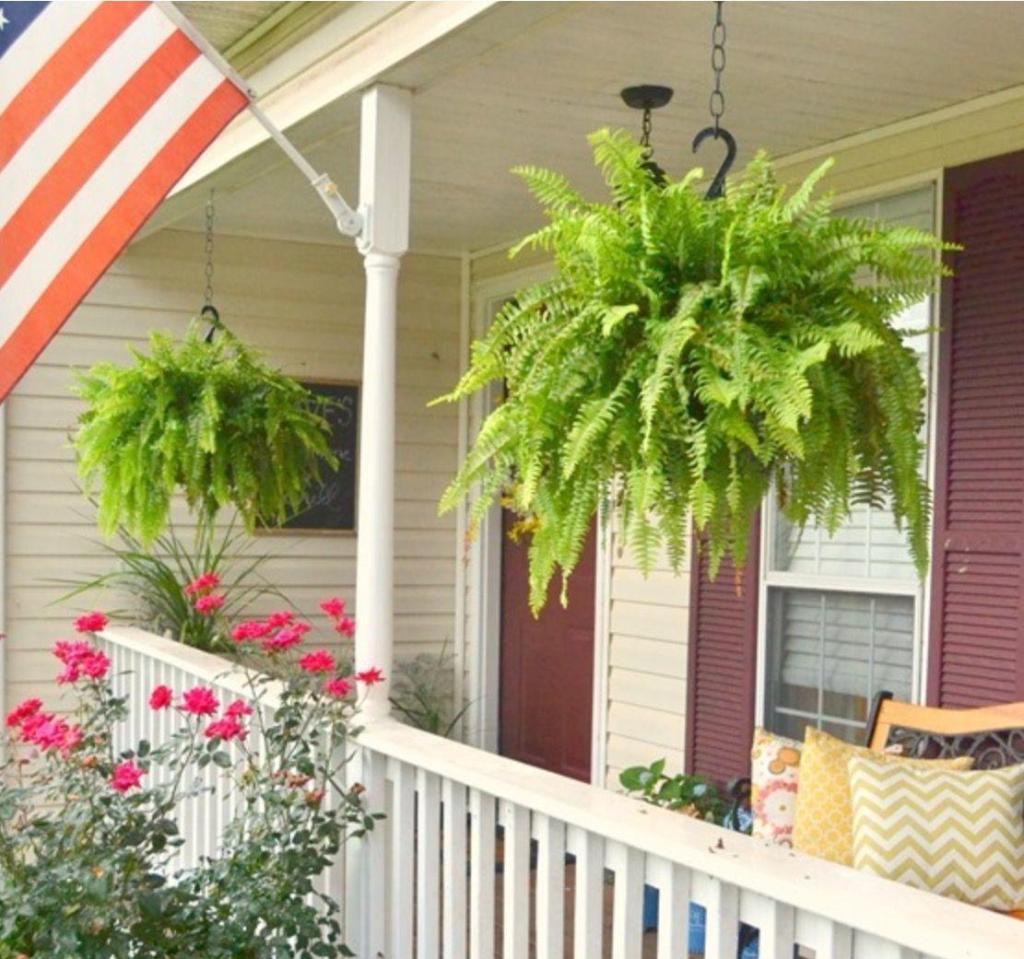
Hanging baskets are a smart option when you want greenery but have limited floor space.
Ferns naturally grow downward, so they fill out a hanging container easily and create a full, cascading look without much styling.
This works particularly well on porches, balconies, or near entryways where you want to frame the space without cluttering it.
You can hang one basket for a simple setup or layer a few at different heights to create more visual depth.
This approach keeps the area open while still giving you that lush fern garden feel.
4. Use Wooden Planters for a Natural Look
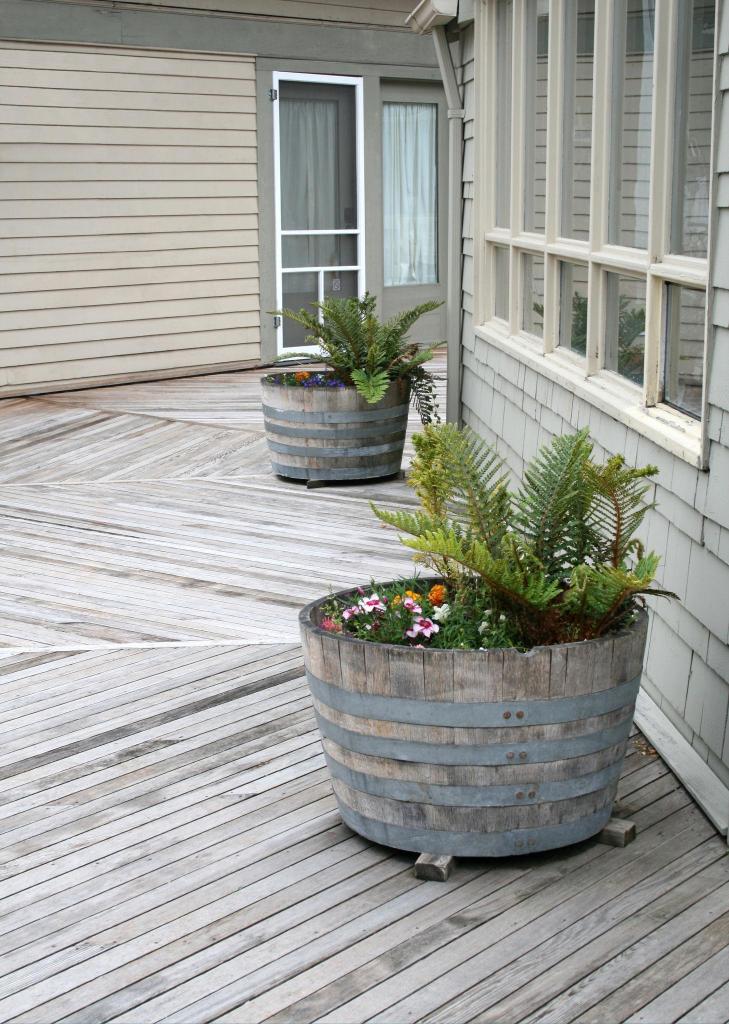
Wooden planters add warmth and texture that pairs well with the softness of fern leaves.
The contrast between structured wood and loose greenery helps create a balanced, natural look that doesn’t feel overly styled.
This idea works well on patios, decks, or alongside a front door planter if you prefer a more relaxed, rustic style.
Repurposed crates or old wooden boxes can also be used as a budget friendly option.
5. Use a Tiered Plant Stand for Layering
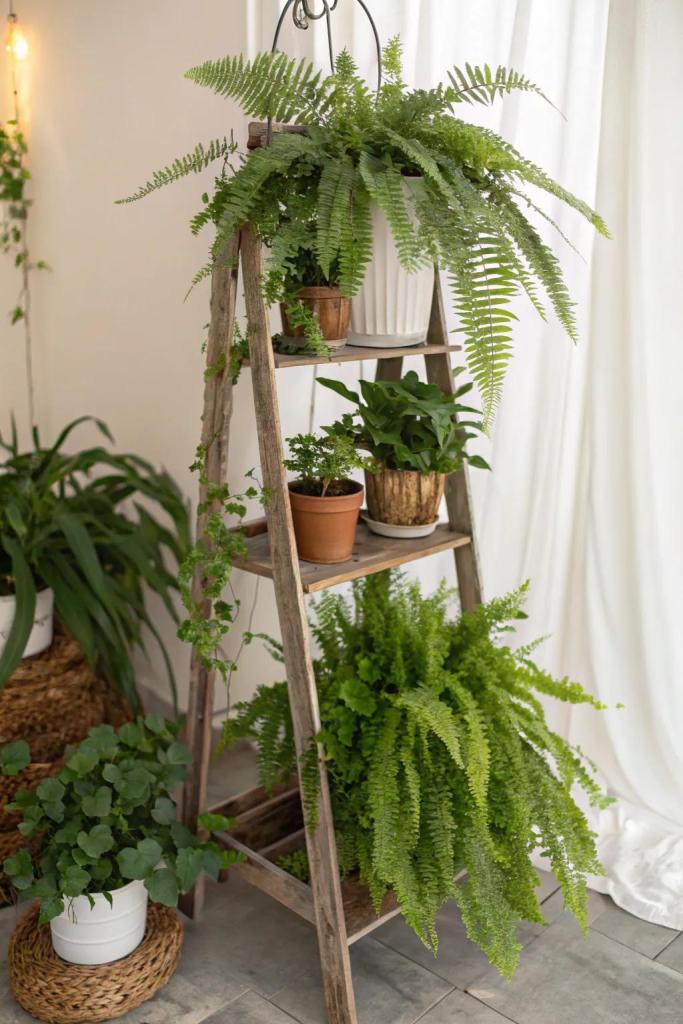
A tiered stand helps you display multiple ferns without everything sitting at the same height.
This creates a layered effect that makes the arrangement feel more intentional and less flat.
Place larger ferns on the lower levels and smaller ones above to keep the setup balanced.
This works well indoors near a bright window or outdoors in shaded areas.
It’s especially useful if you’re building a small fern garden in a compact space and want it to feel fuller without adding more floor planters.
6. Combine Ferns with White Impatiens for a Clean Look
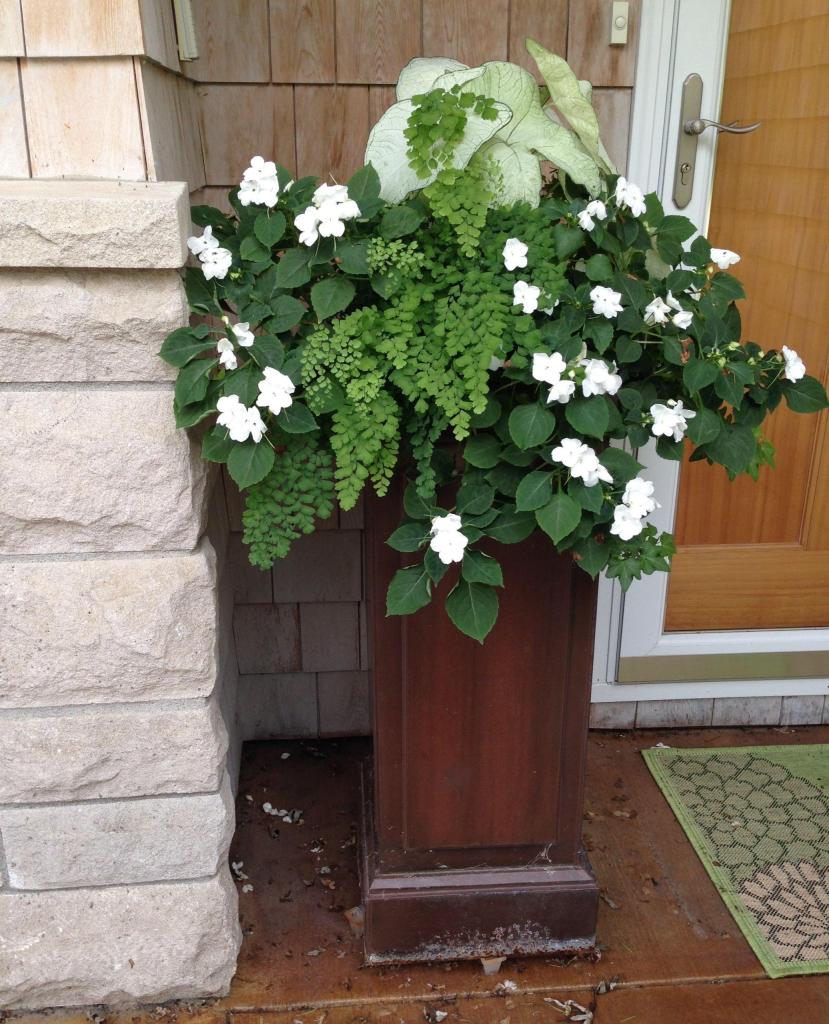
Image: Pinterest
Pairing ferns with white impatiens creates a simple, low contrast arrangement that feels clean and organised.
The white flowers add definition among the green fronds without competing for attention.
Both plants prefer similar light conditions, so they’re easy to maintain together.
This combination works well in shaded porches or entryways where bright flowers might feel too strong.
If you want something that looks polished but not overly decorative, this is a reliable option.
7. Use Large Pots for a Strong Focal Point
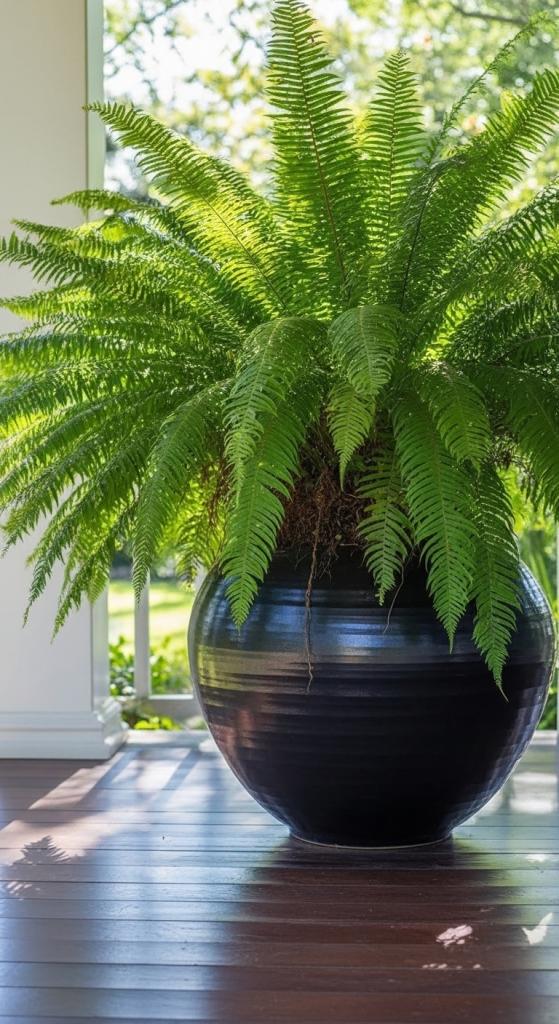
Larger planters allow ferns to grow fuller and become a focal point in the space.
Instead of blending into the background, they help anchor the area and give your space structure.
This works well in entryways, patios, or open indoor spaces where you need something to visually fill the area.
Stick with simple pot designs so the plant stands out.
8. Create a Shaded Fern Corner
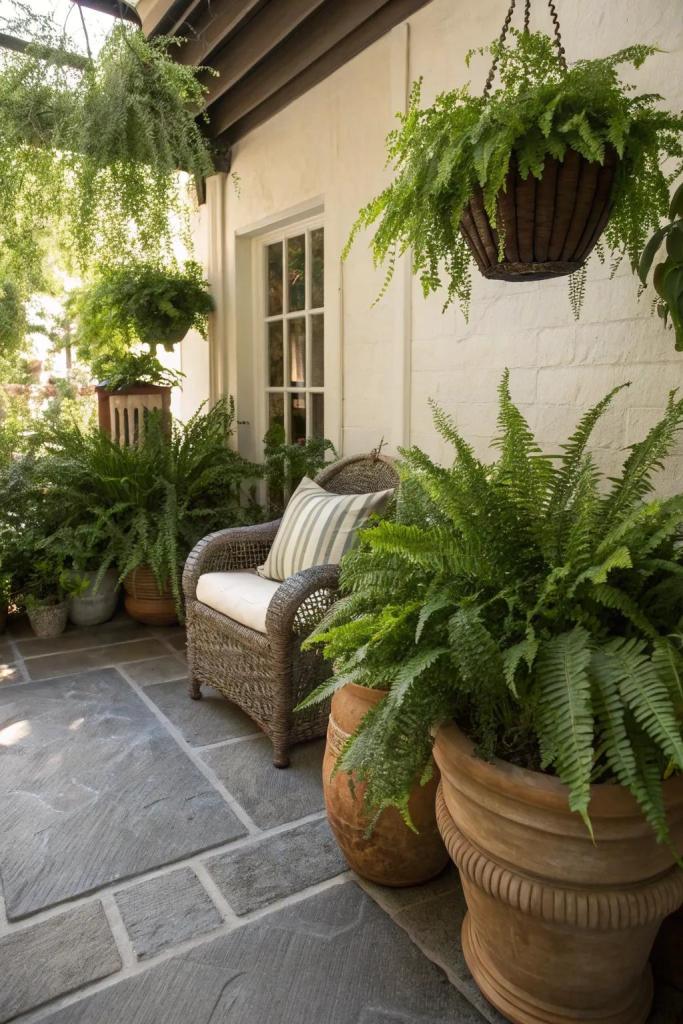
Group several fern planters together in a shaded spot to create a dedicated green area.
This works well because repeating the same plant creates a cohesive look.
Mix different fern varieties to introduce subtle texture differences while keeping the color palette consistent.
This setup is ideal if you want to build a small fern garden that feels calm.
9. Mix Ferns with Caladium for Colorful Foliage
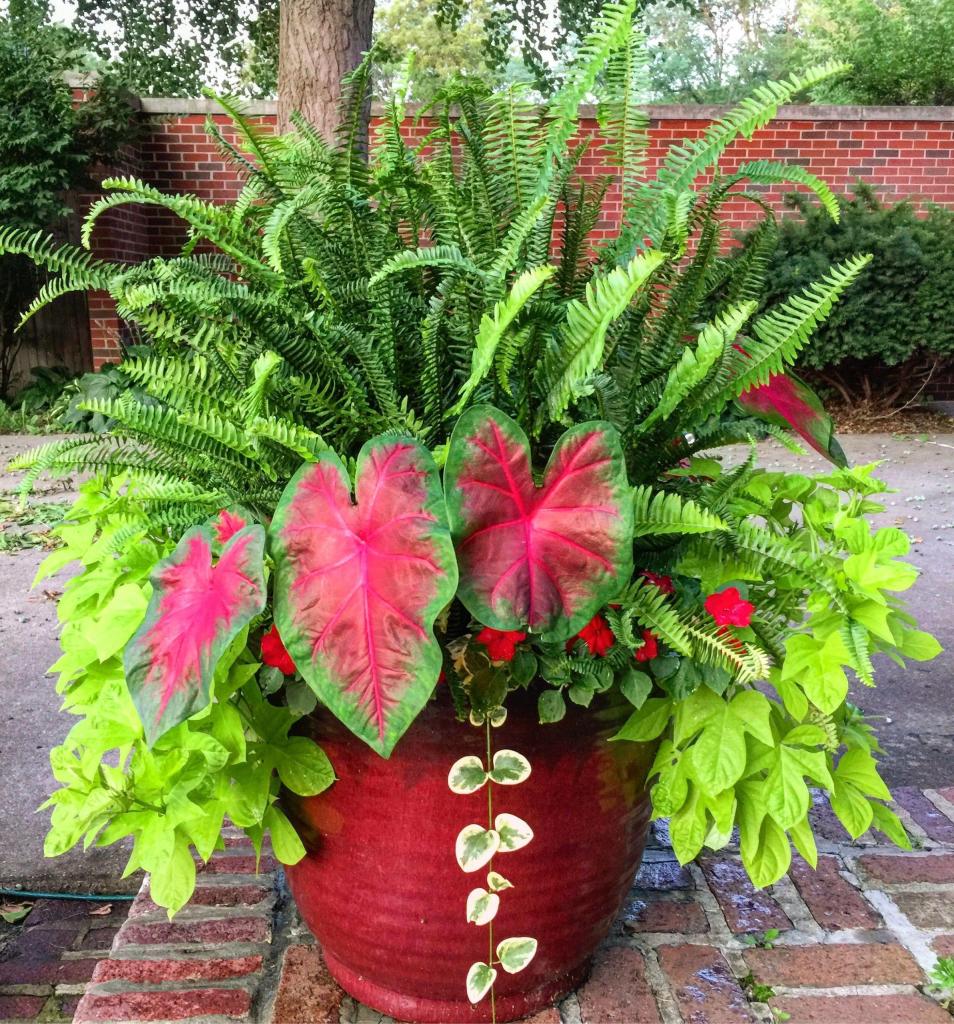
If you want color without relying on flowers, combine ferns with caladium.
Caladium leaves introduce shades of red, pink, and white, which contrast well with the deep green of ferns.
Both plants thrive in similar conditions, so they’re easy to manage together.
This combination works well in decorative containers on porches or patios.
10. Line a Walkway with Fern Planters
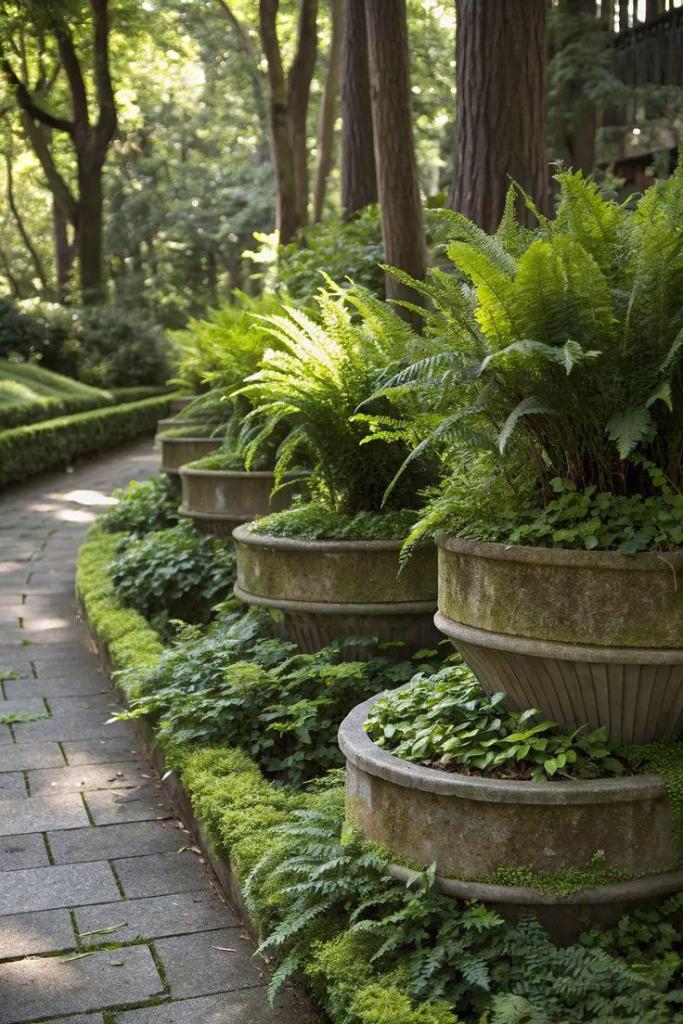
Placing fern planters along a walkway helps guide the eye and makes the space feel more structured.
Repeating the same plant creates consistency, which is useful for tying different areas together.
Use matching pots for a clean look or vary them slightly for a more relaxed style.
This setup works well for front entrances, garden paths, or even side walkways.
11. Use Metal Planters for a Modern Style
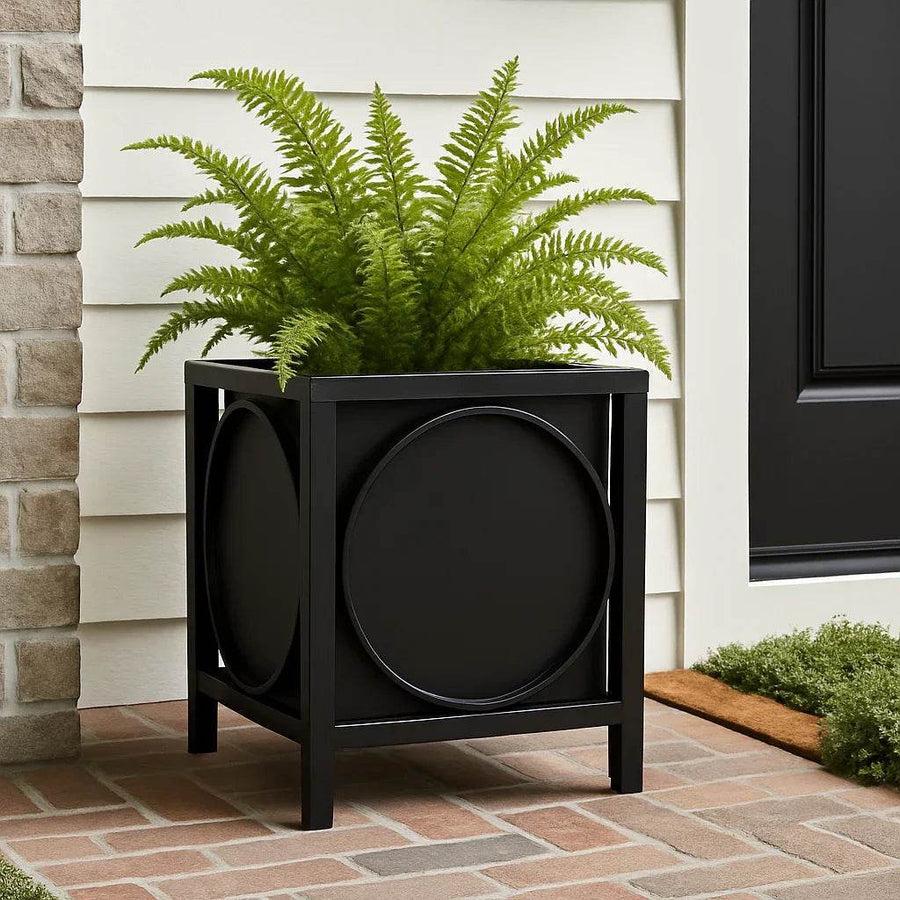
Metal planters offer a clean contrast to the soft texture of ferns.
Finishes like matte black, brushed steel, or dark grey help create a more modern, minimal look.
This combination works well in contemporary patios or indoor spaces where you want a more structured design.
The smooth surface of the planter keeps the arrangement from looking too traditional.
It’s a good example of how fern planter ideas can adapt to different styles.
12. Combine Ferns with Begonias for Depth
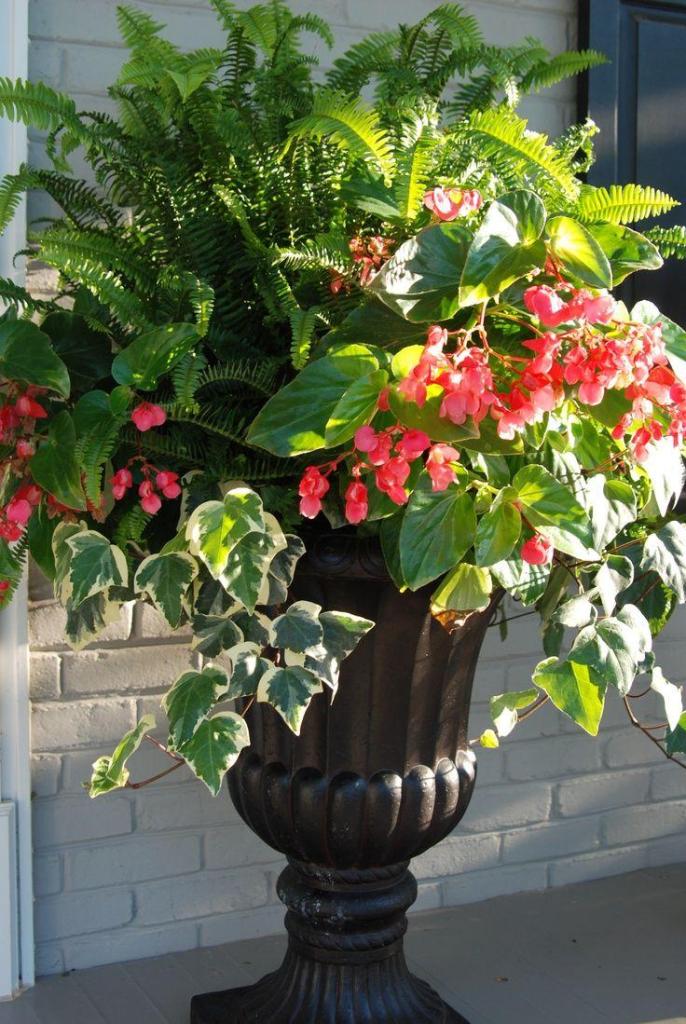
Begonias add a slightly thicker leaf shape and small blooms that contrast nicely with fern fronds.
This creates a layered look that feels full without being overcrowded.
This combination works well in shaded porches or indoor planters where both plants can thrive.
It’s a balanced way to introduce variation while keeping the arrangement easy to manage.
13. Use Window Boxes with Ferns
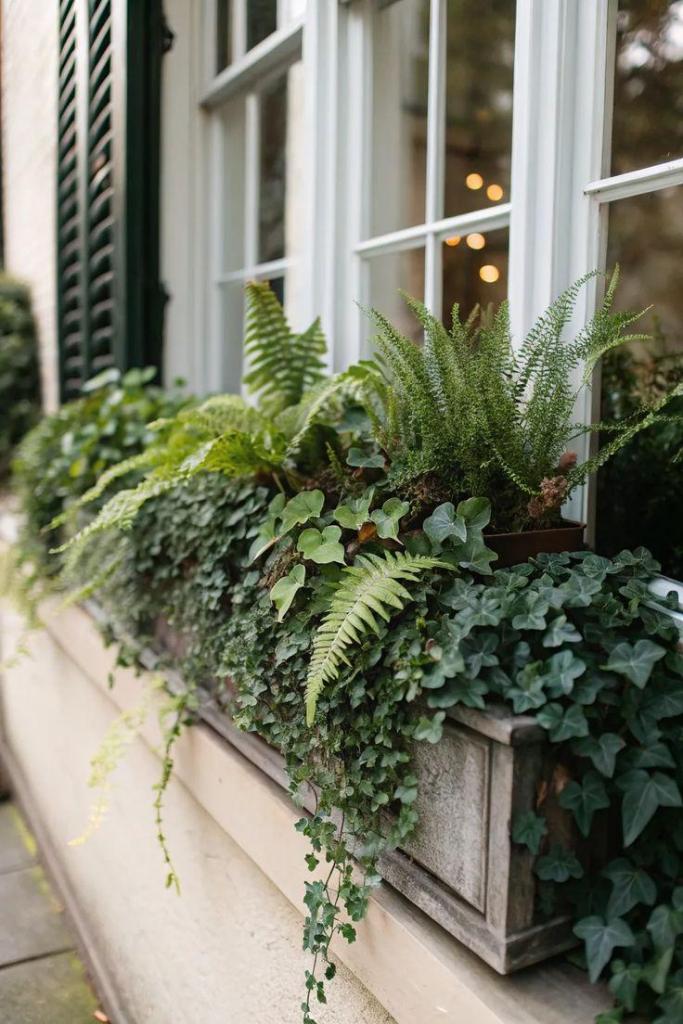
Filling window boxes with ferns adds greenery at eye level and improves the overall look of your home exterior.
The plants soften the edges of the window and create a more finished appearance.
You can keep it simple with just ferns or mix in trailing plants for extra detail.
This works well for both indoor and outdoor views.
It’s an easy way to extend your fern garden vertically without taking up additional space.
14. Mix Different Fern Varieties
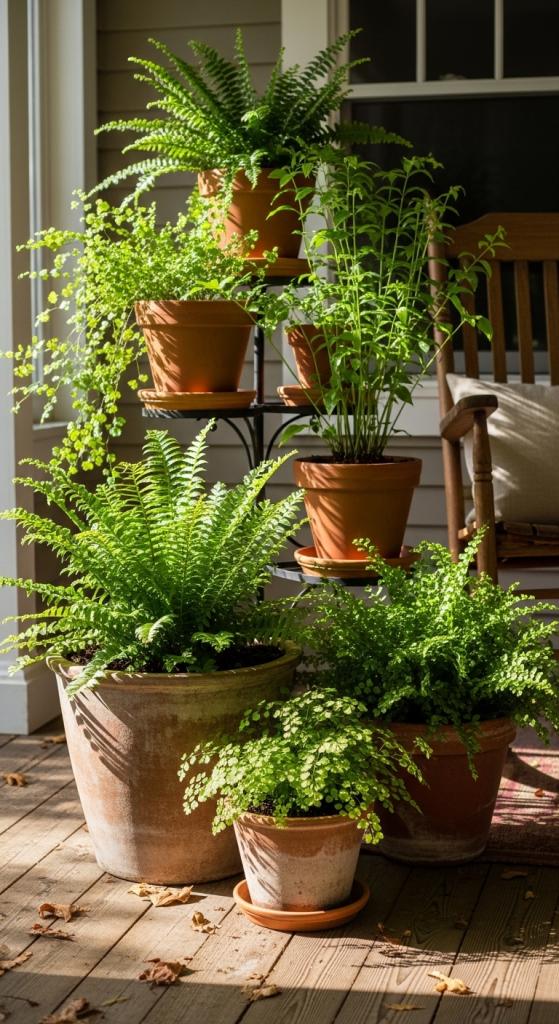
Using multiple fern types in one planter helps create texture without introducing new colors.
For example, combine Boston ferns with maidenhair or bird’s nest ferns for variation in leaf shape.
This keeps the arrangement visually interesting while still feeling cohesive. It’s one of the easiest fern planter ideas to implement because it doesn’t require additional plants or complex design.
15. Use Neutral Pots for a Minimal Look
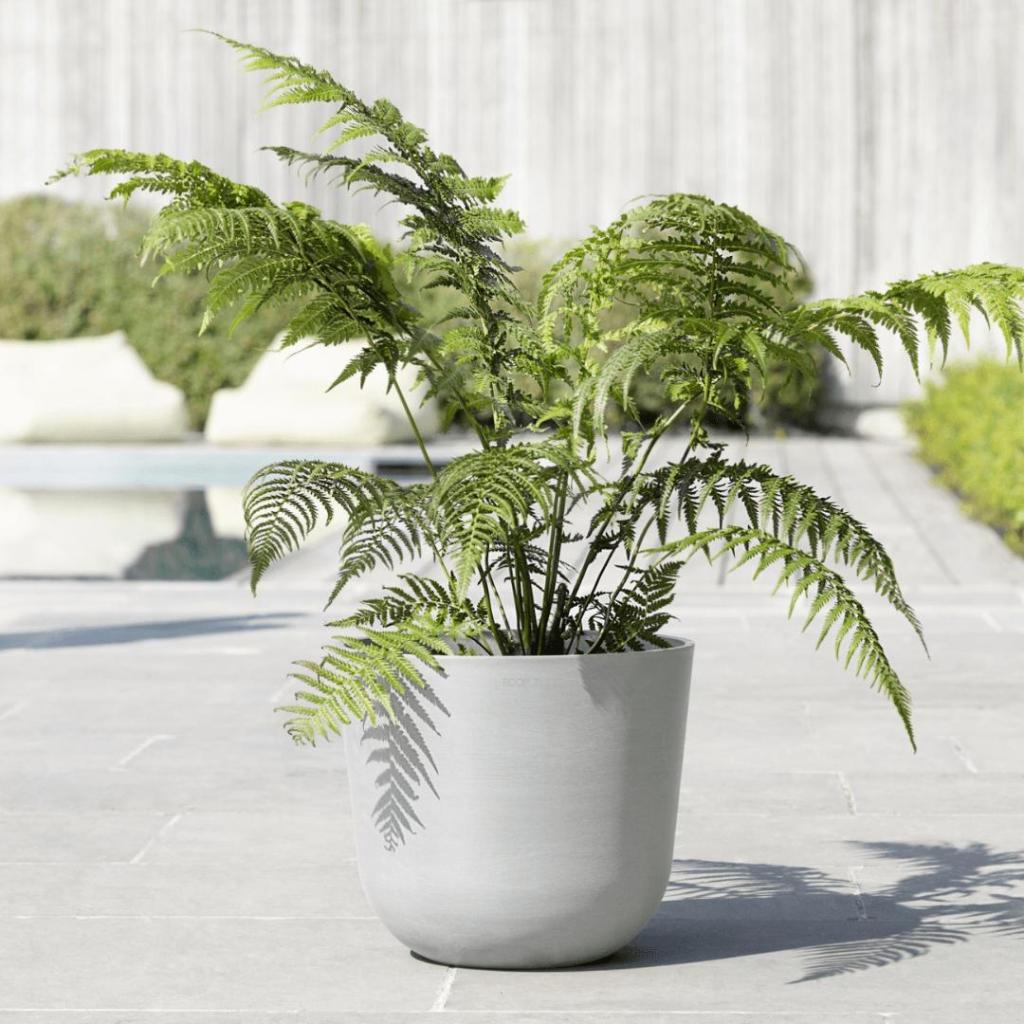
Neutral pots help keep the focus on the greenery rather than the container. Shades like white, beige, or soft grey create a clean and consistent appearance.
This works especially well indoors or in modern outdoor spaces. It also makes it easier to combine multiple planters without clashing styles. If you prefer a simple, uncluttered look, this is a reliable choice.
16. Add Ferns to a Balcony Setup
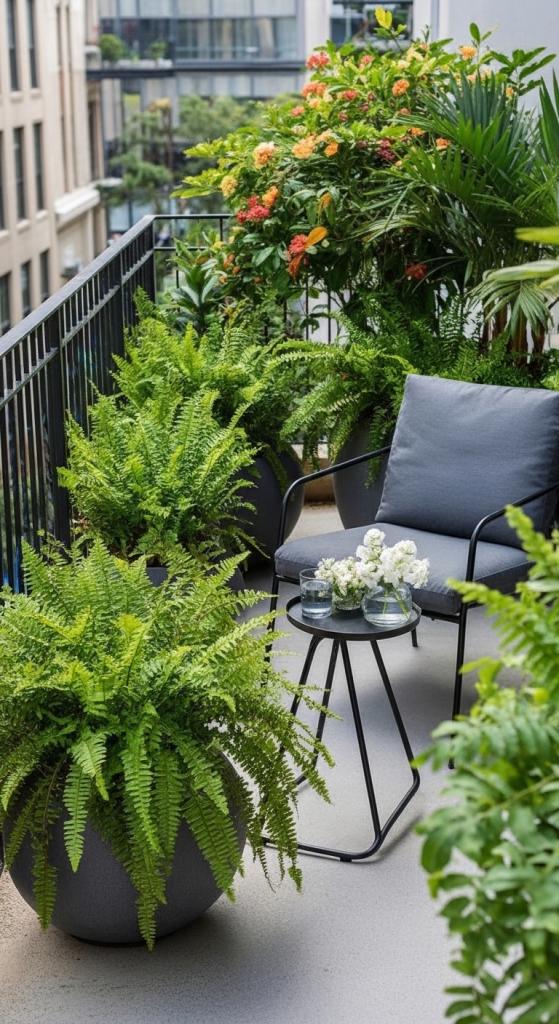
Ferns are well suited for balconies, especially those with partial shade. Use compact pots or railing planters to make the most of the space without overcrowding it.
They help soften hard edges like railings and walls, making the area feel more comfortable. This setup is ideal if you want a small, manageable fern garden in an urban setting. It’s low maintenance and easy to adjust over time.
17. Use Decorative Ceramic Pots
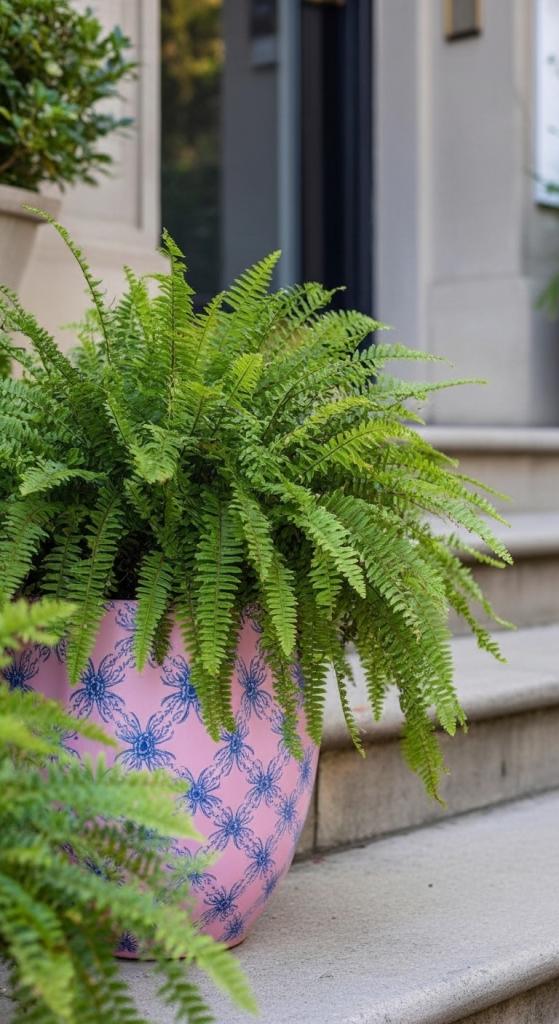
Decorative ceramic pots add visual interest without changing the plant arrangement.
Patterns, textures, or subtle colors can help tie your plants into the rest of your decor.
This works well if your space feels too plain or lacks personality.
Keep the color palette consistent so the setup doesn’t feel cluttered. It’s a simple way to personalise your fern planter ideas.
18. Create a Table Centerpiece with Ferns
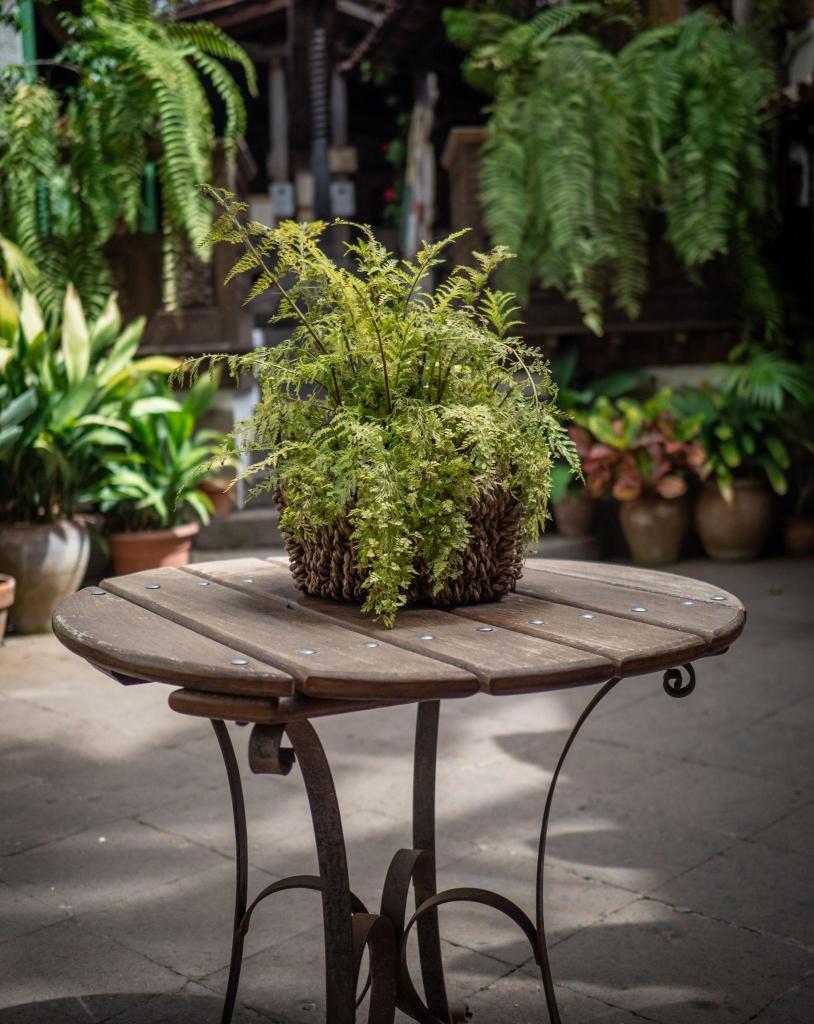
A low planter filled with ferns works well as an outdoor patio table centerpiece.
The height stays manageable, so it doesn’t block views across the table.
This is useful for outdoor dining areas or patios where you want greenery without large planters.
It adds a natural element while keeping the setup practical.
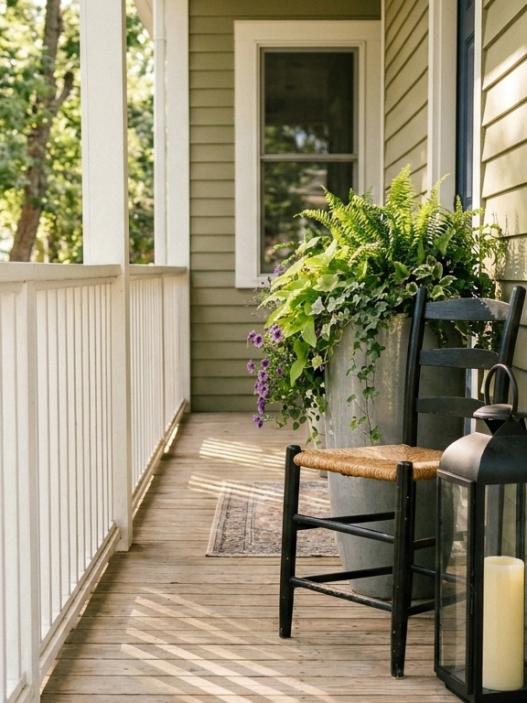
19. Use Tall Planters for Entryways
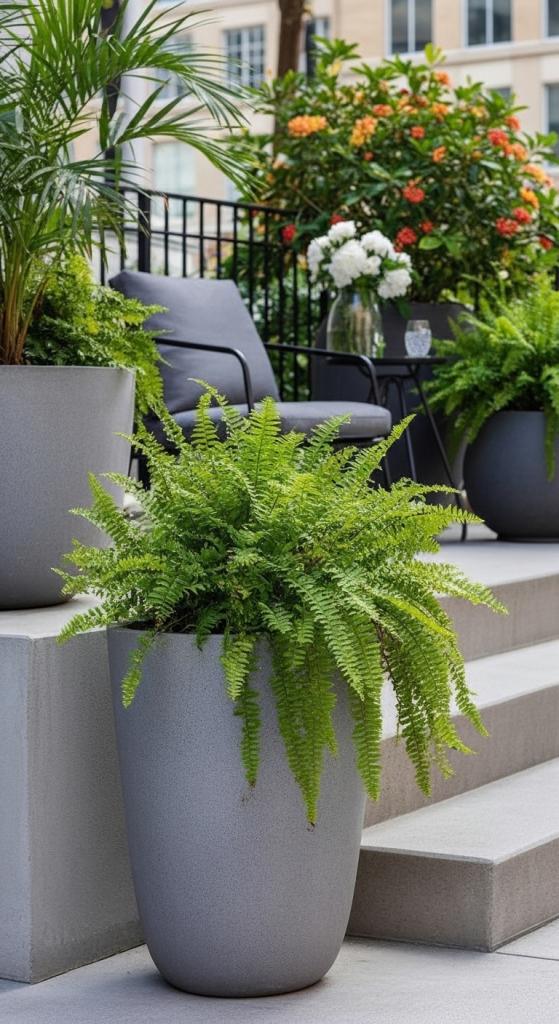
Tall planters help elevate ferns and make them more visible, especially near entrances.
This adds vertical structure and makes the space feel more defined.
They work well when paired with a front door planter setup or placed along pathways.
The added height helps balance larger spaces that feel empty at ground level.
20. Place Ferns in Bathrooms
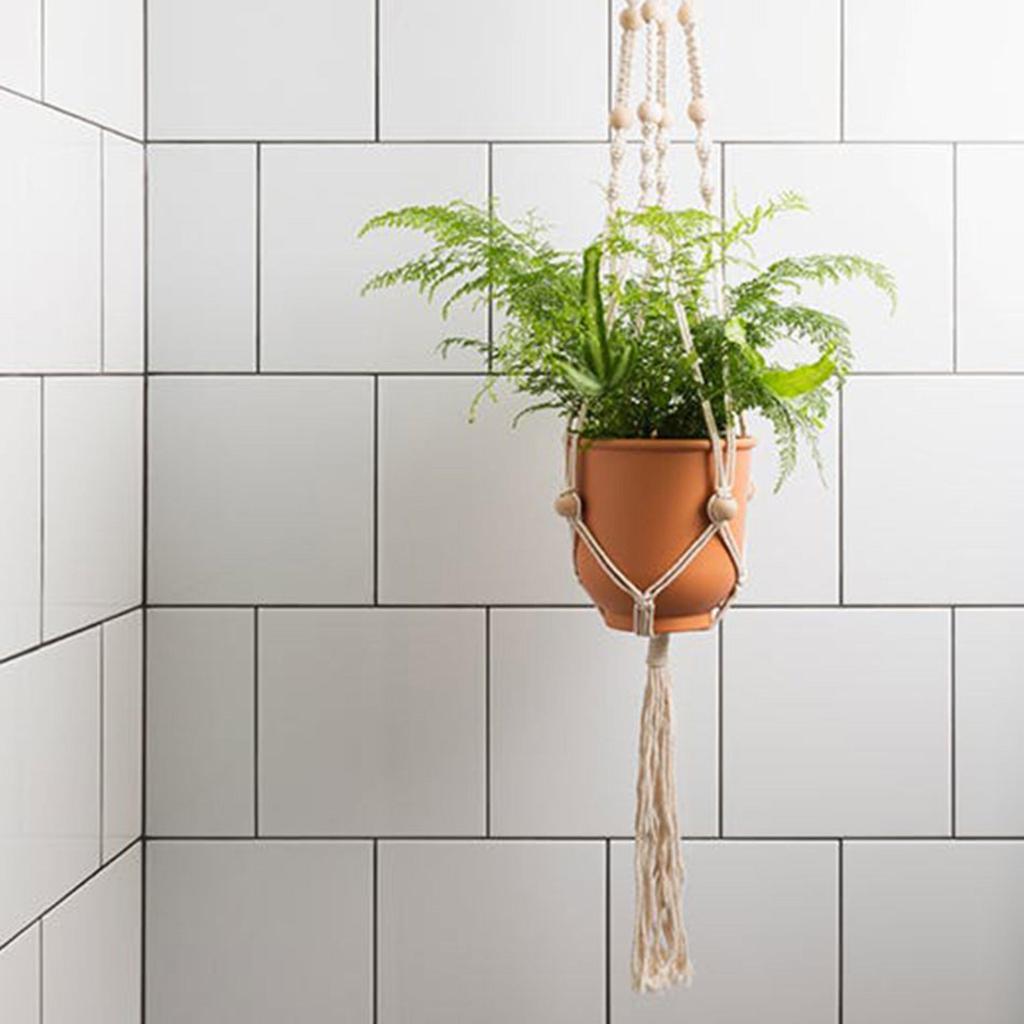
Bathrooms provide the humidity that ferns need, which makes them easier to maintain.
Place them near a window or on a shelf with indirect light.
They help soften the look of tile and hard surfaces while adding a natural element. This is one of the easiest indoor placements for ferns. It’s low effort but makes the space feel more complete.
21. Combine Ferns with Trailing Ivy
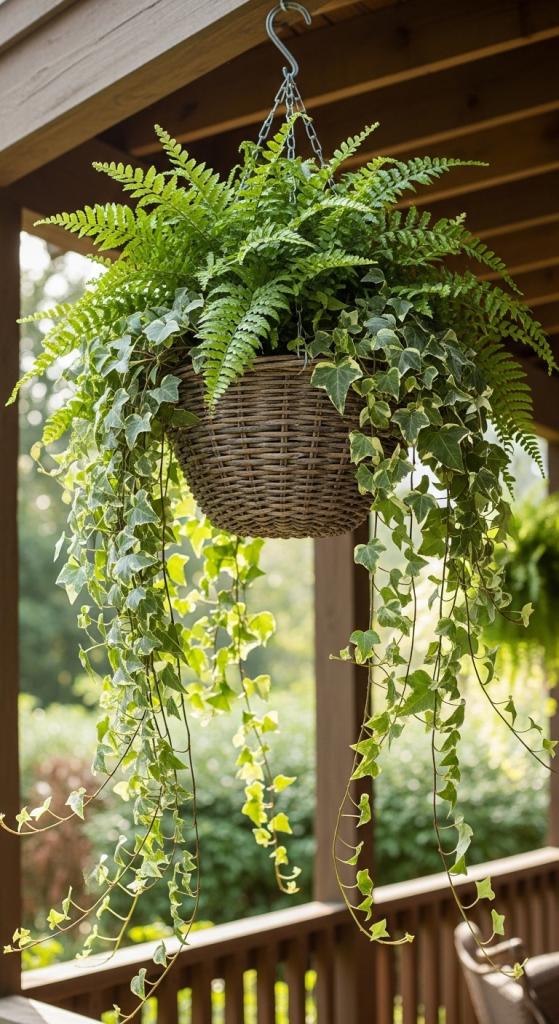
Pairing ferns with ivy creates a layered arrangement with both fullness and movement.
Ferns stay dense in the center, while ivy extends beyond the edges of the planter.
This combination works well in hanging baskets or raised planters where the trailing effect is visible.
It helps the arrangement look more finished without adding too many plant types.