








Full Shade Landscaping can be one of the most difficult types of outdoor spaces to manage. A Shaded Garden often comes with damp soil, patchy grass, moss buildup, weeds, poor drainage, and dark areas that make the yard feel neglected instead of maintained. What works in sunny landscapes usually struggles in a Full Shade Garden, especially beneath mature trees or along heavily shaded fences.
Shade affects everything from soil moisture and lawn growth to plant health and drainage. That is why Front Garden landscaping, backyard landscaping, driveway landscaping, and Shady Front Yard Landscaping all need a completely different approach when sunlight is limited. Choosing the wrong plants often leads to weak growth, muddy areas, and constant maintenance problems.
The good news is that shaded spaces can still look clean, balanced, and low maintenance with the right Shade Garden Design Layout. Using durable ground cover, proper drainage solutions, Flowers For Shaded Areas, and reliable Deep Shade Plants can help reduce moss, improve structure, and create a landscape that thrives naturally in low light conditions.
Choose Plants That Actually Thrive in Full Shade
One of the biggest mistakes in Full Shade Landscaping is planting flowers or shrubs that secretly need more sunlight than the yard can provide.
A lot of struggling shaded gardens come down to poor plant choices. The wrong plants quickly become unhealthy, leggy, or patchy.
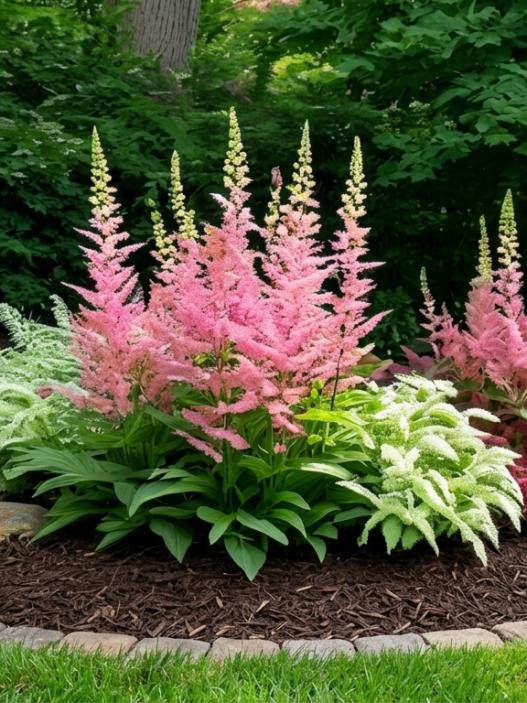
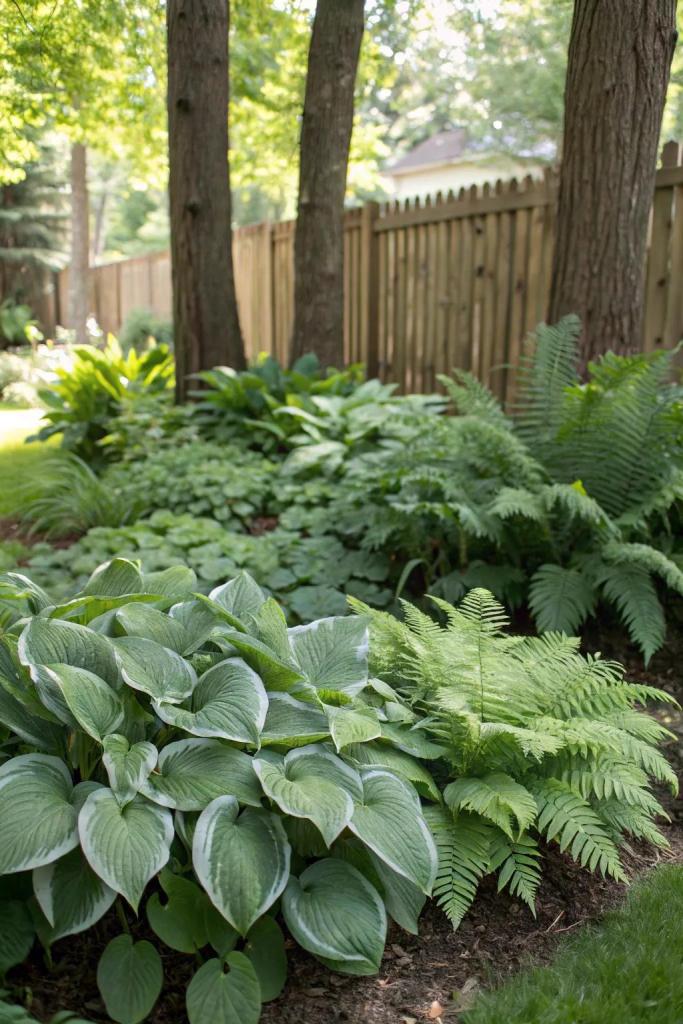
Deep Shade Plants like hostas, ferns, astilbe, coral bells, and Japanese forest grass are popular because they tolerate low light without constantly needing attention.
They also create texture and fullness, which helps shady areas feel intentional instead of empty.
This is especially important in Shady Front Yard Landscaping because unhealthy plants can drag down curb appeal fast.
Layering reliable shade tolerant plants gives the yard structure and consistency without constant replanting every season.
Stop Trying to Grow Grass Everywhere
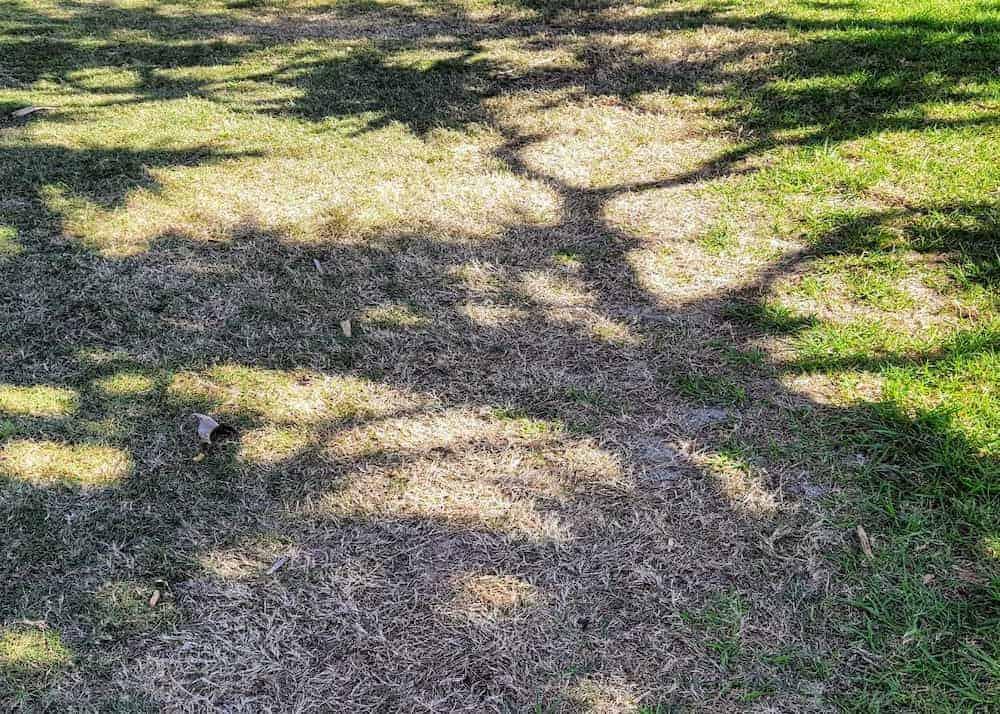
Sometimes the healthiest landscaping decision is accepting that grass may never fully thrive in deep shade.
One of the most common Full Shade Landscaping frustrations is thin, muddy grass beneath trees or beside fences where sunlight rarely reaches the ground.
Even shade grass seed mixes often struggle when the area stays damp for long periods.
Instead of constantly reseeding dead patches, many homeowners save money and maintenance time by replacing difficult lawn sections with mulch beds, gravel, stepping stones, or shade tolerant ground cover.
Ground covers like pachysandra, creeping Jenny, ajuga, and sweet woodruff also perform much better in these conditions. They help suppress weeds, reduce muddy areas, and create greenery where grass simply refuses to cooperate.
This approach works especially well in backyard landscaping where heavily shaded corners often become maintenance headaches.
Use Mulch to Reduce Moss and Weed Growth
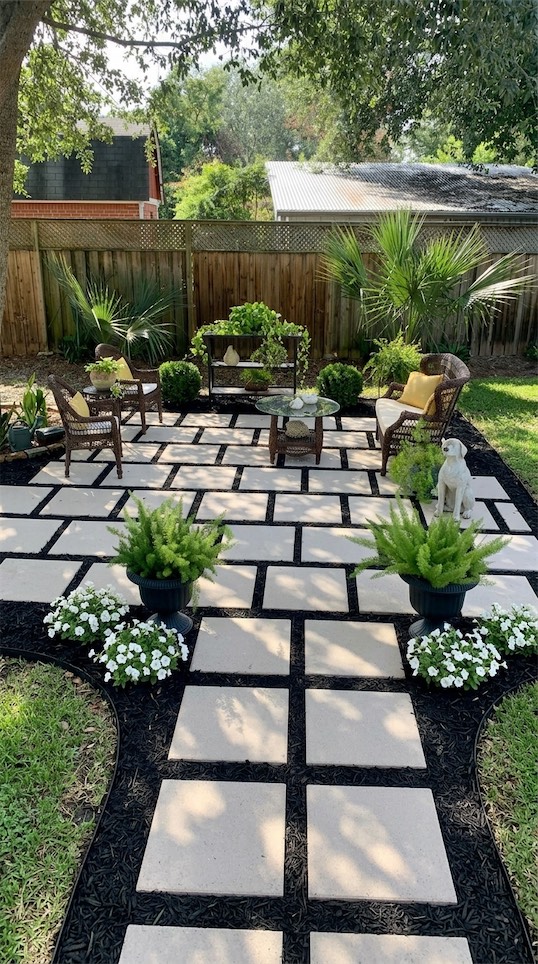
A thick mulch layer can completely change how manageable a shady garden feels.
Shaded areas naturally hold moisture longer, especially beneath mature trees or along fences where airflow stays limited.
Damp conditions encourage moss, fungus, weeds, and muddy soil, particularly during rainy seasons.
Mulch helps stabilize moisture levels while blocking weed seeds from receiving enough light to germinate.
In Full Shade Garden spaces, mulch also creates visual contrast that makes planting beds look cleaner and more maintained.
Dark bark mulch works especially well in front of house landscaping because it highlights green foliage beautifully.
Pine straw is another great option for Zone 5 Landscaping because it helps insulate roots during colder months while still allowing water movement.
Improve Drainage Before Adding New Plants
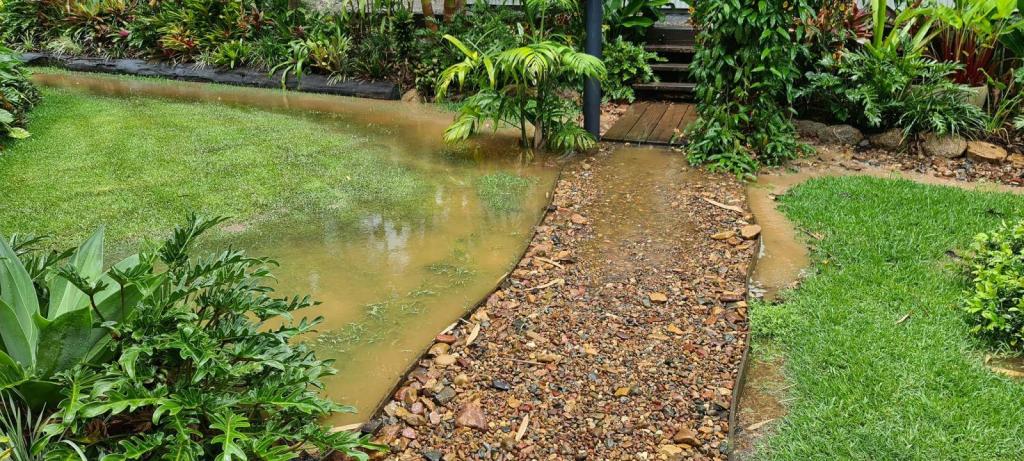
Many shade garden problems begin below the surface.
In heavily shaded yards, soil often stays wet far longer after rain because sunlight is not drying it out throughout the day.
Poor drainage leads to root rot, fungal disease, moss spread, and plants that constantly struggle despite regular care.
Before planting Flowers For Shaded Areas, it helps to observe how water behaves after rainfall. If puddles sit for hours or the soil feels constantly soggy, drainage improvements should happen first.
Mixing compost into compacted soil helps loosen the ground while improving airflow around roots.
Raised beds can also make a huge difference in Full Shade Landscaping because they lift plant roots above overly wet soil.
Even simple additions like gravel pathways or drainage channels can reduce standing water while making the landscape look more structured and organized.
Trim Trees to Increase Filtered Light
A little extra sunlight can dramatically improve the health of a shaded garden.
Not every yard needs tree removal. Sometimes selective pruning is enough to allow more filtered light and airflow into planting beds without losing the mature trees that give the property character.
Overgrown canopies often create excessively damp conditions underneath, which encourages moss and fungal growth.
In Shady Garden Ideas focused on problem solving, tree maintenance becomes a major part of keeping the yard healthier overall.
Thinning lower branches can help grass, shrubs, and Part Shade Plants perform better while also reducing mildew problems.
This can be especially helpful in driveway landscaping where moss and algae often build up on damp surfaces that rarely dry out.
Focus on Texture Instead of Constant Flowers
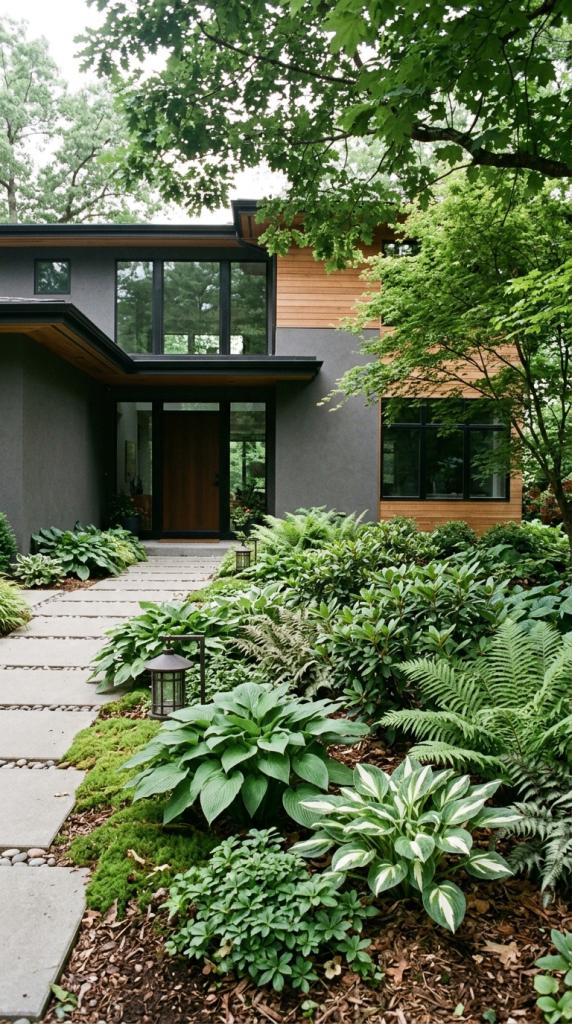
Shaded gardens rarely bloom like sunny cottage gardens, but texture can create just as much visual interest.
One mistake many homeowners make with Full Shade Landscaping is expecting nonstop flowers in areas with very little sunlight. Most successful shade gardens rely more heavily on foliage texture than bright blooms.
Large hosta leaves, delicate fern fronds, glossy shrubs, and layered greenery help create depth and movement throughout the space.
This works especially well in Front Entry Landscaping where structure matters more than constant seasonal color.
Mixing different leaf sizes and shades of green keeps the garden visually interesting without relying entirely on flowers that may struggle in low light.
Adding stone borders, planters, and natural wood features can also help break up all the greenery while adding shape to darker spaces.
Use Gravel Around Damp Driveway Edges
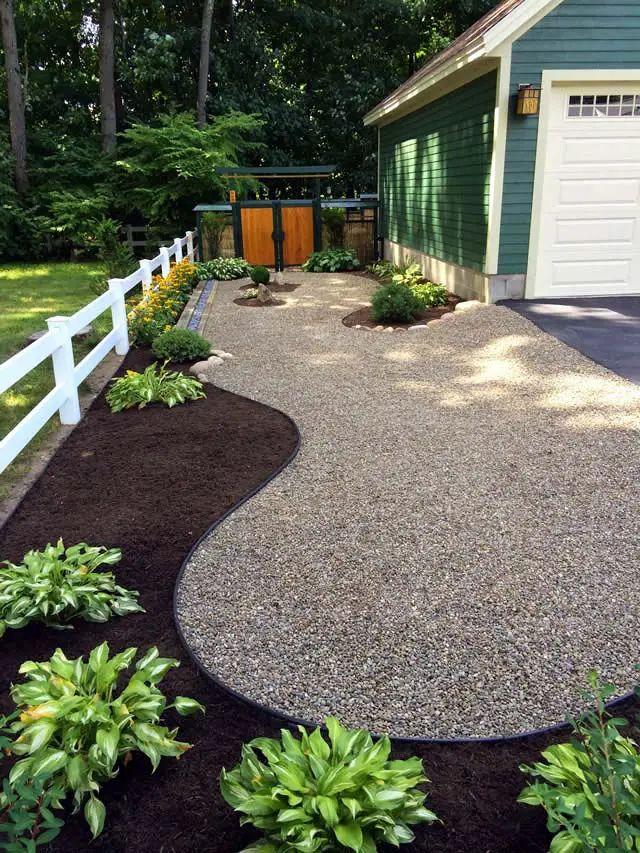
Shaded driveways often stay wet longer than the rest of the property.
If your driveway receives very little sunlight, you may notice moss, algae, muddy edges, or thinning grass developing throughout the year. Constant moisture can make these areas slippery and difficult to maintain.
Replacing difficult lawn edges with gravel, decorative stone, or mulch creates a cleaner and more durable solution. Stone materials dry faster than soil and reduce the amount of muddy runoff during wet weather.
This is one of the simplest driveway landscaping upgrades for shaded homes because it improves both appearance and functionality at the same time.
Plant Evergreen Shrubs for Year Round Structure
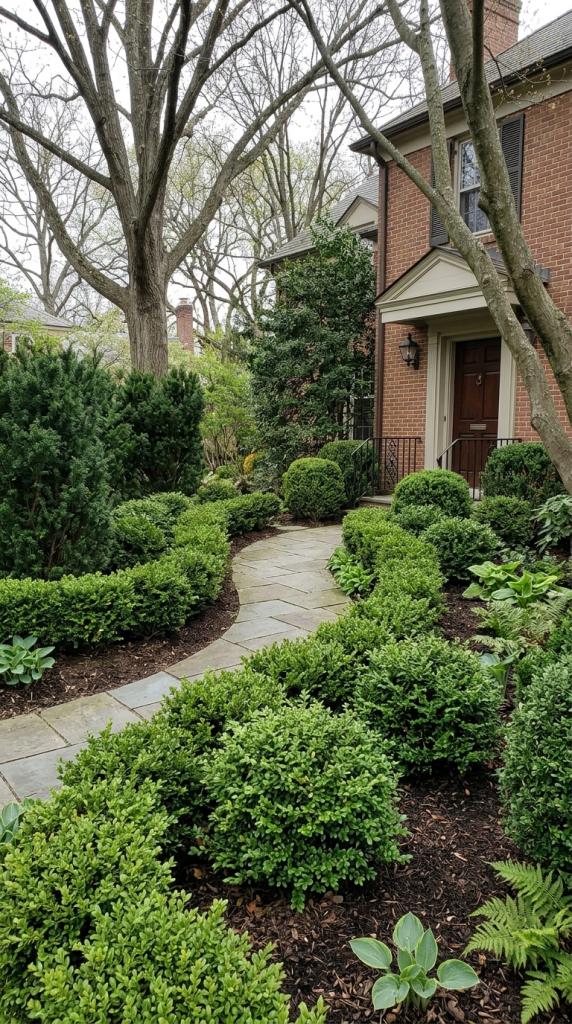
Shaded gardens can look empty during winter without evergreen structure.
Many shade tolerant perennials disappear completely during colder months, leaving planting beds looking bare and uneven.
Evergreen shrubs help anchor the landscape year-round, especially in Zone 5 Landscaping where winters can feel long and gray.
Boxwoods, yews, inkberry, and Japanese holly all tolerate lower light conditions while providing shape and fullness through every season.
This matters especially in front yard landscaping where curb appeal still matters during colder months.
Evergreen shrubs help keep shaded entrances looking maintained even when flowers are dormant.
Mixing evergreen structure with seasonal plants creates a much more balanced landscape overall.
Remove Wet Leaves Before They Smother Plants
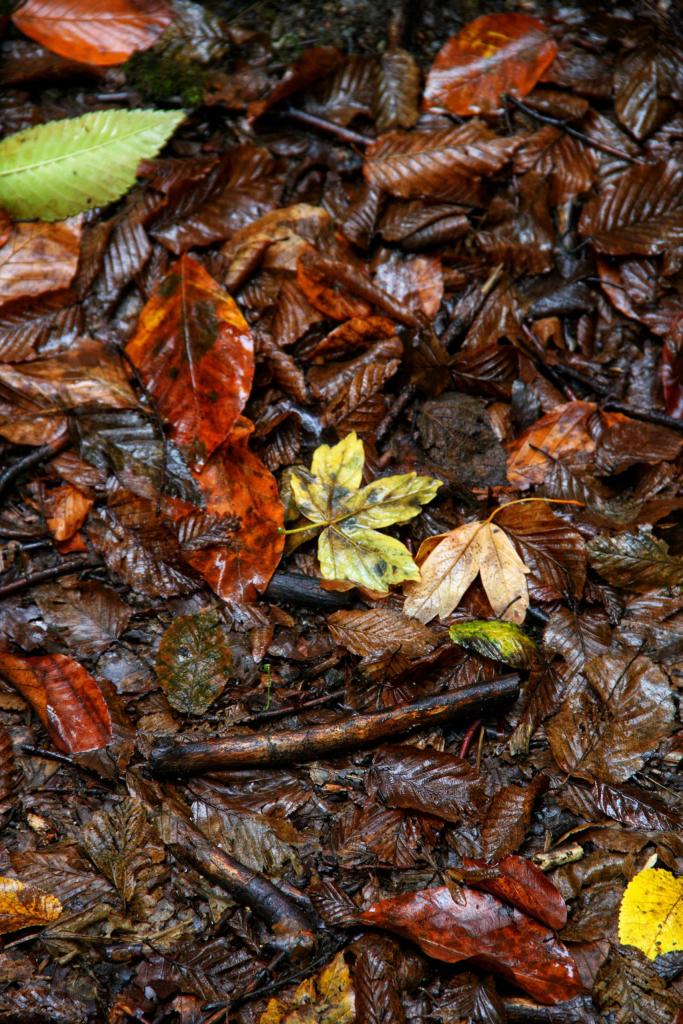
Too many wet leaves can quickly damage a shaded garden.
In shady yards beneath mature trees, fallen leaves tend to stay damp much longer because there is less direct sunlight drying them out.
Thick layers of wet debris trap moisture against the soil, encouraging rot, fungal disease, moss spread, and pest problems.
Regular cleanup becomes especially important in Full Shade Garden spaces where airflow already feels limited.
Using a rake or leaf blower weekly during fall helps prevent buildup before it becomes overwhelming. Shredded leaves can also be composted and reused later as mulch, which improves soil naturally.
Add Containers to Brighten Dark Areas
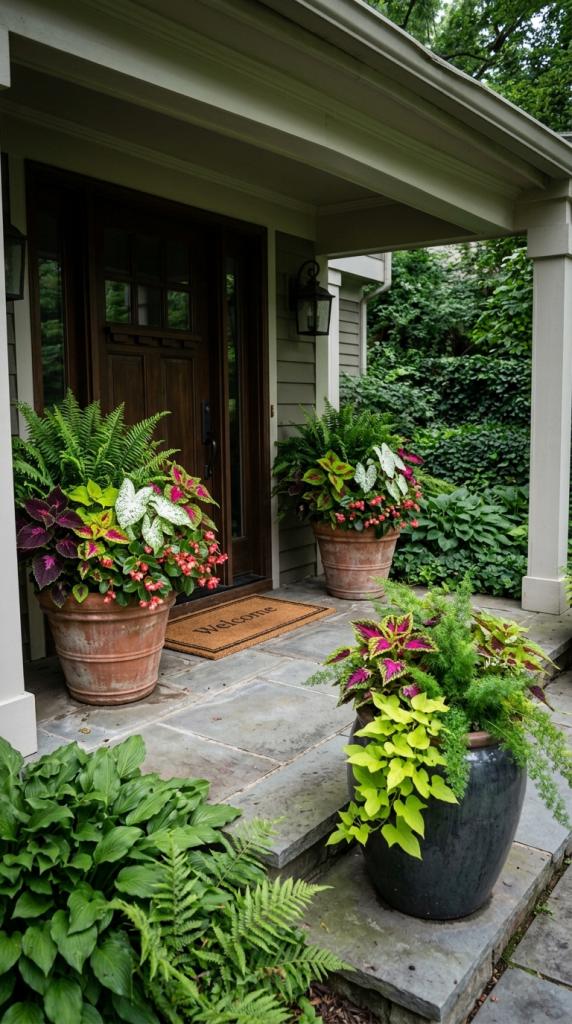
Containers can help improve difficult shady spaces without redesigning the entire yard.
One issue with Front Entry Landscaping in deep shade is that fixed planting beds can sometimes feel dark or repetitive.
Container gardens allow you to introduce color, texture, and height exactly where the space needs it most.
Shade tolerant plants like coleus, caladiums, begonias, and ferns perform beautifully in containers near porches and entryways.
Large planters also help define the entrance visually, especially when surrounding landscaping feels heavily shaded or flat.
This is a great option for homeowners who want quick improvements without committing to a major landscaping project.
Prevent Weeds With Dense Planting
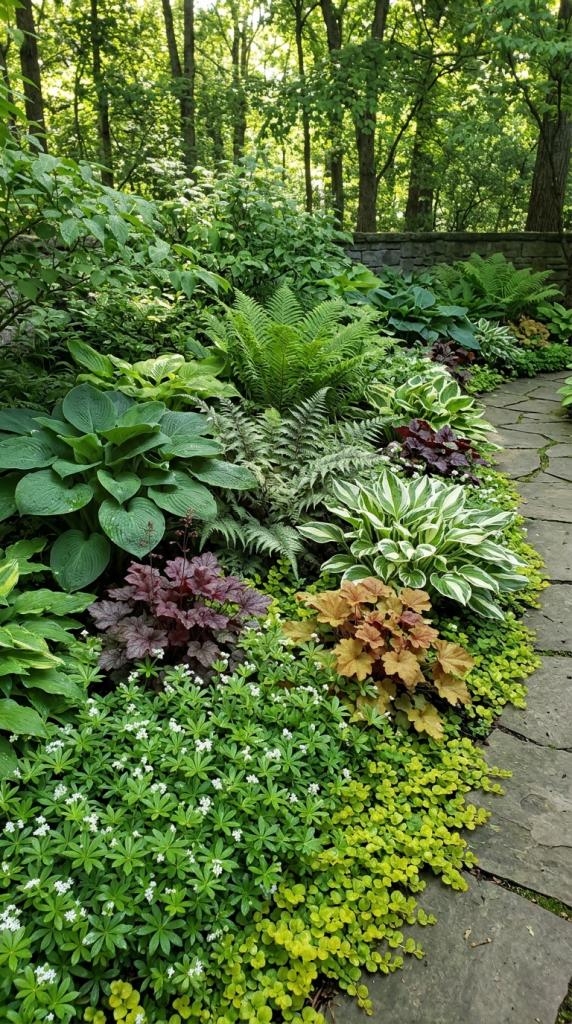
Bare soil almost always invites weeds into shady gardens.
A smart Shade Garden Design Layout focuses on reducing exposed soil by filling planting beds with layered greenery and ground cover. In damp shaded conditions, weeds establish quickly when open gaps are left between plants.
Hostas, ferns, coral bells, and low spreading plants gradually fill empty spaces while helping suppress unwanted growth naturally.
Dense planting also creates a fuller and more established appearance throughout the landscape. Instead of isolated plants surrounded by mulch, the garden feels layered and cohesive.
Use Raised Beds Around Tree Roots
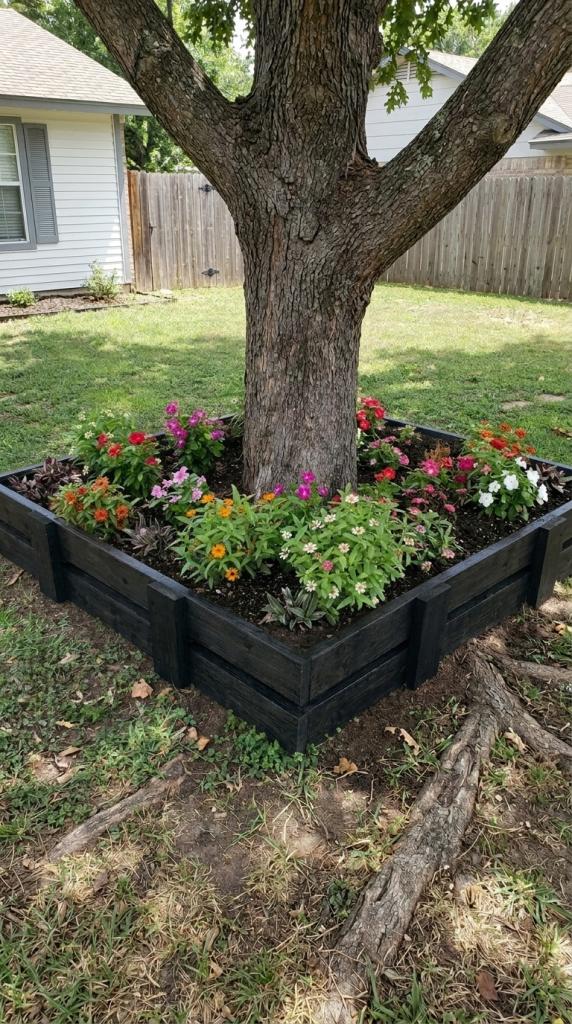
Tree roots can make shady landscaping surprisingly difficult.
Large mature trees compete aggressively for nutrients and moisture, which often explains why nearby flowers struggle despite regular watering.
Raised beds help separate new plants from dense root systems while improving drainage at the same time. This is especially useful in backyard landscaping where old trees dominate large sections of the yard.
Stone or timber raised beds also create visual structure that helps shaded spaces feel more organized.
Even a simple raised border can dramatically improve growing conditions for Flowers For Shaded Areas.
Choose Lighter Hardscaping Materials
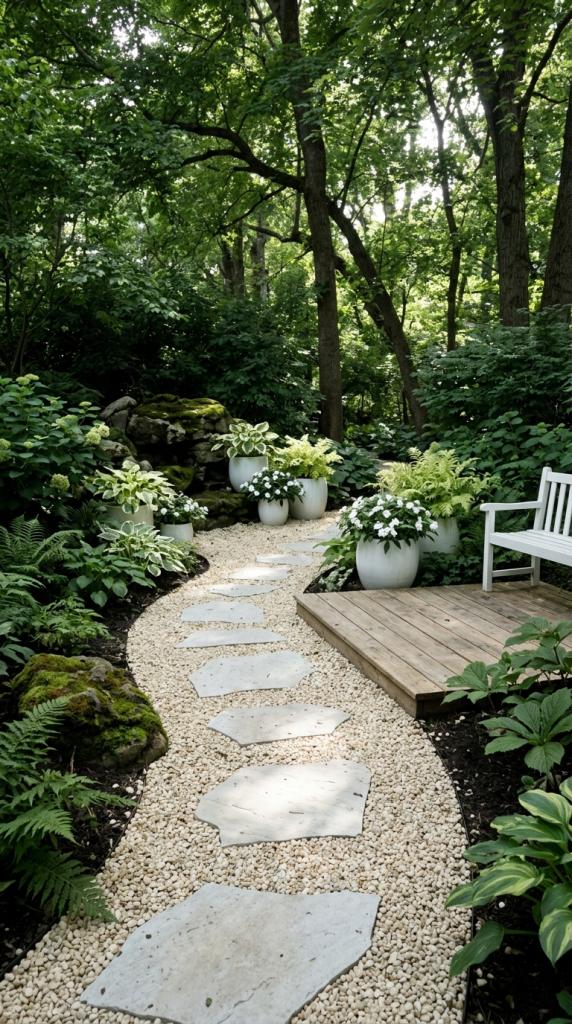
Dark shaded yards can sometimes feel even heavier with dark landscaping materials.
Black fencing, dark mulch, and deep colored stone may absorb what little light the yard receives. Introducing lighter hardscaping materials helps reflect available light around the space while making the garden feel brighter overall.
Pale gravel, natural wood, light gray stepping stones, and white planters all help soften dark corners in Shady Garden Ideas focused on improving visibility.
This can make a huge difference in smaller front of house landscaping projects where limited sunlight already makes the entrance feel enclosed.
Install Lighting to Reduce Dark Corners
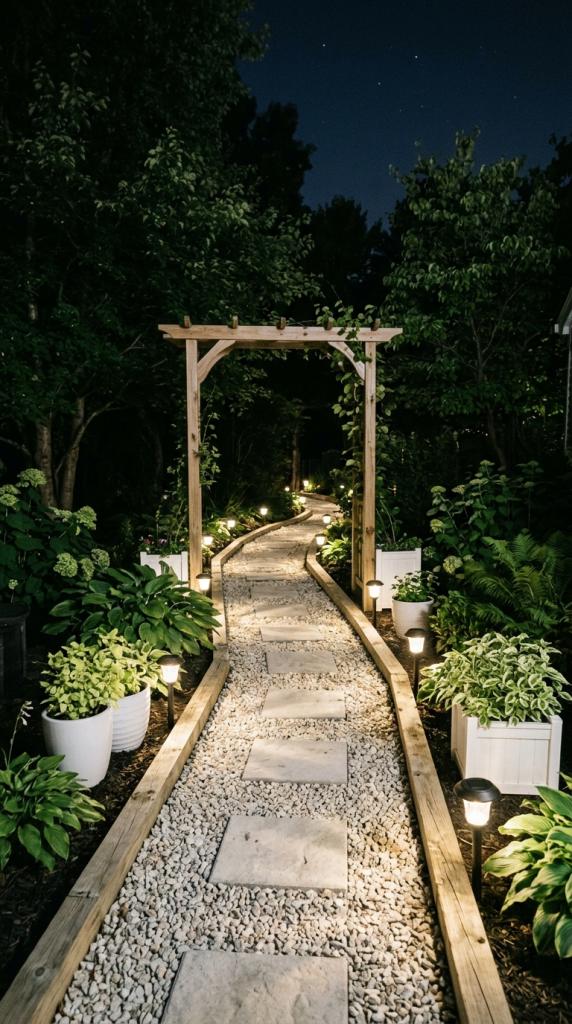
Good outdoor lighting makes shaded gardens feel more intentional after sunset.
One issue homeowners often notice with Full Shade Landscaping is how quickly the yard becomes dark in the evening. Walkways disappear visually, entrances feel hidden, and landscaping details fade away completely.
Warm solar lighting, pathway lights, and subtle uplighting beneath trees can help define the space while improving visibility and safety.
Lighting also highlights texture beautifully, especially on layered foliage plants like ferns and hostas.
Even a softly lit pathway can completely change how the yard feels at night.
Accept That Shade Gardens Need Different Expectations
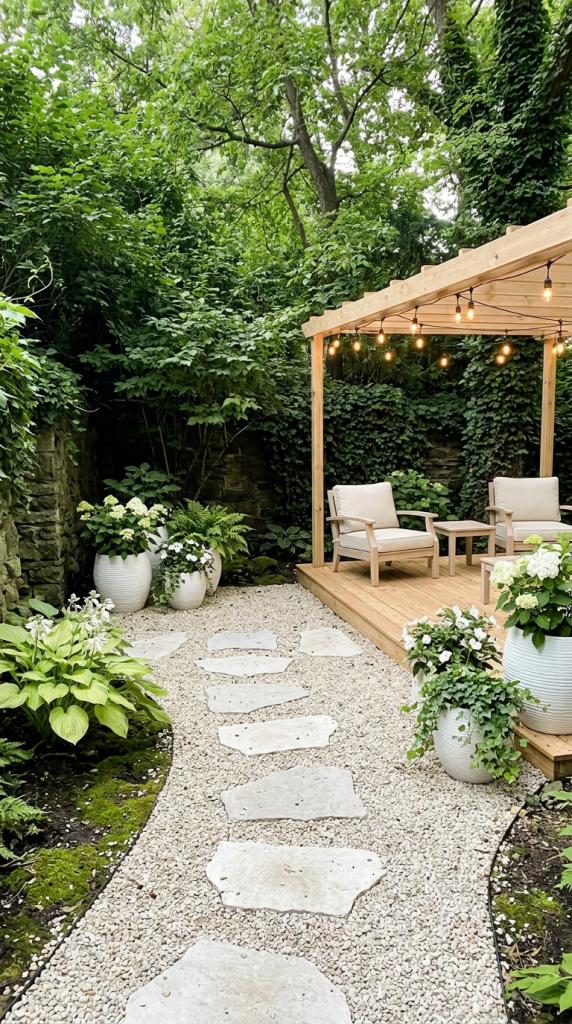
The healthiest shaded gardens usually happen once homeowners stop trying to recreate a sunny yard.
A Full Shade Garden is never going to behave exactly like a bright flower-filled landscape with roses and sun-loving plants. Grass may always grow more slowly, blooms may appear softer, and moisture management will remain part of regular maintenance.
Once you shift expectations, landscaping becomes much less frustrating. Instead of constantly battling the environment, you begin building around what naturally performs well in low light conditions.
Texture, greenery, layered foliage, mulch, drainage improvements, and moisture tolerant plants become the stars of the landscape.
That mindset shift often creates the biggest improvement of all.