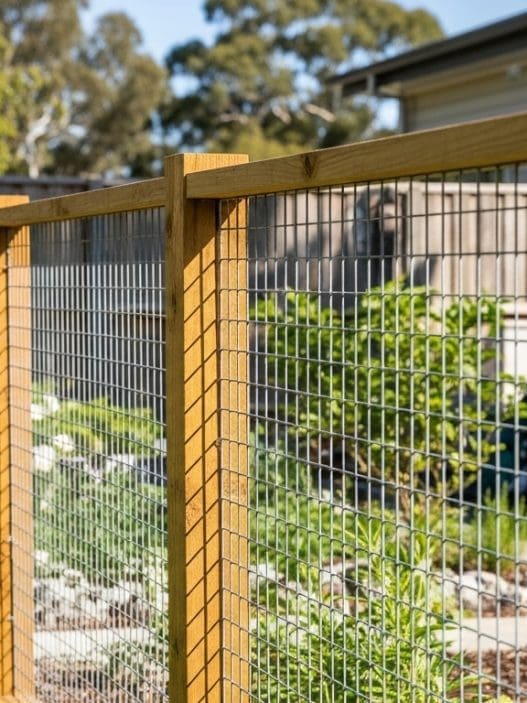









Fall landscaping is about more than raking leaves and cutting everything down before the first frost, because the choices you make now decide how your garden looks, and how well it copes, from November through to March. Every fall garden reaches a point where the flowers have faded, stems have turned brown, and the urge to clear everything down to bare soil becomes hard to resist. For many years, a full cut-back was treated as standard practice. We now know that a completely cleared border offers little for birds and insects, leaves soil exposed to heavy rain, and removes the shape and texture that give a garden its winter interest.
In this guide, we share practical fall landscaping tips to get your garden ready for winter: which plants to leave standing for seedheads and structure, which to tidy now, how to keep evergreen grasses and sedges looking their best, how to prepare hellebores for a winter flowers garden and much more!
If you are looking for landscaping inspiration or winter garden ideas and design that work with nature rather than against it, these steps are a good place to start.
1. Leave Deciduous Ornamental Grasses Standing Until Late Winter
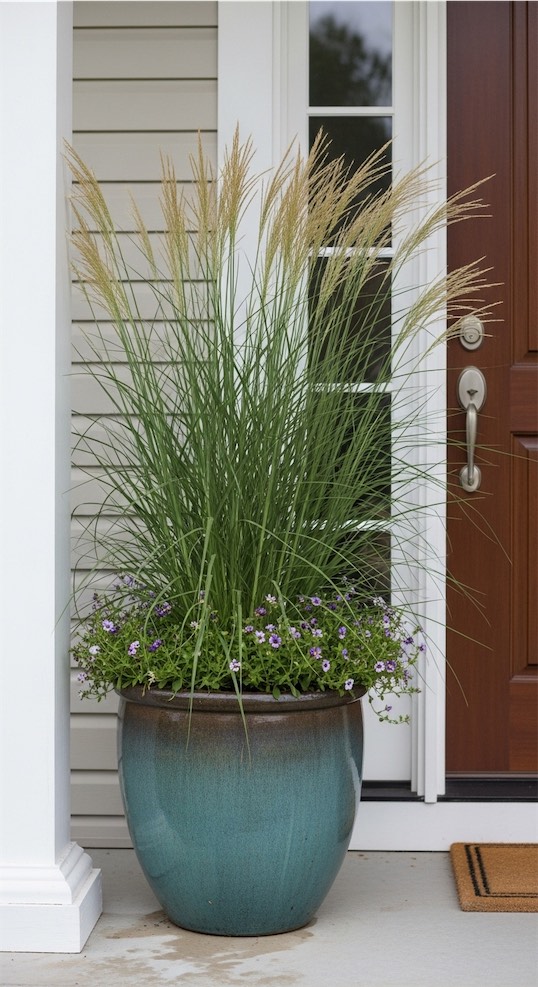
We recommend leaving deciduous ornamental grasses such as Miscanthus, Panicum, Molinia and Calamagrostis ‘Karl Foerster’ uncut throughout the autumn garden season and into winter.
These grasses die back to a straw colour. But keep their shape remarkably well, and they catch frost, low sunlight and wind in a way few other plants can.
The dead leaves also form a protective layer over the crown. This is the point at the base of the plant where the stems meet the roots and where next year’s growth begins.
Cutting them in autumn exposes that crown to cold and wet at the worst time of year.
We suggest cutting them back close to the base. To roughly 10cm. In late winter or very early spring, before new green shoots appear.
If you wait too long, you risk snipping the tips off the fresh growth, which leaves the plant looking scruffy for the rest of the season.
2. Comb, Rather Than Cut, Evergreen Grasses and Sedges
Not every grass should be cut back, and this is one of the most common mistakes we see in autumn garden care.
Evergreen grasses and grass-like plants such as Stipa gigantea, Anemanthele lessoniana, blue fescue (Festuca glauca) and most Carex sedges keep living green leaves all year. Cutting them hard removes healthy foliage the plant still needs.
Many of them are slow to recover from a hard cut, and some never regain their full shape.
Instead, we recommend waiting until spring. Then running gloved fingers or a small rake through the clump to pull out the dead brown leaves.
This removes the untidy material while leaving the living growth in place.
If you are unsure whether a grass is evergreen, look at the base of the clump in late autumn: if there is still fresh green growth among the brown, treat it as evergreen and comb it rather than cutting it.
3. Keep Coneflower and Black-Eyed Susan Seedheads for Birds
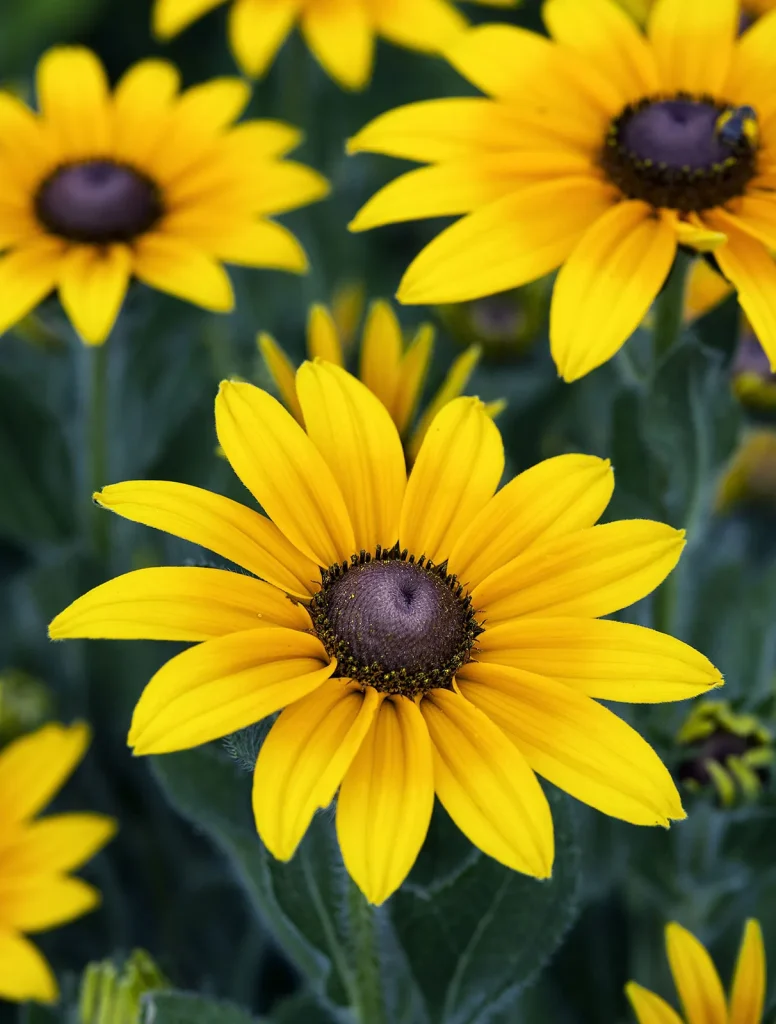
Echinacea (coneflower) and Rudbeckia (black-eyed Susan) are two of the most useful plants to leave standing for winter. Once the petals drop, each flower leaves behind a firm, dark cone packed with seeds, and finches, particularly goldfinches, will feed on these through autumn and early winter.
The cones also hold their shape well and add dark dots of structure to a border that would otherwise look flat.
In a prairie garden or naturalistic planting, these seedheads are a large part of the winter display.
We suggest leaving the stems intact until late winter. Then you can cut them down to just above the new basal leaves – the small rosette of foliage that forms at ground level.
If some stems fall over in strong wind before then, we remove only those. That keeps the border looking cared for without losing its wildlife value.
4. Leave Sedum Flowerheads in Place for Frost and Structure
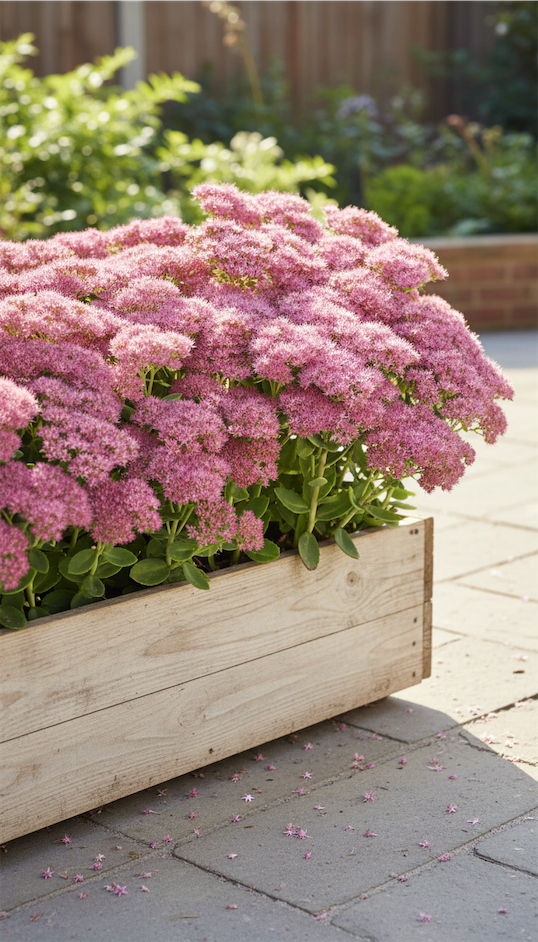
Tall sedums, now more correctly named Hylotelephium, are among the best plants for winter structure in a small garden. Varieties such as ‘Herbstfreude’ (often sold as ‘Autumn Joy’) produce broad, flat flowerheads that turn a deep rust-brown and stay upright for months.
Their flat tops catch frost and light snow, which gives them a strong, clear outline on cold mornings.
The dead stems also offer a little protection to the new growth that forms at the base during late winter. We recommend leaving the stems standing until early spring, when you can see small, fleshy rosettes of new leaves at soil level. Then cutting the old stems down just above them.
If your sedums have flopped open in the middle, this is usually a sign of soil that is too rich. So in spring we suggest dividing the clump or giving it a lighter position rather than adding more feed.
5. Keep Architectural Seedheads Such as Sea Holly, Globe Thistle and Teasel
Some plants are worth growing almost as much for their dead seedheads as for their flowers.
Sea holly (Eryngium), globe thistle (Echinops), teasel (Dipsacus) and Phlomis russeliana, with its stacked whorls of seed cases along each stem, all dry into firm, sculptural shapes that last well into winter.
These strong outlines give an autumn garden a sense of order even when most of the colour has gone.
Teasel in particular is valued by goldfinches, whose narrow beaks can reach the seeds inside the spiky heads.
We recommend leaving these plants standing until they start to lean or break, which in a sheltered spot may not happen until February.
Teasel is a biennial, meaning it grows leaves in its first year, flowers in its second and then dies, so we suggest letting a few seeds fall if you want a steady supply of plants in future years.
6. Leave Hollow Stems Standing for Overwintering Insects
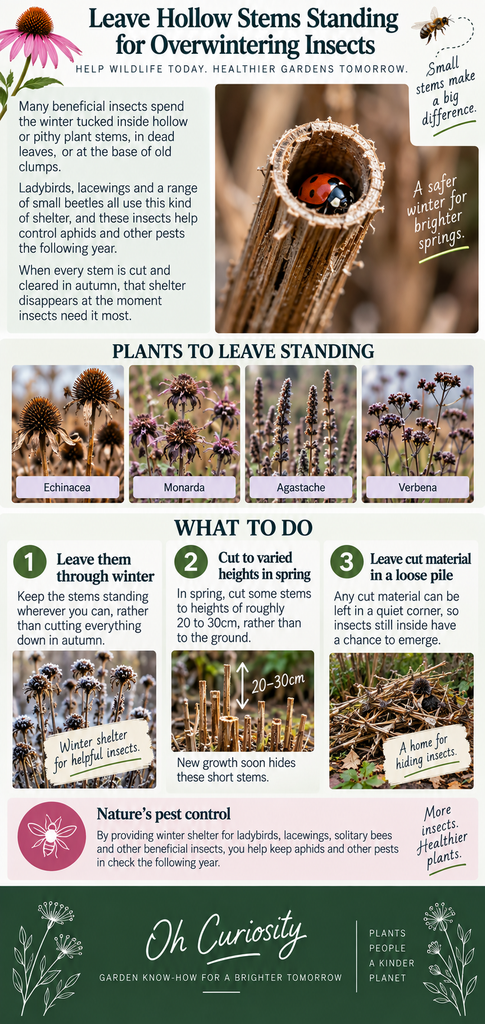
Many beneficial insects spend the winter tucked inside hollow or pithy plant stems, in dead leaves, or at the base of old clumps.
Ladybirds, lacewings and a range of small beetles all use this kind of shelter, and these insects help control aphids and other pests the following year.
When every stem is cut and cleared in autumn, that shelter disappears at the moment insects need it most.
We recommend leaving the stems of plants such as Echinacea, Monarda, Agastache and Verbena standing through winter wherever you can.
In spring, rather than cutting everything to the ground, we suggest cutting some stems to varied heights of roughly 20 to 30cm.
New growth soon hides these short stems, and the hollow ends can then be used by stem-nesting solitary bees.
Any cut material can be left in a loose pile in a quiet corner, so insects still inside have a chance to emerge.
7. Hold Off on Pruning Penstemons Until Spring
Penstemons are a good example of a plant that should not be cut back in autumn, even though they often look untidy by October.
The old stems and leaves act as a light shield over the base of the plant, protecting the crown from frost and cold, wet weather.
Penstemons are generally hardy, but they are more likely to be lost over winter if they are cut hard in autumn and left exposed.
We recommend waiting until mid-spring, when fresh shoots appear at the base, and then cutting the old stems back to just above this new growth.
This timing lets you see exactly where the healthy growth is, so you do not cut too low.
In the meantime, if the plants look messy, we suggest removing only the dead flower spikes, which improves their appearance without taking away the protective foliage.
8. Leave Woody-Based and Borderline Perennials Uncut

Some perennials form a woody base or sit on the edge of full hardiness, and for these a spring prune is much safer than an autumn one.
This group includes shrubby salvias such as ‘Hot Lips’, Russian sage (Perovskia), Verbena bonariensis and hardy fuchsias.
Cutting these plants in autumn encourages soft new shoots during a mild spell, and those shoots are then easily damaged by the next frost.
The old stems also shelter the lower buds that will produce next year’s growth.
We recommend leaving them standing through winter and pruning in spring once the risk of hard frost has passed and you can see buds swelling low on the stems.
In milder, coastal gardens these plants often come through winter with little damage, but in colder or more exposed spots, the old top growth can make the difference between a plant that survives and one that does not.
9. Leave Spent Flowerheads on Mophead Hydrangeas
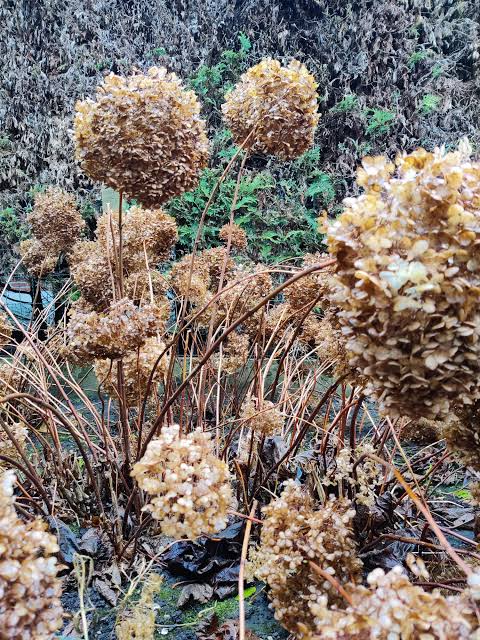
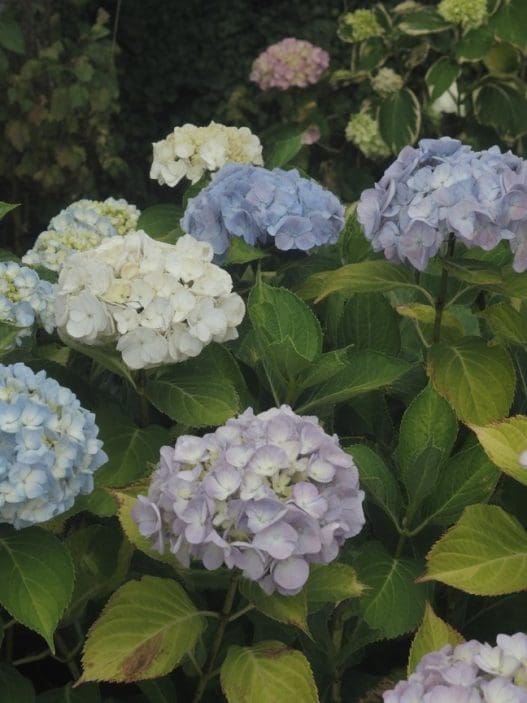
Mophead and lacecap hydrangeas (Hydrangea macrophylla) should keep their faded flowerheads over winter.
These papery heads look attractive as they fade to pink, green or bronze, but they also have a practical job: they shelter the flower buds that sit just below them on the stem.
These hydrangeas flower on growth made the previous year, so if those buds are damaged by frost, or cut off by an autumn prune, the plant may produce plenty of leaves but very few flowers the following summer.
We recommend leaving the old flowerheads in place until spring, then cutting each one back to the first pair of plump, healthy buds below it.
This is different from panicle hydrangeas (Hydrangea paniculata), which flower on new growth and can be cut back harder in late winter or early spring without losing blooms.
10. Let a Prairie Garden Stand All Winter and Cut It in One Pass
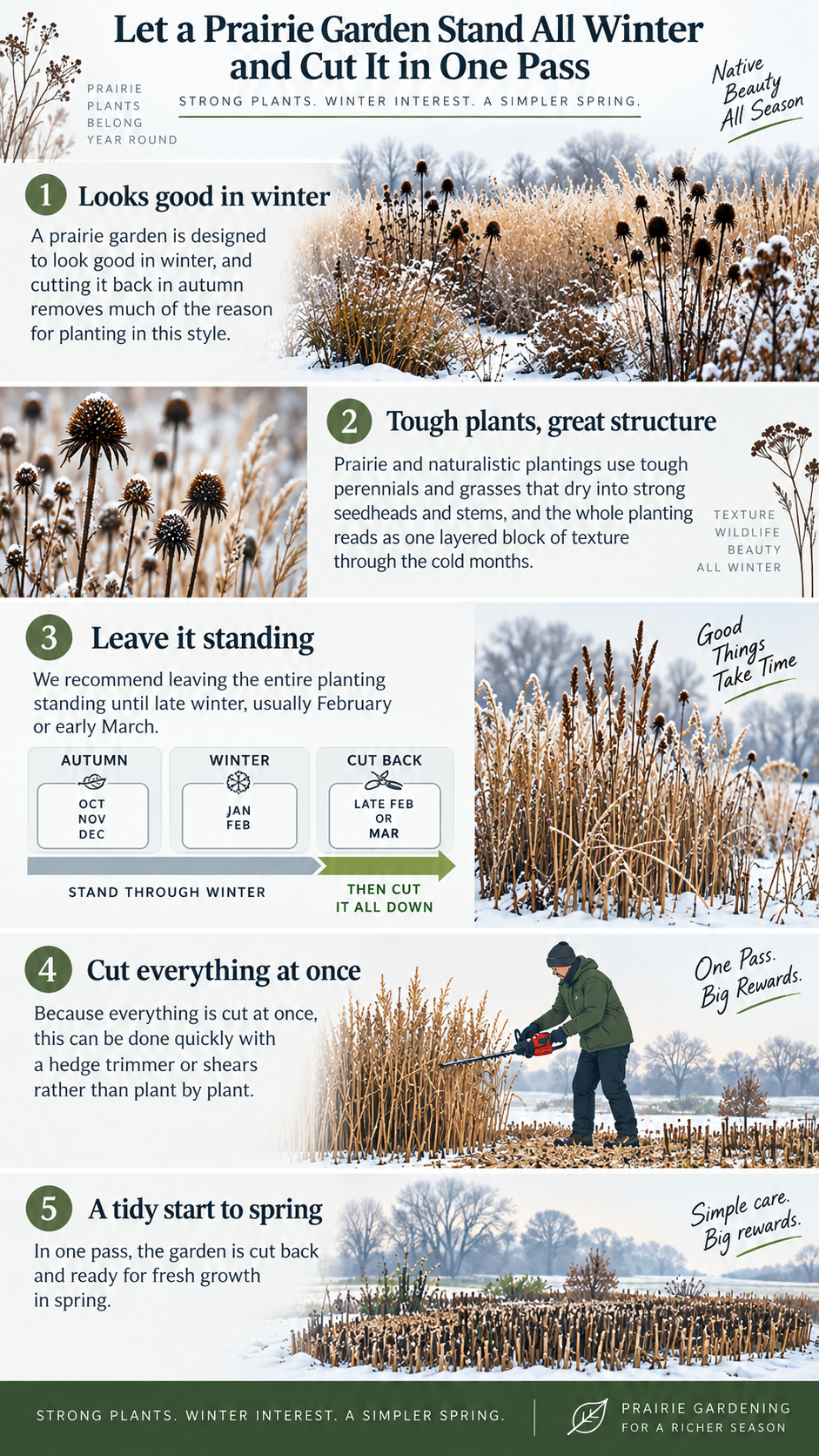
A prairie garden is designed to look good in winter, and cutting it back in autumn removes much of the reason for planting in this style.
Prairie and naturalistic plantings use tough perennials and grasses that dry into strong seedheads and stems, and the whole planting reads as one layered block of texture through the cold months.
We recommend leaving the entire planting standing until late winter, usually February or early March, and then cutting it all down in a single session.
Because everything is cut at once, this can be done quickly with a hedge trimmer or shears rather than plant by plant.
Many gardeners chop the cut material into short pieces and scatter it back over the border as a light mulch, which returns organic matter to the soil.
The key is to finish this job before new growth gets going, so the fresh shoots are not damaged.
11. Leave Fallen Leaves in Borders but Clear Them From Lawns and Paths
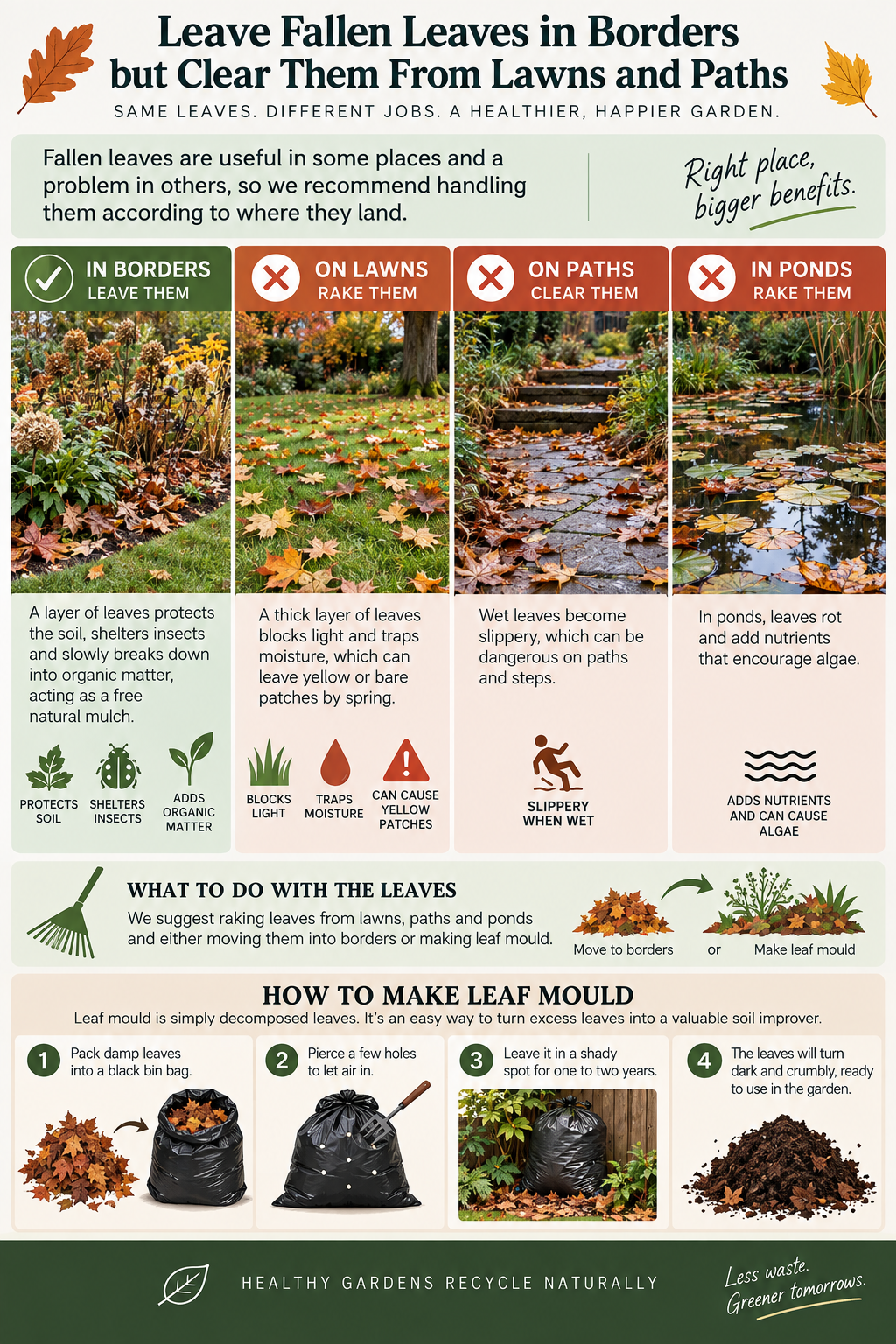
Fallen leaves are useful in some places and a problem in others, so we recommend handling them according to where they land.
In borders and under shrubs, a layer of leaves protects the soil, shelters insects and slowly breaks down into organic matter, acting as a free natural mulch.
On lawns, however, a thick layer of leaves blocks light and traps moisture, which can leave yellow or bare patches by spring.
On paths and steps, wet leaves become slippery, and in ponds they rot and add nutrients that encourage algae.
We suggest raking leaves from lawns, paths and ponds and either moving them into borders or making leaf mould.
Leaf mould is simply decomposed leaves; to make it, pack damp leaves into a black bin bag, pierce a few holes, and leave it in a shady spot for one to two years until the leaves turn dark and crumbly.
12. Cut Back Peony Foliage and Remove It From the Garden

Herbaceous peonies are one plant we recommend cutting back fully in autumn. Once the leaves yellow and brown, cut all stems down to ground level and take the foliage away.
Peonies are prone to a fungal disease called peony wilt, a type of grey mould also known as botrytis, which causes stems to blacken and collapse and flower buds to turn brown before they open.
The fungus can survive the winter on old leaves and stems, then infect the new shoots in spring.
Removing the foliage breaks that cycle. We suggest disposing of it in your green waste bin rather than your home compost heap, since most garden compost heaps do not get hot enough to kill fungal spores.
Note that this advice applies to herbaceous peonies only; tree peonies have woody stems that should be left in place.
13. Clear Collapsing Hostas and Daylilies
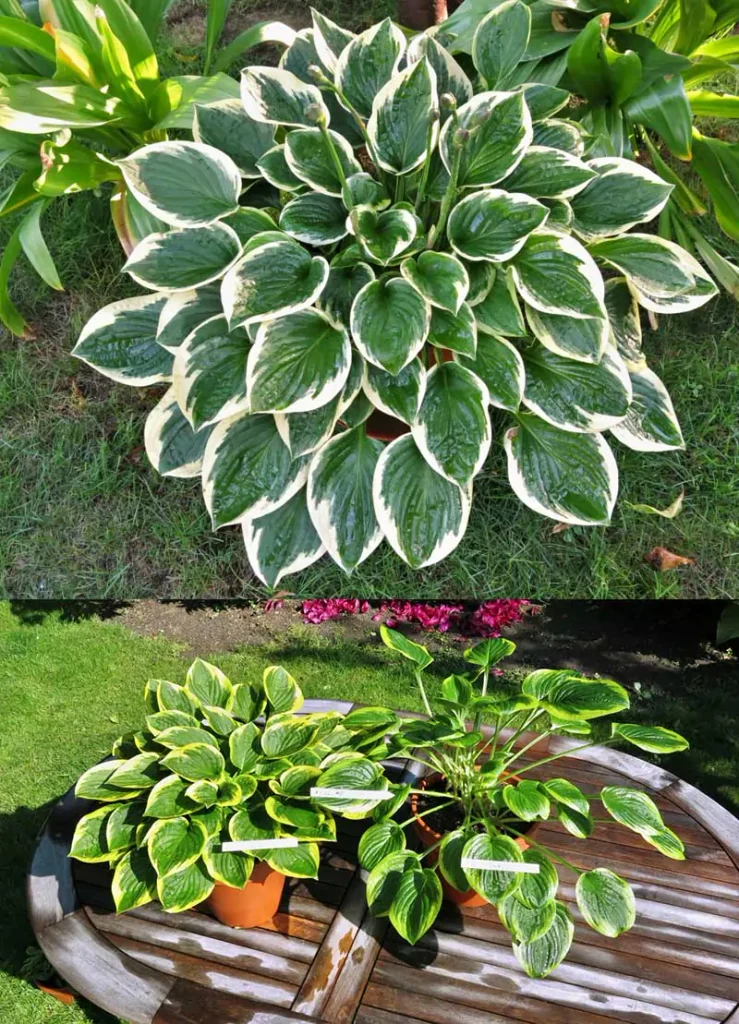
Some perennials do not die back neatly but collapse into a wet, slimy mass after the first frosts.
Hostas are the best-known example, and daylilies (Hemerocallis) behave in a similar way.
This rotting foliage offers no winter structure and makes an ideal hiding place for slugs and snails, which also lay eggs in damp, sheltered material at soil level.
Since hostas are one of the plants slugs damage most in spring, leaving that cover in place close to the crowns can make the problem worse.
We recommend clearing hosta and daylily foliage once it has collapsed, pulling it away gently or cutting it at the base.
The material can go on the compost heap if it is healthy.
Clearing these plants also lets you see where they are, so you can avoid digging into them by accident when you plant bulbs or add garden mulch later in the season.
14. Cut Hardy Geraniums and Catmint Down to the Ground
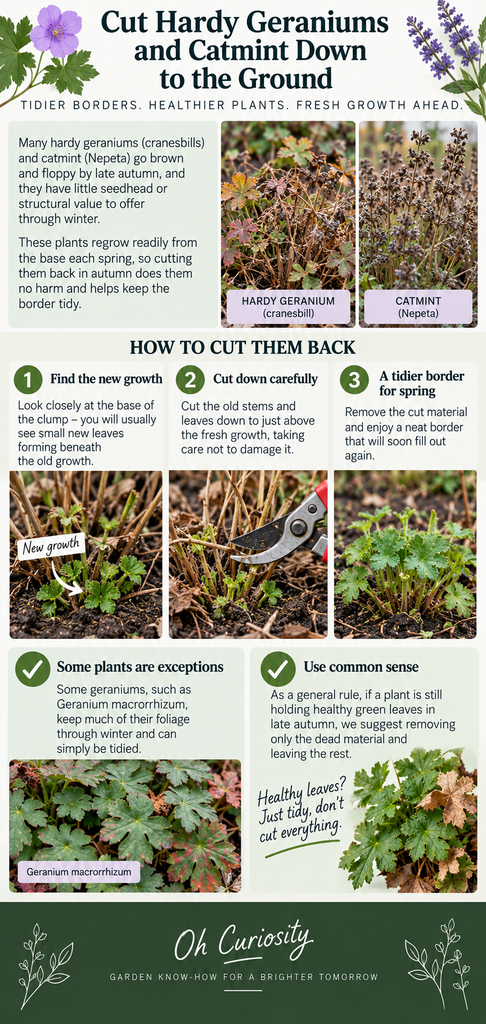
Many hardy geraniums (cranesbills) and catmint (Nepeta) go brown and floppy by late autumn, and they have little seedhead or structural value to offer through winter.
These plants regrow readily from the base each spring, so cutting them back in autumn does them no harm and helps keep the border tidy. In most cases, if you look closely at the base of the clump, you will already see small new leaves forming beneath the old growth.
We recommend cutting the old stems and leaves down to just above this fresh growth, taking care not to damage it.
There are a few exceptions: some geraniums, such as Geranium macrorrhizum, keep much of their foliage through winter and can simply be tidied.
As a general rule, if a plant is still holding healthy green leaves in late autumn, we suggest removing only the dead material and leaving the rest.
15. Remove Diseased Leaves From Roses and Other Shrubs

Where plants have suffered from fungal leaf diseases during the year, clearing the fallen leaves is a sensible part of autumn garden care.
Rose black spot is the most common example: the fungus causes dark spots and early leaf drop, and it can survive the winter on fallen leaves and infected stems.
Rain splash in spring can then carry spores back onto the new foliage. Collecting infected leaves from under roses helps reduce the amount of fungus close to the plant, although it will not remove the problem completely.
We recommend raking up these leaves and putting them in your green waste bin rather than your compost heap or leaf mould bags.
The same approach works for other plants that showed obvious leaf disease this year.
Healthy leaves from unaffected plants, by contrast, can safely stay in borders or be turned into leaf mould.
16. Deadhead Plants That Self-Seed Too Freely

Some plants spread their seed so generously that, if left alone, they fill gaps, paths and gravel with seedlings.
Lady’s mantle (Alchemilla mollis), aquilegia and Mexican fleabane (Erigeron karvinskianus) are common examples.
Whether this is welcome depends on your garden: in a relaxed cottage-style planting it can be useful, but in a more controlled border it creates a lot of weeding the following year.
We recommend deciding plant by plant.
Where you want fewer seedlings, cut off the seedheads before they ripen and drop, ideally in late summer or early autumn.
Where you are happy for a plant to spread a little, leave a few seedheads and remove the rest.
This is a small trade-off, since some seed that feeds birds will be lost, so we suggest focusing this job only on the plants that genuinely cause you trouble.
17. Reduce Tall Roses by a Third to Prevent Wind Rock
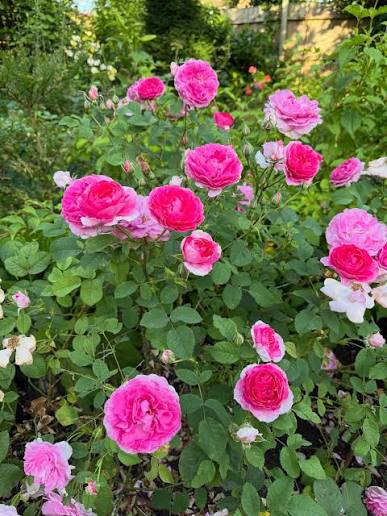
Tall shrub and bush roses can suffer from wind rock over winter. Wind rock happens when strong winds push a tall plant back and forth, loosening its roots in the soil and sometimes leaving a hollow around the base of the stem where water can collect and freeze.
This is a particular concern in exposed or coastal gardens with frequent winter storms. We recommend reducing the height of tall roses by about a third in late autumn.
This is not the main annual prune, which is best done in late winter or early spring, but a simple step to lower the plant and reduce how much it catches the wind.
Cut just above an outward-facing bud where you can, and remove any long, whippy stems that are clearly vulnerable.
Climbing roses should be tied in securely to their supports instead of being cut back.
18. Remove Old Hellebore Leaves in Early Winter
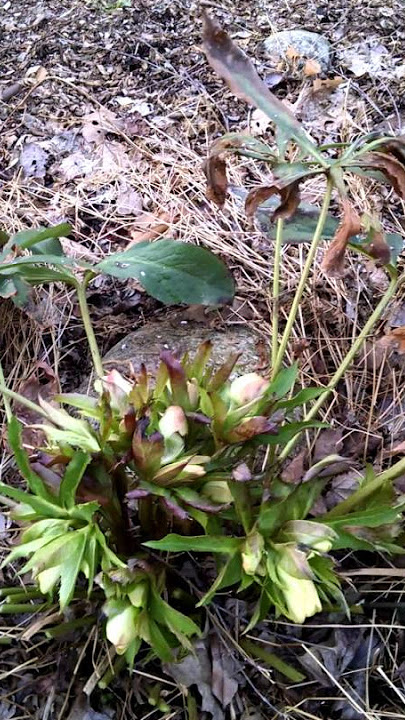
Hellebores are one of the few plants that are best tidied in early winter rather than autumn or spring.
The common garden hellebore (Helleborus × hybridus) produces its flowers in late winter, and the old leaves from the previous year often become tatty and spotted by then.
These leaves can carry hellebore leaf spot, a fungal disease that causes dark blotches and can spread to new foliage and flowers.
We recommend cutting the old leaves off at the base in November or December, before the flower buds push up through the soil.
This helps limit disease and also means the flowers are clearly visible rather than hidden under a mass of leaves.
Take care not to cut the emerging flower stems, which can look similar at first.
Stemmed types, such as Helleborus foetidus and Helleborus argutifolius, grow differently and should not be treated this way.
19. Cut and Clear a Meadow Garden Before Winter

A meadow garden is managed very differently from a border, and the way it is cut has a direct effect on how well the wildflowers perform.
Most wildflowers that grow in meadows thrive on poor, low-fertility soil, while grasses and coarse weeds thrive when soil is rich.
The main cut of a perennial meadow usually takes place from late summer into early autumn, once most of the flowers have set seed.
We recommend leaving the cut material lying on the ground for a few days so seeds can drop, then raking it all up and removing it.
Leaving the clippings to rot would feed the soil and gradually favour grass over flowers.
A second mow in autumn, again with the clippings removed, keeps the meadow short going into winter.
For this reason, we do not recommend adding garden mulch or fertiliser to a meadow at any time.
20. Apply Garden Mulch at the Right Time and in the Right Way
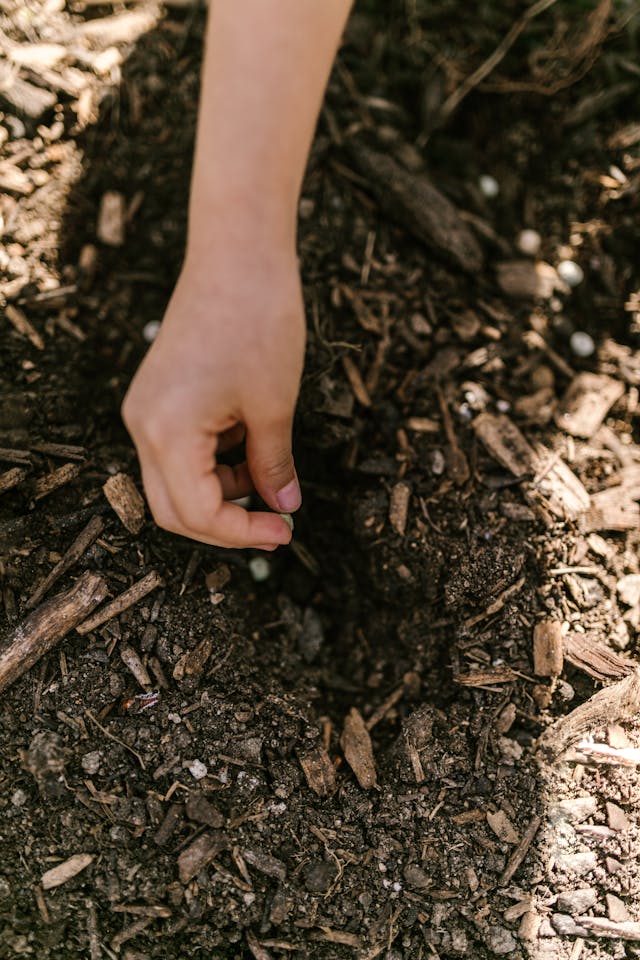
Autumn is a good time to mulch borders, but only once the other jobs are done and the conditions are right.
Garden mulch is any layer of material spread over the soil surface, such as garden compost, well-rotted manure, leaf mould or bark chips.
It helps protect soil structure from heavy rain, reduces weed growth, and, in the case of compost and manure, adds organic matter as it is worked into the soil by worms.
We recommend mulching after you have cleared weeds and cut back the plants that need it, while the soil is still moist and not frozen.
Mulching over dry soil can trap the dryness in, and mulching over frozen soil can keep it cold longer.
We suggest a layer of about 5 to 7cm, kept a few centimetres away from the stems of shrubs and the crowns of perennials, since mulch piled against them can hold moisture and cause rot.