




These fall farm stand ideas are seasonal, quick to prepare, and work well for beginners who want to make the most of the busiest few months of the year for roadside selling.
This list includes profitable things to sell at a farmers market in fall, beginner-friendly autumn market ideas, and realistic easy fall products to sell without needing expensive equipment or a commercial kitchen.
You will also find shelf stable fall farm stand items, baked goods, produce ideas, and handmade fall crafts to sell at weekend markets and roadside setups.
When Should You Switch Your Stand Over To Fall Stock?
Most stands change over too late. Shoppers start buying fall products well before the weather actually turns, usually from the first week of September, and pumpkin and decor sales climb steeply through late September and October.
The safest approach is to overlap. Keep late summer produce on one end of the table while you introduce a small fall section on the other, then expand that section each week as sales shift.
There are really three selling waves in autumn, and they need different stock:
- Early fall (September): decorating products, mums, early apples, squash, spiced baked goods
- Peak fall (late September into October): pumpkins, cider, porch bundles, Halloween-adjacent products
- Late fall (November): Thanksgiving baking supplies, pie kits, soup mixes, gift-style jars
Planning by wave also stops you overbuying. Pumpkins and mums lose value fast once the first week of November arrives, so most sellers order those to sell out rather than to have plenty left over.
Should A Fall Stand Stick To One Niche?
The same rule applies in autumn as the rest of the year. A stand looks more professional when it has one main category with supporting products that naturally sit alongside it.
Fall makes this easier than any other season because the products pair themselves. Someone buying pumpkins is already thinking about their porch, and someone buying apples is already thinking about baking.
Here are some fall pairings that work well together:
| Main Products | Supporting Products |
|---|---|
| Pumpkins and gourds | Cornstalks, straw bales, mums, porch bundles, pumpkin carving kits |
| Apples | Cider, caramel sauce, apple butter, pie kits, cinnamon sugar, cider donuts |
| Mums and potted plants | Ornamental kale, pumpkins, dried bouquets, wreaths, decorative baskets |
| Winter squash | Soup mix jars, herb blends, recipe cards, bread, honey |
| Spiced baked goods | Cider, caramel sauce, coffee beans, mulling spice kits, mini pies |
| Preserves and jars | Bread, crackers, honey, cheese boards, gift bags, ribbon and tags |
| Handmade fall decor | Wreaths, dried corn hangers, candles, wooden signs, knitted goods |
| Thanksgiving baking | Pie kits, pastry, spice blends, pie dishes, recipe cards, cranberry sauce |
20 Fall Farm Stand Ideas To Sell
Pie Pumpkins And Ornamental Gourds
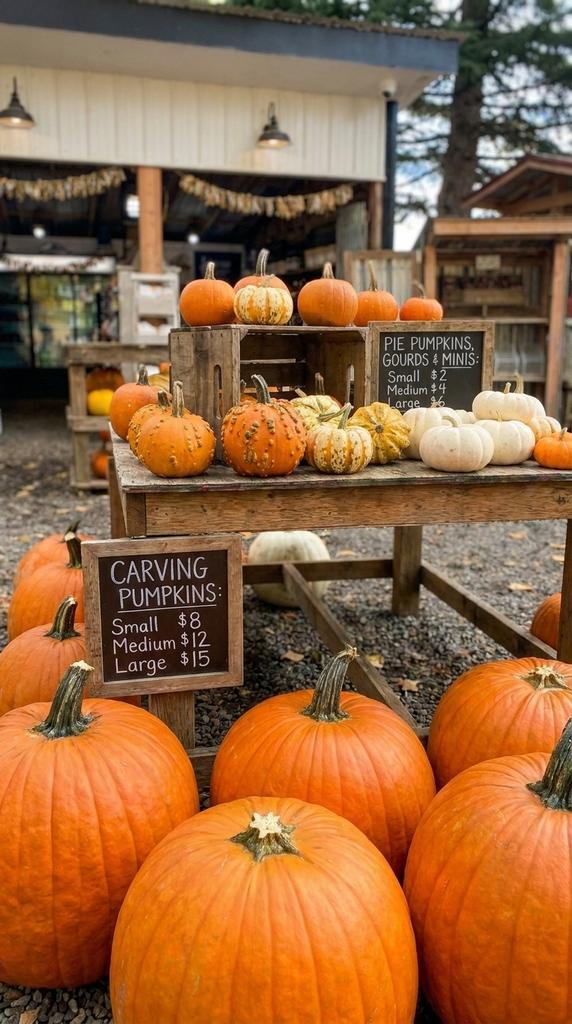
Pumpkins are the anchor product of any autumn stand, and most shoppers buy more than one.
Sell them in two clear groups. Carving pumpkins sit at the front where they are visible from the road, and smaller pie pumpkins, warty gourds, white pumpkins and mini pumpkins sit on the table where people browse.
The small ones matter more than people expect. Mini pumpkins and odd-coloured gourds are the impulse purchase that turns a single carving pumpkin sale into a full basket, and they cost very little to grow or buy in.
Price by size band rather than by weight if you want faster sales. A simple sign reading small, medium and large removes hesitation and keeps queues moving on busy weekends.
Stacking pumpkins on straw bales, wooden crates and ladder shelves adds height to the display and makes a small stand look far fuller from a distance.
Supporting products: Cornstalks, straw bales, mums, carving kits, porch bundles, dried corn, decorative baskets.
Apple Cider Donuts
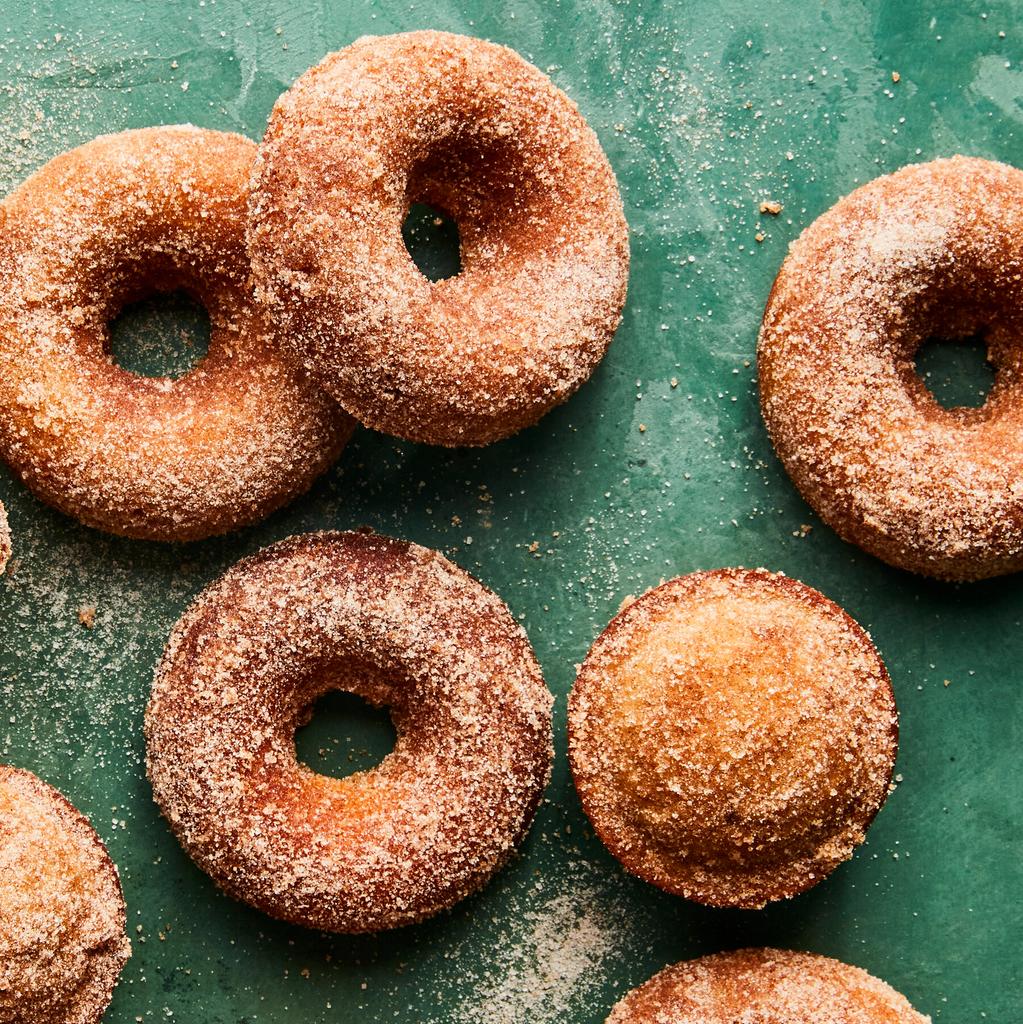
Cider donuts are one of the strongest fall sellers because they are tied to the season and hard to find the rest of the year.
They work best made fresh on site or brought in warm, since the smell does most of the selling. If you cannot fry on site, a cinnamon sugar baked version in a donut pan still sells well.
Sell in sixes and dozens rather than singles where you can. Boxed half dozens raise your average sale and look more giftable than a paper bag.
Keep them under a cloche or in a covered warmer so they stay soft and look cared for, and set the price list high enough on the stand to be readable from the queue.
Supporting products: Fresh cider, coffee, caramel sauce, mini pies, spiced nuts, hot chocolate.
Potted Mums
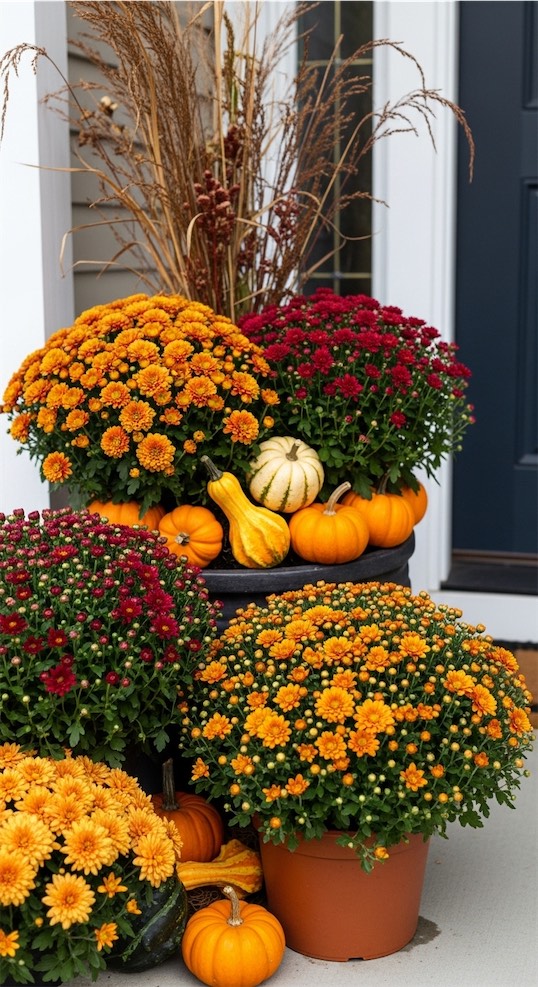
Mums are the fastest-moving plant of the season and one of the few products where people routinely buy three or more at once.
Bronze, burgundy, rust and cream tend to outsell bright yellow because they match the porch styling most shoppers are copying from Pinterest.
Group them in threes on the ground in front of the stand with a price sign, rather than lining them up in a single row. Trios sell trios.
Buying in tight-budded plants rather than fully open ones gives customers a longer display at home, which is worth mentioning on your signage because it justifies the price.
If you also sell ornamental kale, cabbage or pansies, keep them right beside the mums so people can build their own porch grouping. There are more planting combinations in our guide to fall window box ideas.
Supporting products: Pumpkins, ornamental kale, pansies, decorative pots, straw bales, cornstalks.
Fresh Apple Cider
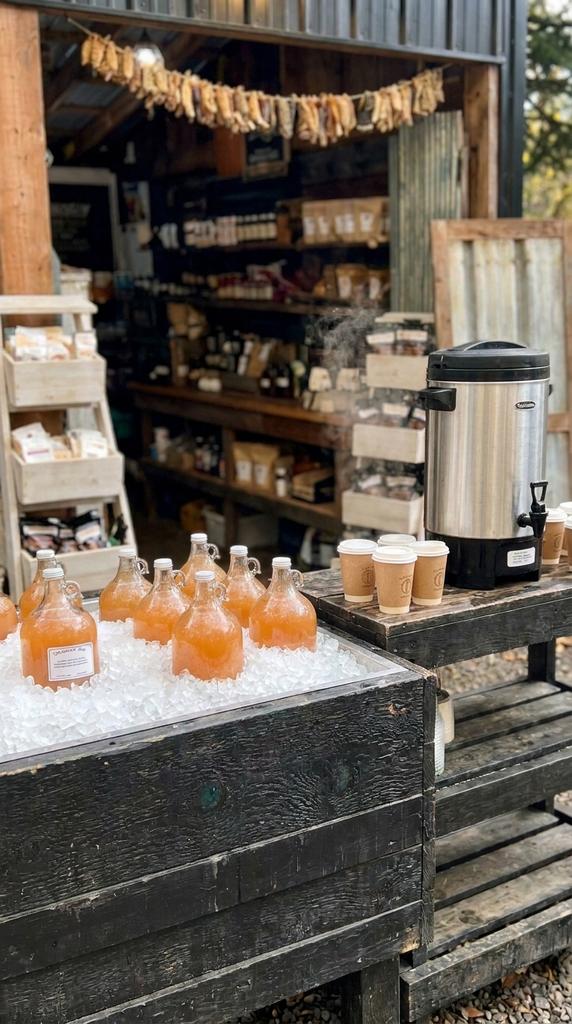
Cider brings people to a stand and keeps them there long enough to look at everything else.
Sell it cold by the jug for taking home and hot by the cup on colder mornings. The hot cup is what stops foot traffic, and the jug is where the profit is.
Before you sell cider, check your state or county rules. Unpasteurised cider is regulated in most places and usually needs either a warning label or pasteurisation, and rules differ by state, so confirm with your local health department rather than assuming.
A slow cooker of hot cider with cinnamon sticks floating on top is cheap to set up and doubles as advertising, because the steam and smell carry further than any sign.
Supporting products: Cider donuts, mulling spice kits, caramel apples, spiced nuts, apple butter, mugs.
Caramel Apples
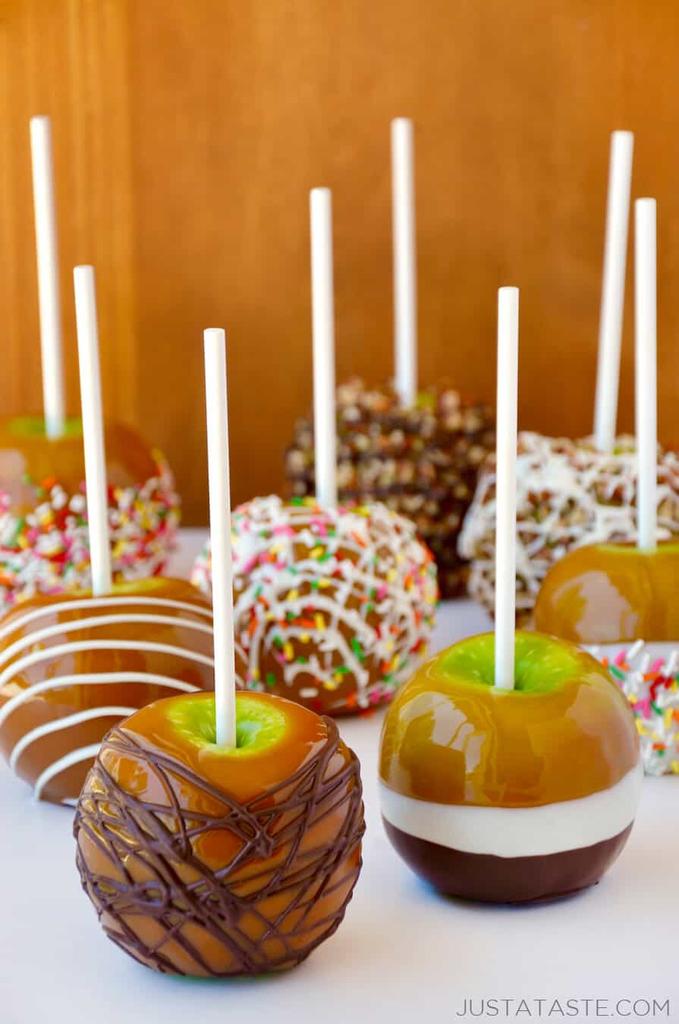
Caramel apples look like far more work than they are, and they photograph well enough that people buy them just to hold.
Dipped toppings are what lift the price. Chopped pecans, crushed pretzel, mini chocolate chips and cinnamon sugar all cost pennies per apple and let you charge a premium tier price.
Granny Smith apples hold up best because the tartness cuts the sweetness and the skin takes caramel cleanly.
Set them on parchment squares in a single row on a tiered stand rather than crowding them, and keep them out of direct sun so the caramel does not slide.
Slicing one in half on a display plate shows the caramel layer, which sells the rest of the tray.
Supporting products: Cider, donuts, caramel sauce jars, spiced nuts, cookies, hot chocolate.
Apple Butter And Pumpkin Butter
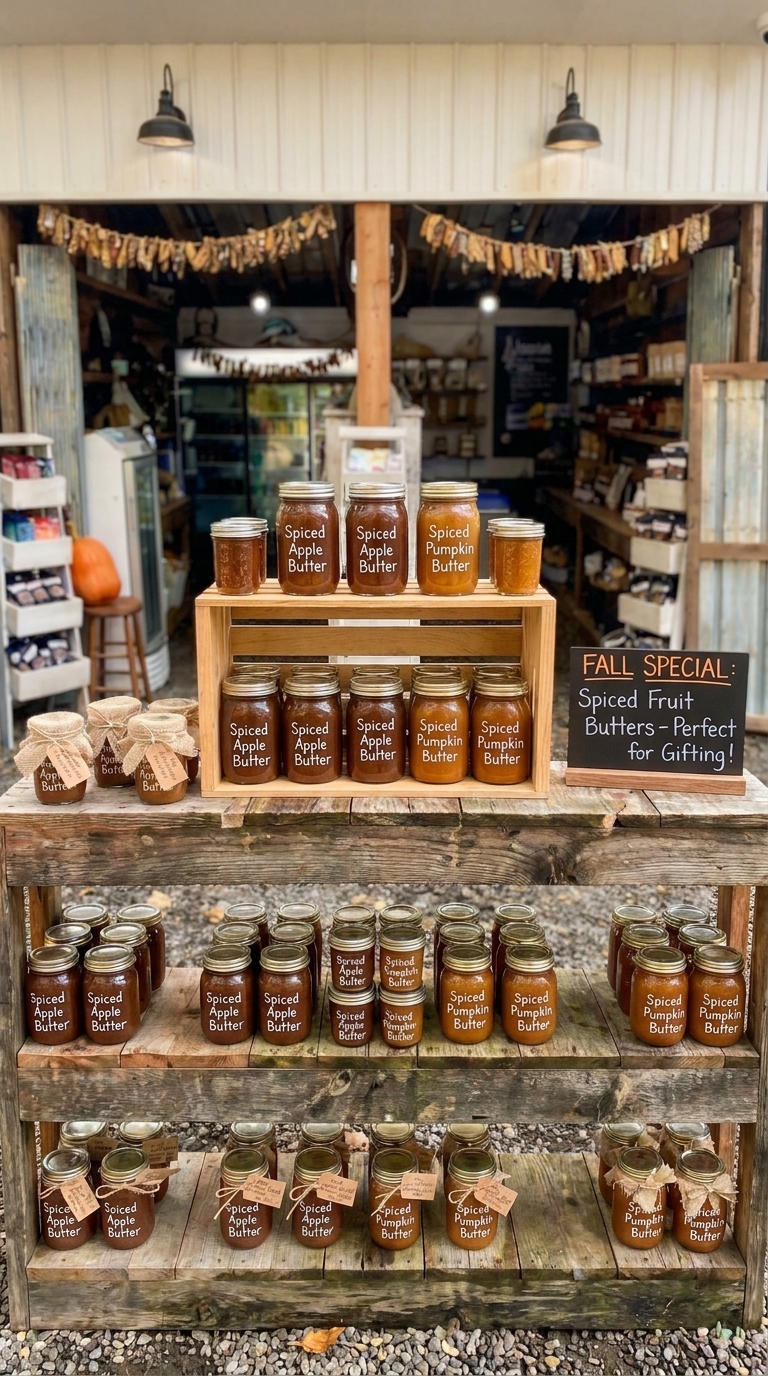
Spiced fruit butters are one of the best value products on a fall stand because the ingredients are cheap, the jars store well, and they feel like a gift.
Apple butter is the reliable seller, with pumpkin butter and spiced pear as the products that make people stop and read the label.
A note on safety that matters here. Apple butter is high enough in acid to be safely water bath canned, but pumpkin butter is not, and the USDA does not recommend home canning pumpkin butter at all. Sell pumpkin butter refrigerated and labelled for short term use, or leave it off the list.
Small jars outsell large ones at markets because people are buying a treat rather than a pantry staple, so a four ounce jar at an easy price point will move faster than an eight ounce jar.
Put out a plate of sliced bread or crackers with a spreader. Tasting converts this product better than almost anything else you can sell.
Supporting products: Fresh bread, biscuits, honey, tea blends, cheese, gift bags and tags.
Cornstalks, Straw Bales And Porch Bundles
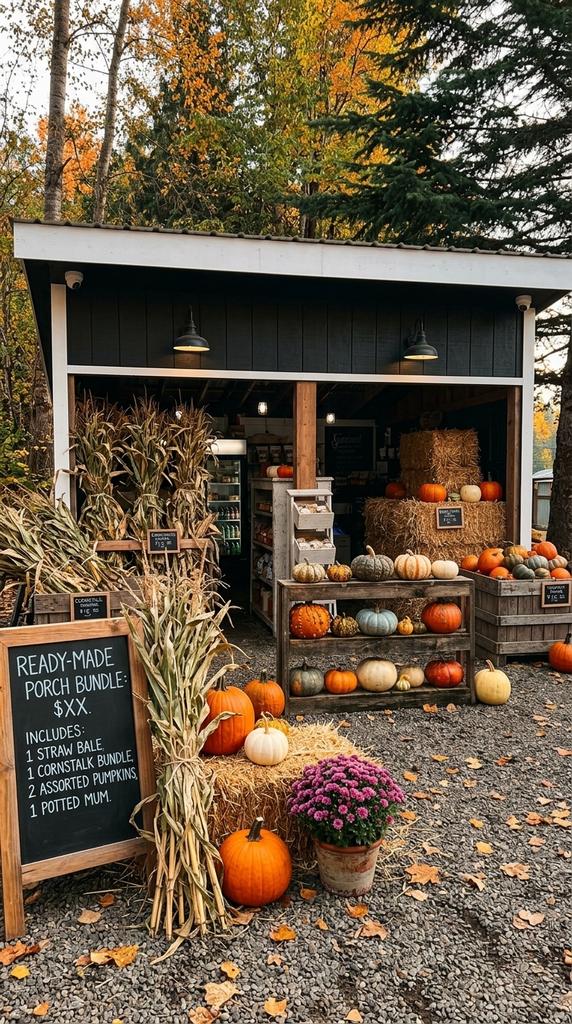
These are the bulk items that turn a pumpkin sale into a much larger one.
Sell cornstalks in tied bundles of three to five, and straw bales individually. Both have very low cost per unit and take almost no preparation.
The real product here is the bundle. Offer a ready-made porch set at a single price, for example one bale, one cornstalk bundle, two pumpkins and a mum, and a lot of customers will take it rather than piece their own together.
Build one complete display set at the edge of your stand so people can see what the bundle looks like assembled. That display is the sales pitch.
Keep bales off bare ground on a pallet so the bottoms stay dry, and have twine on hand because people will ask you to tie things for the car.
Supporting products: Pumpkins, mums, dried corn, wooden signs, wreaths, scarecrow kits.
Mulling Spice Kits
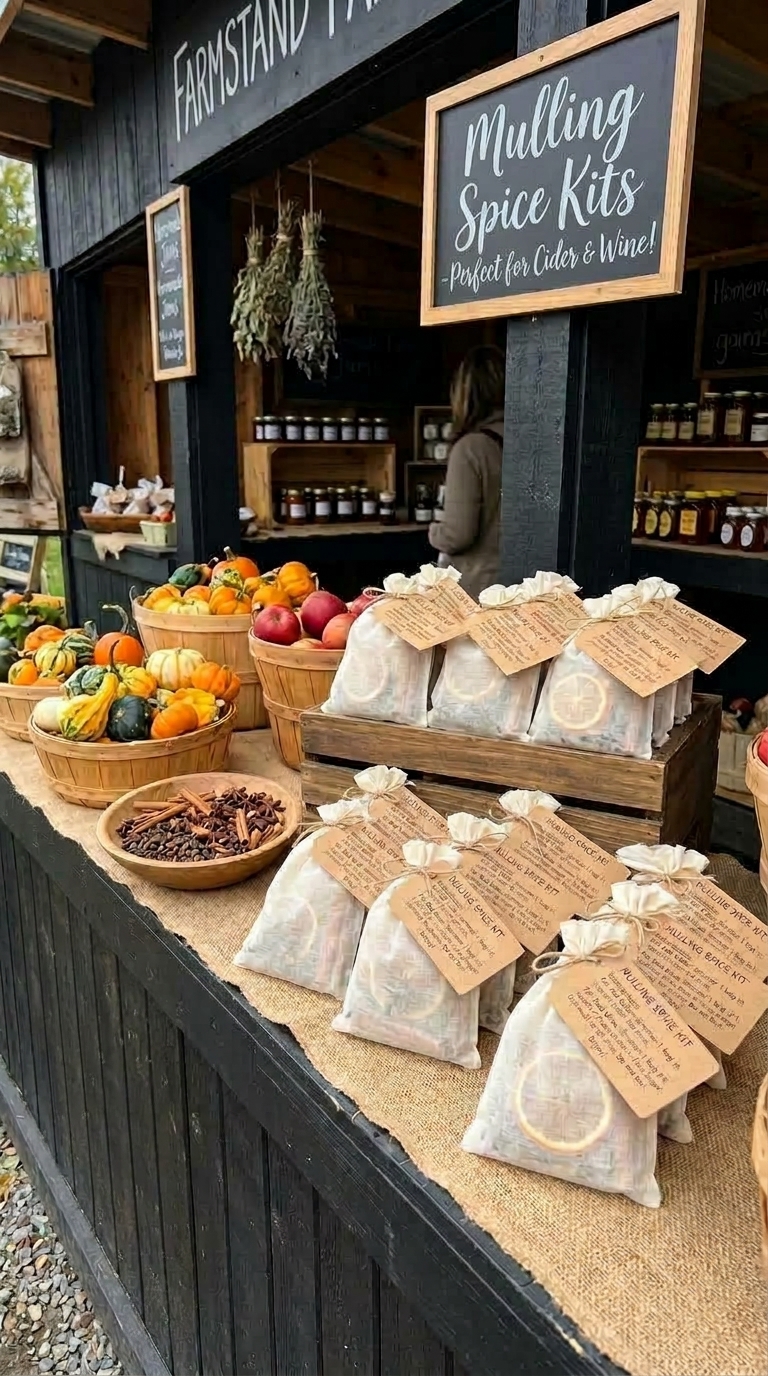
Mulling spice sachets are close to pure margin and weigh almost nothing to transport.
A mix of cinnamon sticks, cloves, star anise, allspice and dried orange peel in a muslin bag looks far more expensive than it costs to assemble.
Attach a tag with instructions for both cider and red wine. Giving two uses makes the product feel worth buying and answers the question people are silently asking.
These sell hardest in November and December, so keep a supply back for late season markets when shoppers are buying gifts rather than groceries.
Sold in threes with a ribbon, they become an easy hostess gift, which is a higher price point for the same product.
Supporting products: Cider, honey, tea blends, mugs, caramel sauce, gift bags.
Pumpkin Bread And Spiced Loaf Cakes
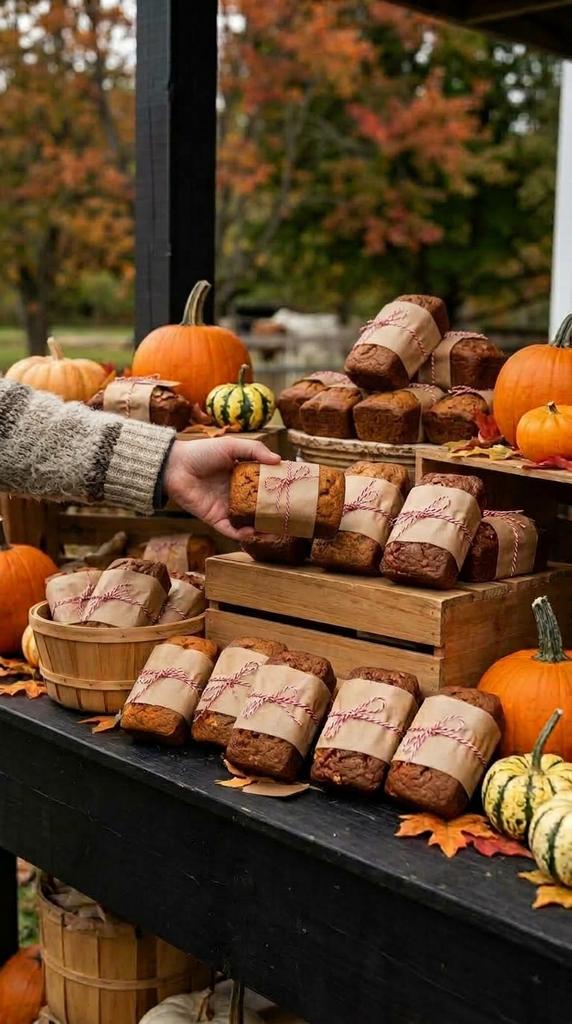
Spiced loaves are the baked good that says autumn without any decoration.
Pumpkin, apple cinnamon, spiced pear, maple pecan and gingerbread all work, and all use the same basic method with different additions.
Mini loaves sell better than full ones at markets because the price feels like a treat rather than a commitment, and they travel home in one piece.
Wrapping in parchment with baker’s twine and a handwritten flavour label costs very little and makes the loaf look bakery made.
Cut one loaf into sample pieces. Spiced cakes are hard to judge by eye, so a taste does the work your sign cannot.
Supporting products: Coffee beans, cider, caramel sauce, honey, hot chocolate, butter.
Winter Squash Varieties
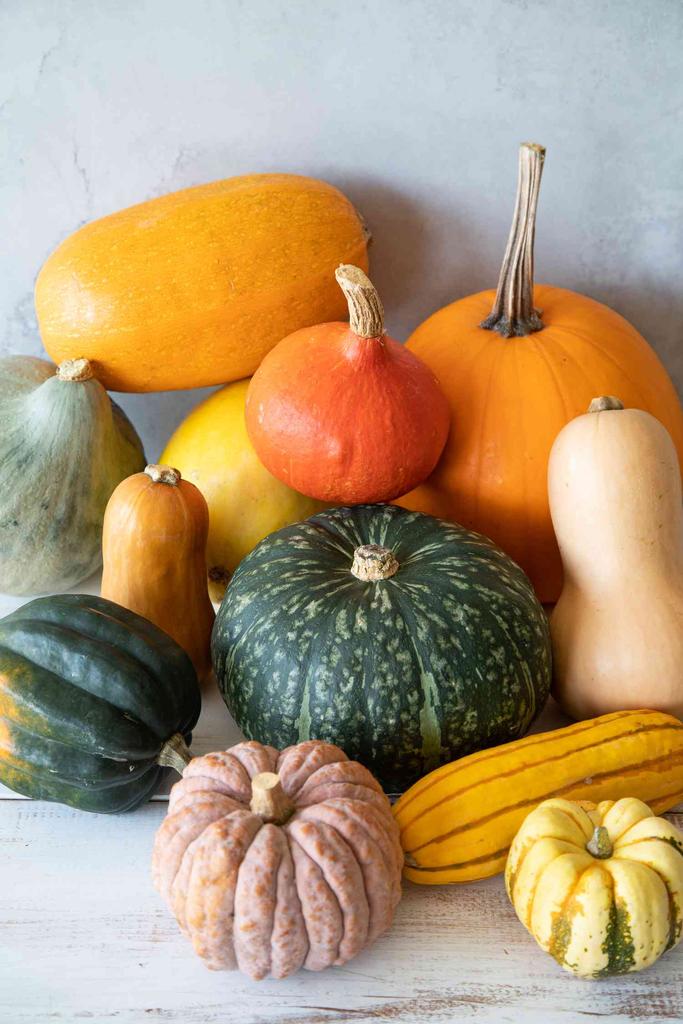
Squash is the quiet earner on a fall stand. It is not exciting, but it stores for months, sells steadily, and costs you nothing in waste.
Butternut, acorn, delicata, spaghetti squash and red kuri each look different enough that a mixed display reads as abundance rather than repetition.
Most customers do not know what to do with anything beyond butternut, so a small card beside each variety with one cooking suggestion will noticeably increase how many you sell.
Because squash keeps well in a cool dry place, anything unsold is simply stock for next weekend, which makes it one of the lowest risk products you can put on the table.
Selling by the piece rather than by weight speeds up busy Saturdays and makes pricing easier to sign.
Supporting products: Soup mix jars, herb blends, recipe cards, bread, honey, seasoning mixes.
Soup Mix Jars
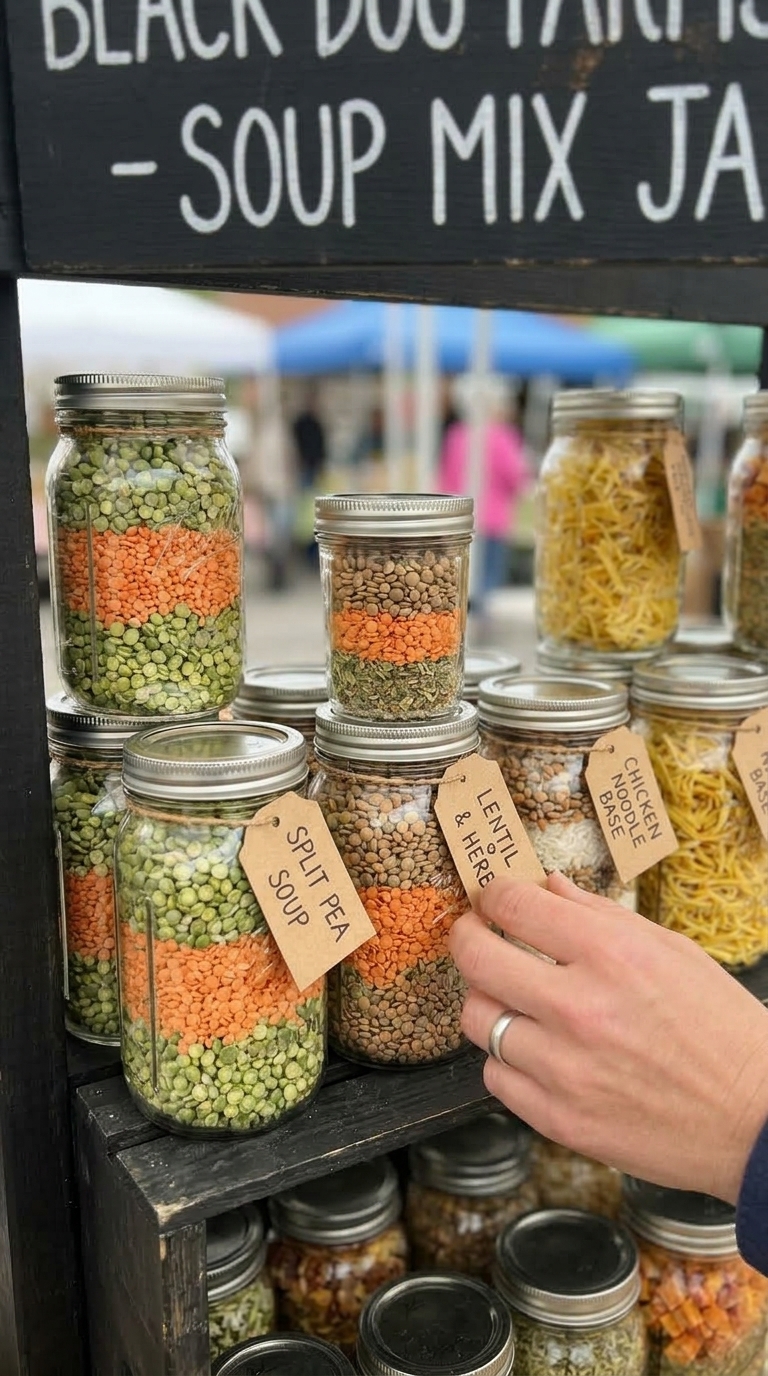
Layered dry soup mixes in mason jars are cheap to make, shelf stable, and look good stacked.
Split pea, lentil and herb, chicken noodle base, and a spiced butternut blend all work with pantry ingredients you can buy in bulk.
The layers are the selling point, so pack them tightly and keep the colours contrasting. A jar that has settled into one beige mass will not sell.
Tie the instructions to the lid rather than putting them on the back label. Customers need to see how simple it is before they decide.
These pair naturally with squash and bread, so put them physically beside those products rather than in a separate section.
Supporting products: Winter squash, bread, herb blends, honey, crackers, dried beans.
Dried Flower And Sunflower Bouquets
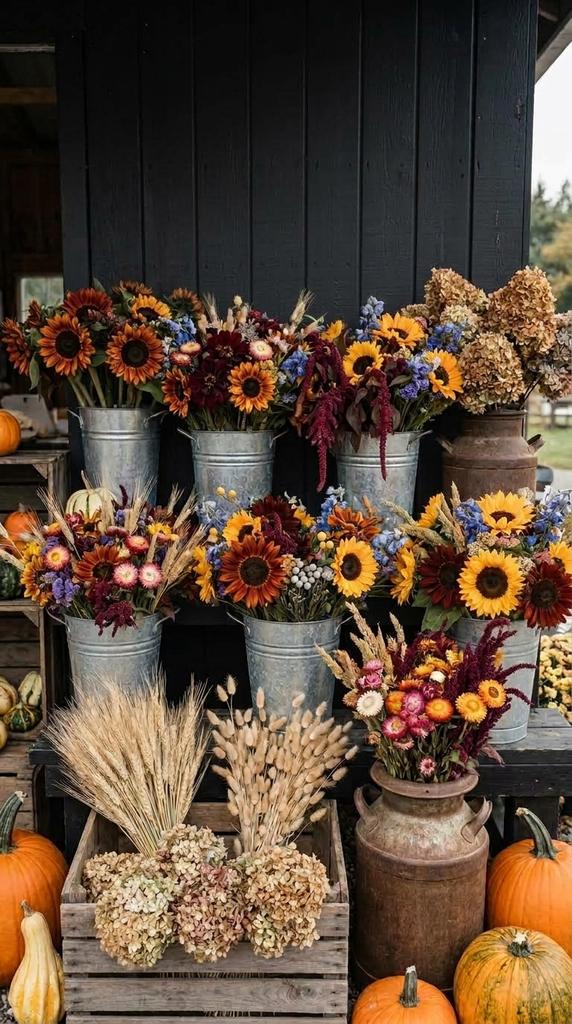
Autumn bouquets sell to a different customer than your produce does, which is exactly why they are worth carrying.
Sunflowers, strawflower, statice, amaranth, wheat, bunny tails and dried hydrangea all hold their colour and can be made up days in advance.
Dried bunches are the practical version of this product, because they do not wilt, do not need water, and can be restocked from the same batch across several weekends.
Stand them upright in galvanised buckets or old milk cans. Height at the edge of a stand pulls people in from the road better than anything laid flat.
Wrapping in kraft paper and twine lets you charge a bouquet price rather than a bunch price.
Supporting products: Wreaths, candles, pumpkins, mums, vases, wooden signs, greeting cards.
Dried Corn Door Hangers
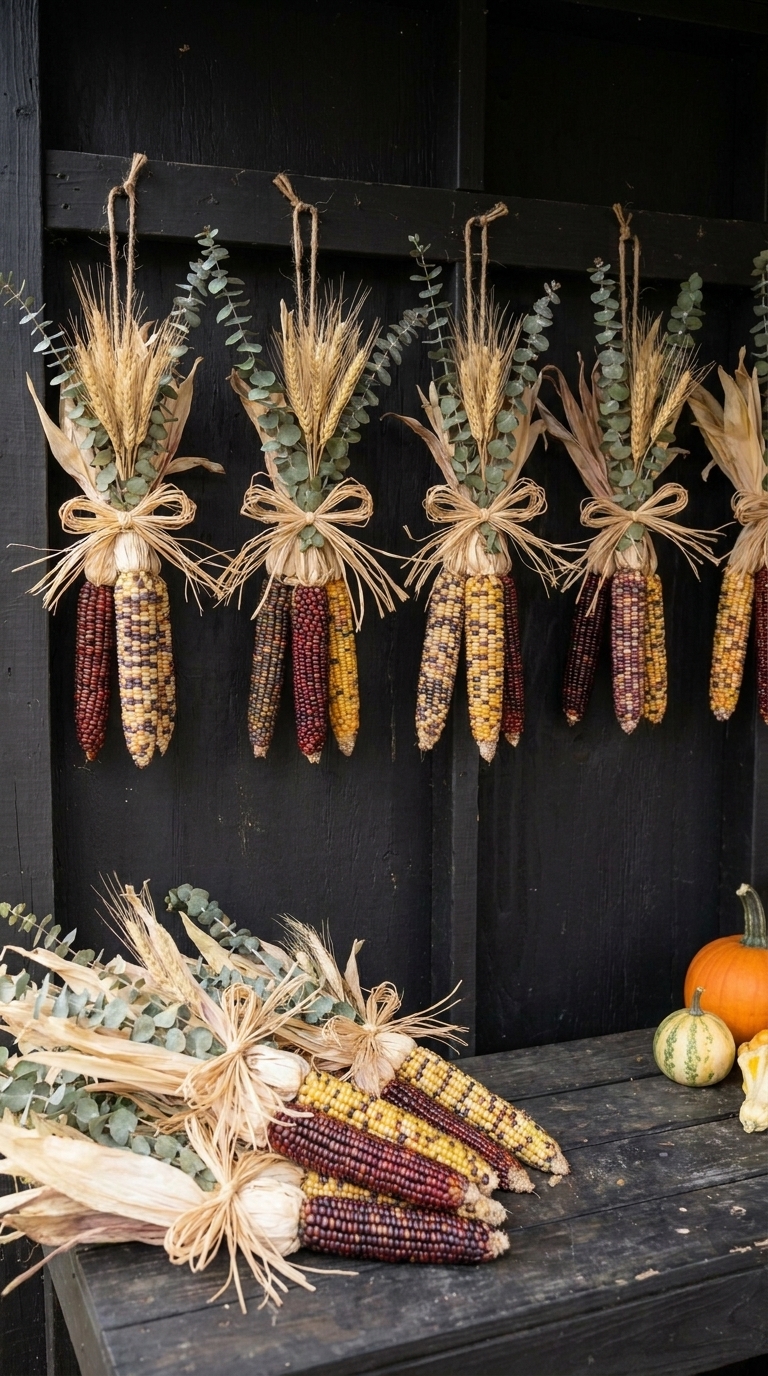
Dried ornamental corn tied into door hangers is one of the cheapest decorative products you can make.
Three or four ears bundled at the top with raffia, twine or a wired ribbon bow takes a couple of minutes and sells for several times the cost of the corn.
Adding a few stems of wheat, dried hydrangea or eucalyptus turns a plain bundle into a product that looks designed.
Hang a few at the back of the stand at eye level rather than laying them on the table. They sell far better vertical, because that is how people will use them.
They also store perfectly from one season to the next, so unsold stock is not lost money.
Supporting products: Wreaths, cornstalks, pumpkins, wooden signs, dried bouquets, ribbon.
Candied And Spiced Nuts
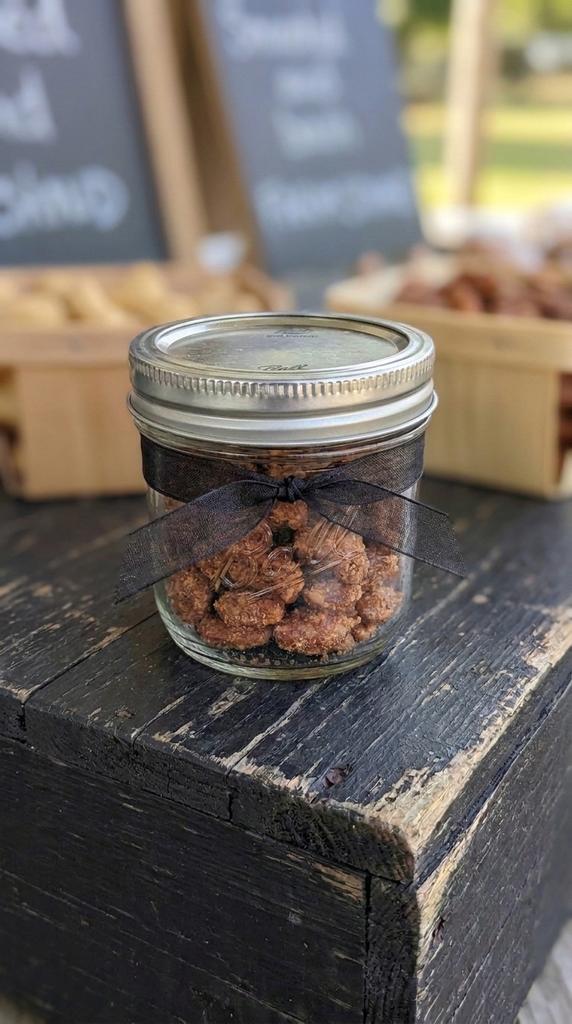
Warm candied nuts are the smell that travels furthest at a market, and they are an easy impulse buy.
Cinnamon sugar pecans, maple walnuts, honey roasted almonds and a spiced savoury mix cover most tastes with one base method.
Sell in small cones or bags at an easy cash price for eating now, and a larger bag for taking home. Most people who taste one will buy the larger bag.
If you can make a batch on site in a pan, do it during your busiest hour. The scent is the advertisement.
They are shelf stable for weeks in sealed bags, so you can build up stock in advance of peak weekends.
Supporting products: Cider, coffee, caramel apples, popcorn, chocolate, gift tins.
Apple Pie Kits
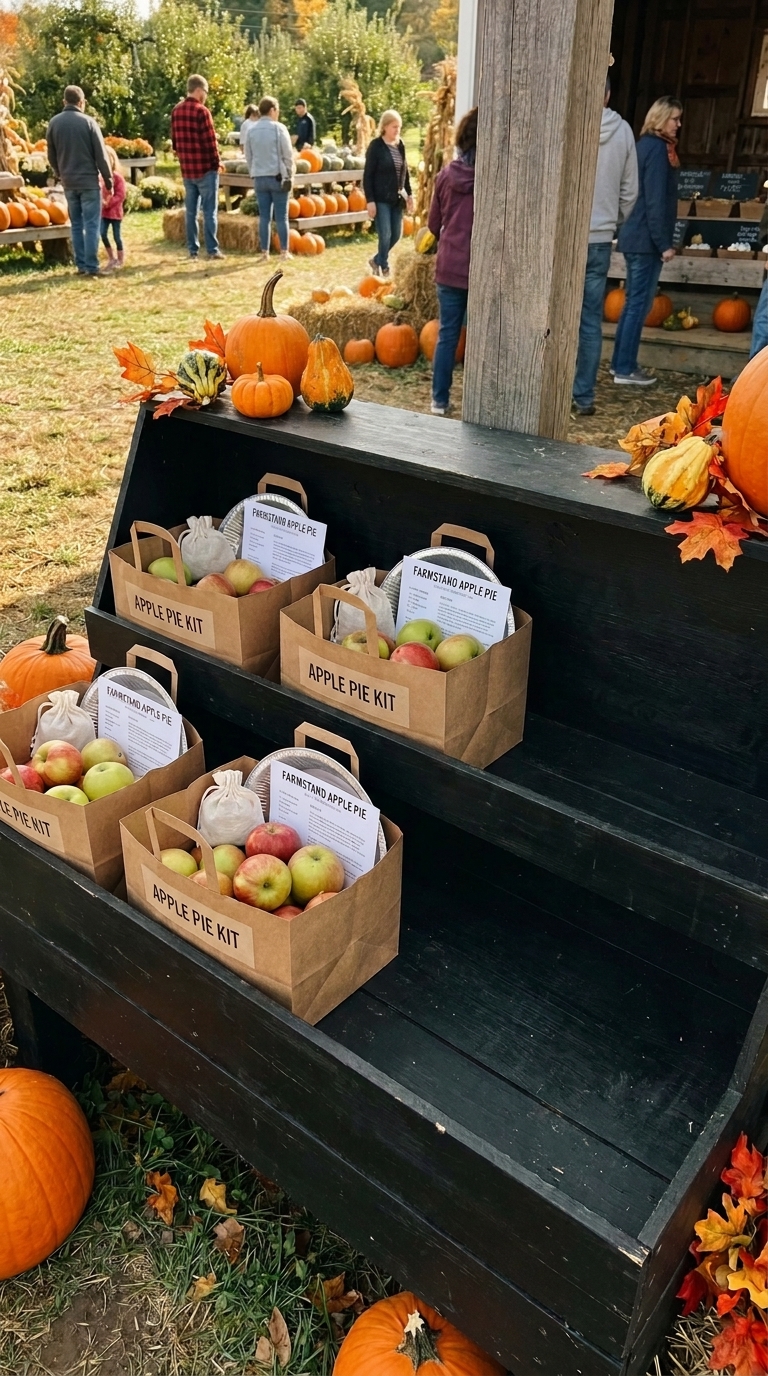
A pie kit is a higher priced product made from things you already sell.
Pack apples, a spice sachet, a disposable pie tin and a printed recipe card into a paper carrier, and you have turned loose fruit into a gift.
Adding a pastry disc or a jar of your own caramel sauce lifts the price further, as long as you handle the chilled items properly.
These sell hardest in the two weeks before Thanksgiving, when people are buying to bake rather than buying to eat.
Make the recipe card genuinely good. Customers who bake a successful pie from your kit come back next year, and they tell people where they got it.
Supporting products: Apples, caramel sauce, spice blends, pie dishes, cider, vanilla, cream.
Hot Pepper Jelly
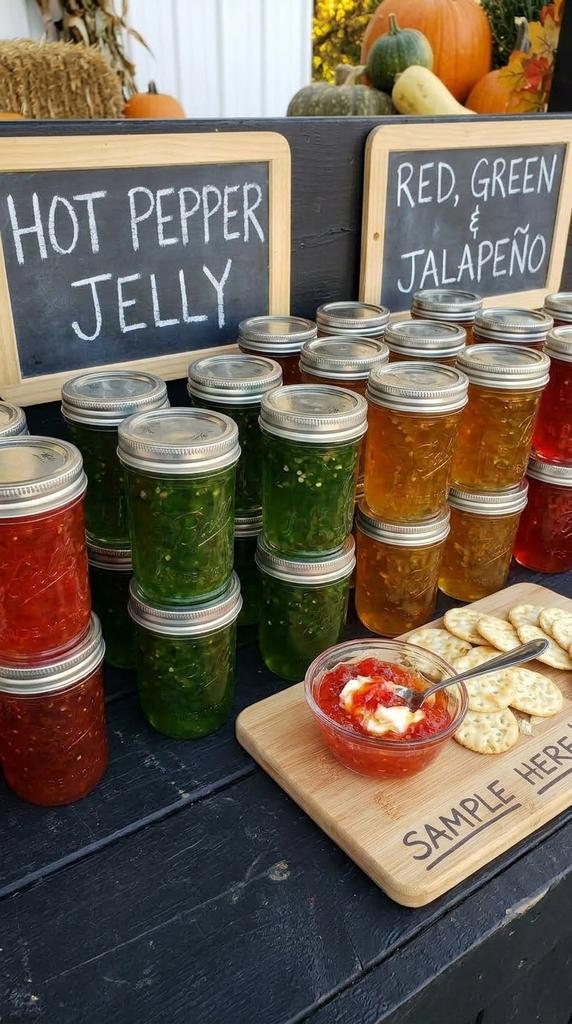
Late peppers arrive at the same time as the fall market rush, and pepper jelly is the best way to use them.
Red, green and jalapeño versions all look good in a row, and the colour does a lot of work on a table full of browns and oranges.
The standard serving suggestion of jelly spooned over cream cheese with crackers is worth putting on a tag, because it answers the question most shoppers have about it.
Offer a sample with crackers if you can. Pepper jelly is a product people rarely buy unprompted and frequently buy after tasting.
It is properly shelf stable when water bath canned to a tested recipe, so it works as stock you can carry across the whole season.
Supporting products: Crackers, cheese, bread, honey, gift bags, chutneys.
Fall Harvest Honey
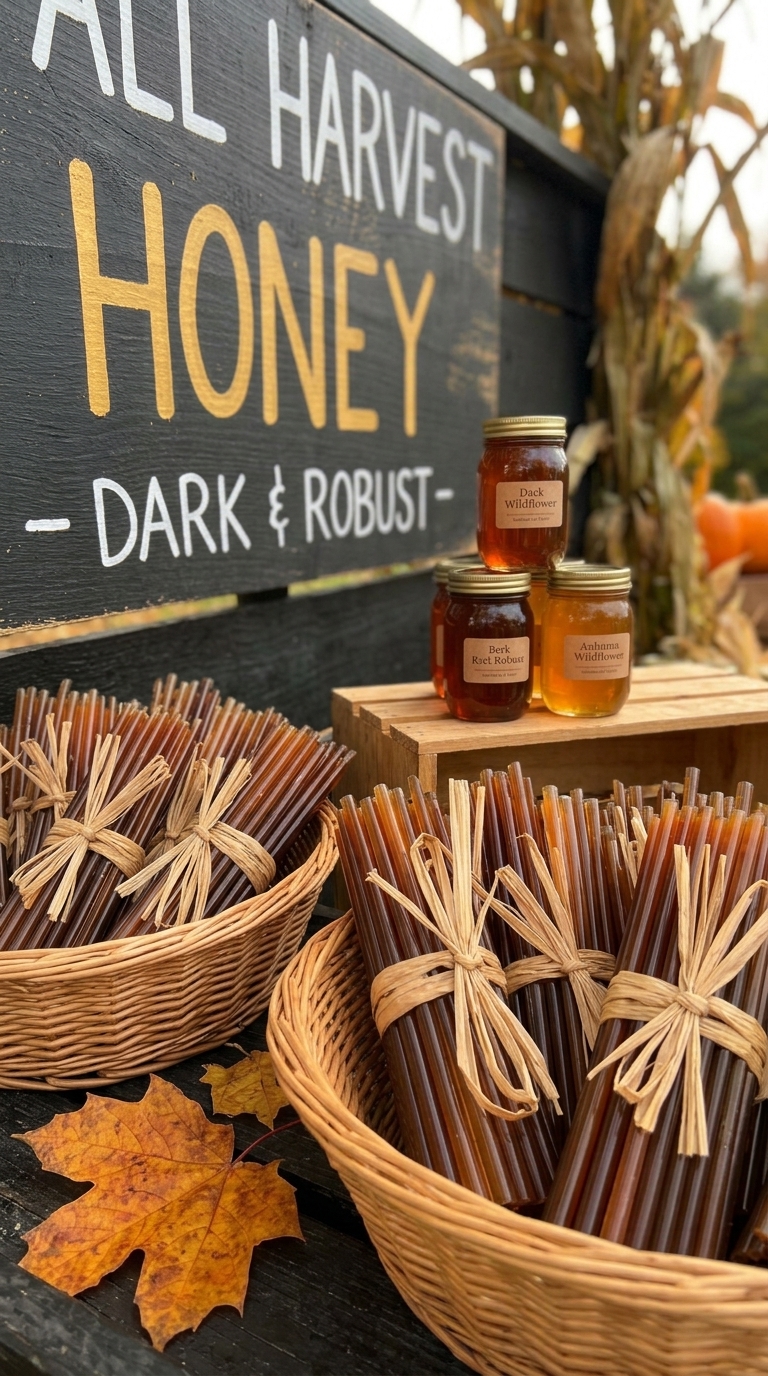
Autumn honey is darker and stronger than summer honey, which is a selling point rather than a drawback.
Label it by season or by the plants it came from where you can, because customers are buying local character as much as they are buying honey.
Small jars, honeycomb pieces and honey sticks give you three price points from one product, and the sticks are an easy add-on at the till.
If you do not keep bees yourself, a partnership with a local beekeeper can work well, since honey pairs with almost everything else on a fall table.
Keep one jar on a saucer with a dipper. A honey display that looks untouched sells less than one that looks used.
Supporting products: Bread, tea blends, soup mixes, mulling spices, cheese, granola.
Caramel Sauce Jars
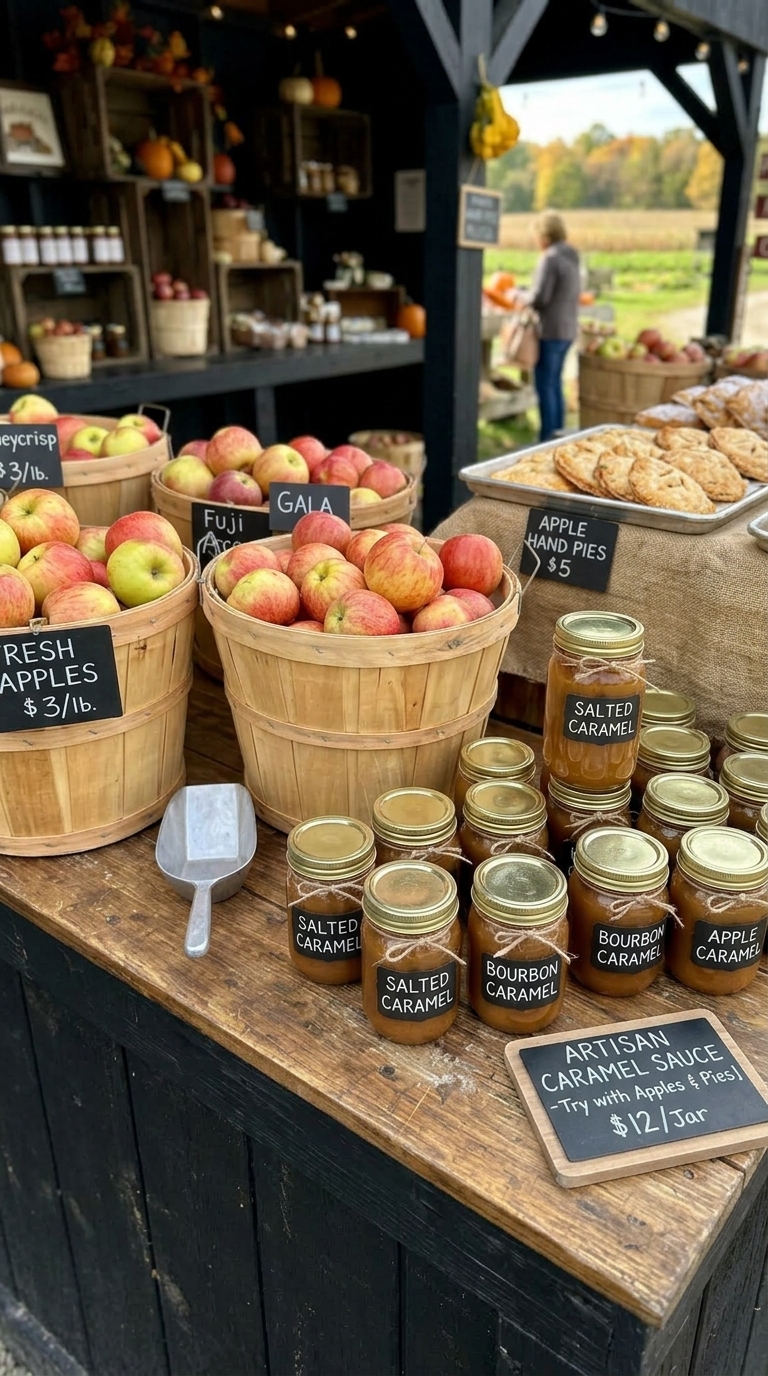
Jarred caramel is an add-on product that attaches itself to half your stand.
Salted caramel, bourbon caramel, apple caramel and plain all sell, with salted caramel usually leading.
Place the jars beside the apples and the baked goods rather than in their own section. It sells as an accompaniment, not a destination.
Caramel is not safe to home can, so sell it refrigerated with a clear use-by date and a note to keep it chilled. Do not treat it as a shelf stable pantry jar.
A small spoon and a plate of apple slices beside the jars will move this product faster than any label.
Supporting products: Apples, pie kits, donuts, loaf cakes, ice cream, coffee.
Fire Starters And Kindling Bundles
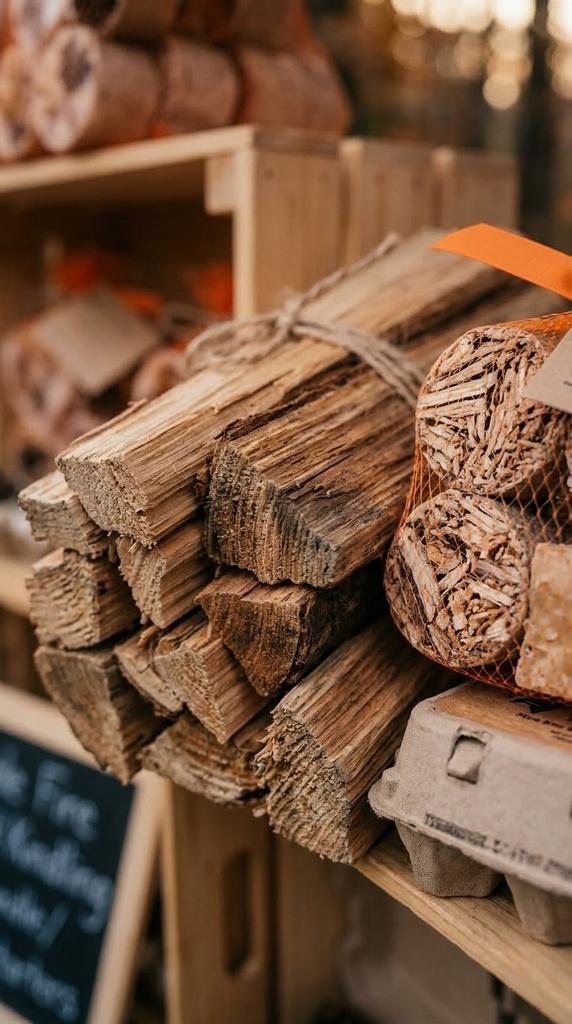
Once evenings turn cold, anyone with a fire pit, wood stove or open fire becomes a customer.
Beeswax or soy poured into cardboard egg cups filled with sawdust, dried lavender, cinnamon or pine cones makes an attractive starter that costs very little.
Bundle six to twelve into a mesh bag or a small crate so it reads as a product rather than a craft.
Kindling bundles tied with twine sell alongside them and use up offcuts you may already have.
This is a practical product on a table full of decorative ones, and it often sells to the person who was just waiting while someone else shopped.
Supporting products: Candles, matches, firewood, wool blankets, mugs, hot chocolate.
Chunky Knit Scarves And Hand Warmers
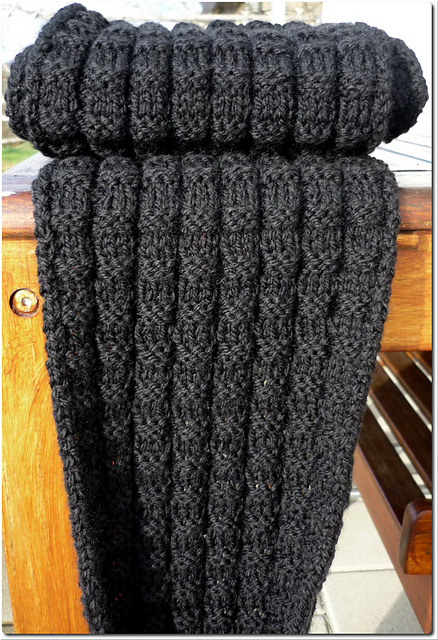
Knitted goods are the point where a fall stand starts earning from cold weather rather than just surviving it.
Scarves, headbands, fingerless gloves, mug cosies and simple hats are all quick to make in batches and easy to price in tiers.
Neutral and heathered colours sell more broadly than bright shades, and they photograph better on a wooden table.
Put one of each item out to be touched. Knitwear sells on texture, and a folded stack nobody has handled will sit there all day.
Because they do not spoil, anything unsold rolls forward to the Christmas markets, which makes them a low risk use of your off-season time. Pair them with our fall wreath ideas if you want a full handmade section.
Supporting products: Mugs, hot chocolate mix, candles, soap, wooden signs, gift bags.
Quick Notes Before You Sell
Check your cottage food rules first. Every state sets its own list of what you can make in a home kitchen and sell direct, and baked goods, jams and dry mixes are usually allowed while anything needing refrigeration usually is not. Look up your own state’s cottage food law rather than copying what another seller does.
Price for sell-out on seasonal stock. Pumpkins, mums and cornstalks are worth almost nothing in November, so order to clear rather than to have plenty spare.
Keep a cash float and a card reader. Fall sales are higher value than summer ones because of bundles and decor, and a lost sale on a porch bundle is a big lost sale.
Plan for weather. Wind takes signage and rain ruins paper packaging, so weights, clips and a covered table are worth the setup time.