





A great Flea Market Set Up should make shoppers slow down before they have even decided to visit your booth. With rows of vendors competing for attention, an interesting display can be the difference between someone walking straight past and someone stepping inside to see what they can find.
The good news is that you do not need an expensive professional display. Clever Market Set Up Ideas using crates, ladders, baskets, rugs, signs, and unexpected vintage pieces can turn a basic stall into a space people actually want to explore.
Whether you are creating a Vintage Market Booth, selling at a Thrift Market, or simply looking for better ways to display secondhand treasures, these ideas focus on visibility, easy browsing, personality, and making your best Flea Market Finds almost impossible to walk past.
1. Put One Incredible Find Right at the Front
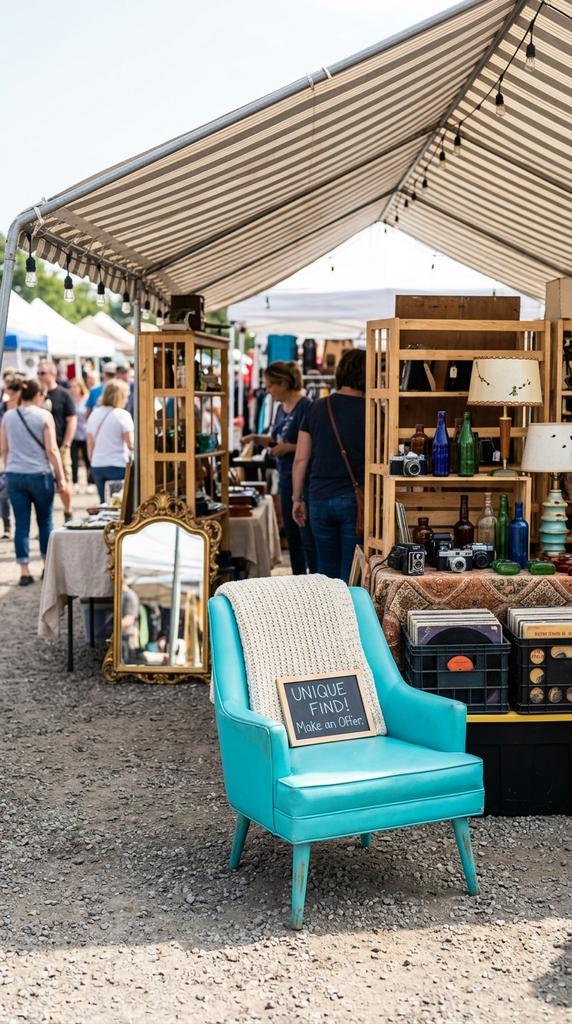
Give shoppers a reason to stop before they have even entered your booth.
Choose one of your most unusual pieces and position it right at the front. It could be a bright vintage chair, huge ornate mirror, retro lamp, old bicycle, colorful cabinet, or quirky piece of advertising signage.
The goal is not necessarily to sell that particular item first. Think of it as your visual hook.
A striking piece makes people look twice, and once they have slowed down, they are much more likely to notice everything sitting behind it.
Change your front piece throughout the day if something sells or foot traffic slows. Your best Flea Market Finds should be doing some of the advertising for you.
This is especially useful in a busy market where shoppers are scanning dozens of booths at once. Give their eyes somewhere obvious to land.
2. Build Height With Wooden Crates

Flat tables make it difficult to see what is hiding behind the first row of products.
Stack wooden crates vertically and horizontally to create instant shelving for pottery, books, baskets, candles, small antiques, and home decor.
You can place some crates on tables and others directly on the ground to create different display levels.
This makes a Flea Market Booth Display look fuller without making it feel cluttered. It also means shoppers standing outside your booth can see more merchandise immediately.
Old fruit crates are particularly good for a Flea Market Style display because they become part of the aesthetic rather than simply holding stock.
Just make sure stacked crates are stable, especially if shoppers will be picking items up.
3. Hang an Oversized Sign Above Your Booth
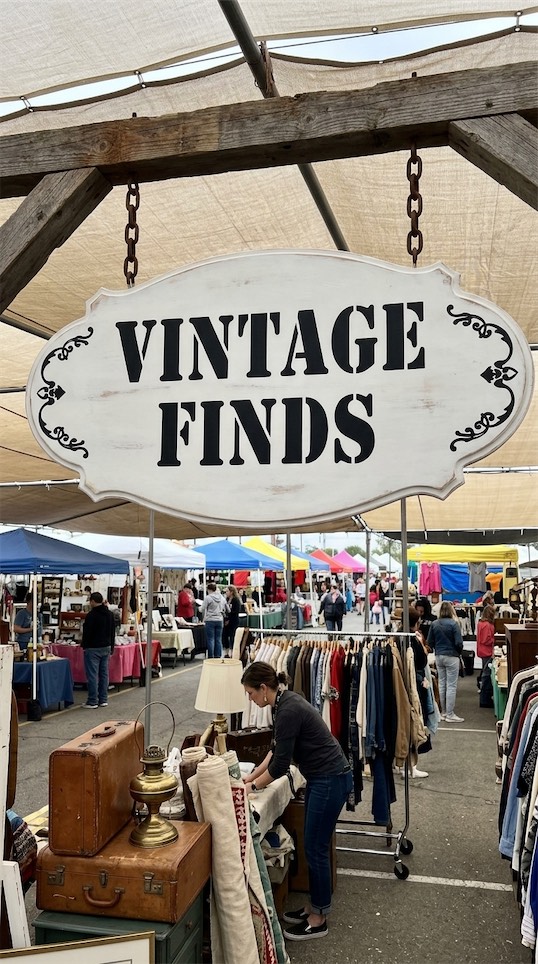
Your sign should be visible before shoppers reach you.
Instead of putting a small sign on the checkout table, hang a large banner or painted wooden sign high above your Thrift Booth.
Keep the wording short enough to read while walking.
Try phrases such as:
VINTAGE FINDS
EVERYTHING UNDER $20
RETRO HOME
THRIFTED TREASURES
VINTAGE CLOTHING
The sign immediately tells shoppers what they can expect inside.
Height matters here. In a crowded market, your table-level signs disappear behind people. A sign positioned above head height can attract shoppers from several aisles away.
4. Use an Old Ladder as Vertical Shelving
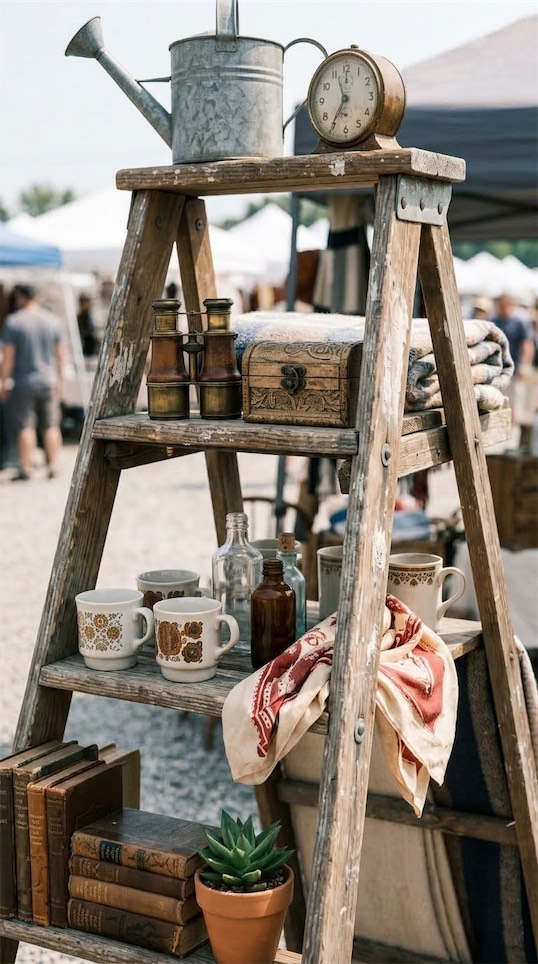
An old wooden ladder can become one of the most useful pieces in your entire booth.
Open a step ladder and use the steps for baskets, folded textiles, small plants, books, or lightweight decor. You can also lean a straight ladder against a secure wall and hang blankets, scarves, bags, or signs from the rungs.
It gives you valuable vertical display space without adding another bulky table.
The ladder itself also contributes to that collected, slightly imperfect Flea Market Style people expect from vintage markets.
For a Vintage Market Booth, try combining a worn wooden ladder with linen textiles, woven baskets, and old picture frames.
Suddenly practical storage becomes part of the display.
5. Create a “Fresh Finds” Table
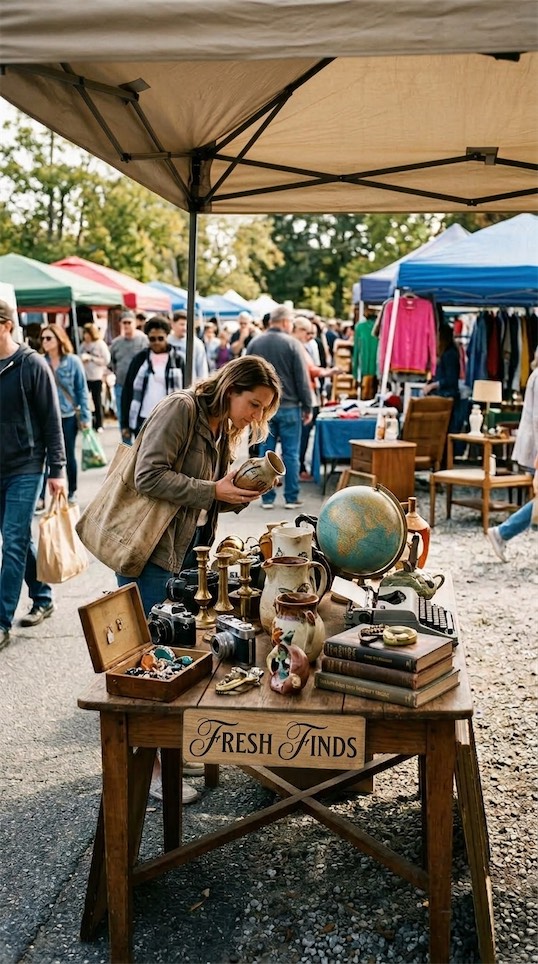
Make shoppers feel like they have discovered the good stuff before everyone else.
Choose a small table near the front and label it “Fresh Finds”, “Just In”, or “New This Week.”
Use it for newly sourced items, unusual pieces, or merchandise you particularly want people to notice.
This creates urgency without needing a discount. Shoppers naturally assume the section contains items that have not already been picked through.
It is also perfect for regular markets because returning customers have somewhere new to check each time they visit your booth.
Keep this table relatively sparse. Ten interesting pieces will attract more attention than 50 objects fighting for space.
6. Turn a Clothing Rack Into a Curated Rail
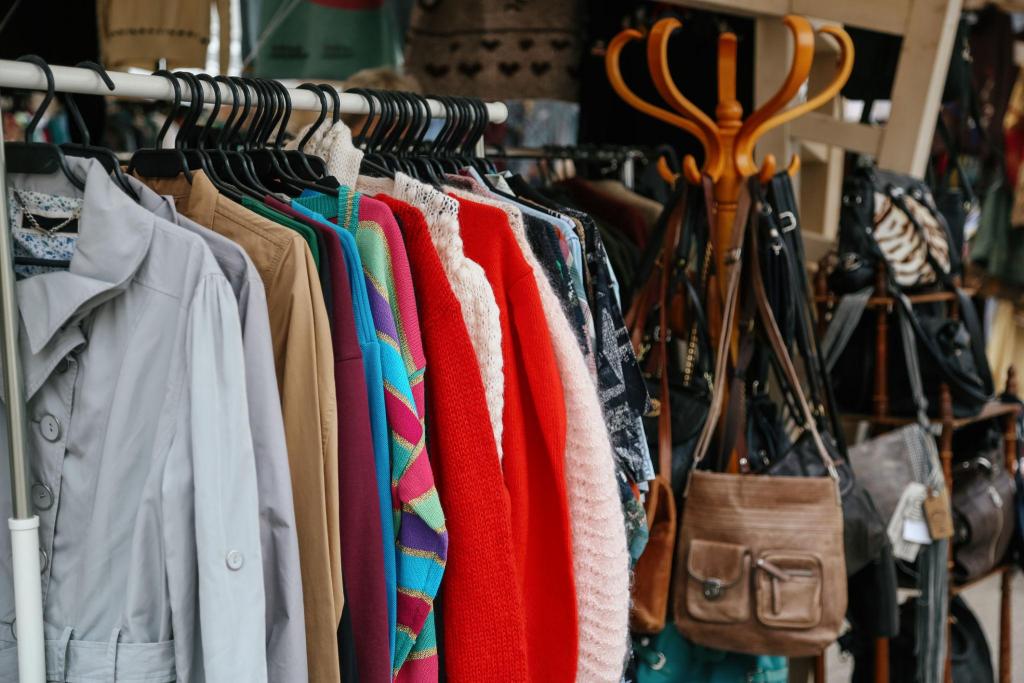
Do not cram 100 garments onto one rail.
Choose your most visually interesting pieces and give them enough space to actually be seen.
Arrange clothing by color, garment type, era, or style. You might have denim together, patterned dresses together, then jackets at the end.
Put one standout piece facing outward rather than sideways. A sequined jacket, colorful vintage dress, leather coat, or embroidered shirt can act almost like a shop-window display.
Add clear size markers so people can browse without checking every individual label.
For a Thrift Market, this small amount of organization makes secondhand clothing feel curated rather than discarded.
Keep additional stock underneath in labeled tubs and replenish the rail as things sell.
7. Put a Full-Length Mirror Beside the Clothing
A mirror can quietly keep shoppers in your booth much longer.
Place a full-length mirror beside your clothing rack so people can hold jackets, dresses, hats, scarves, and bags against themselves.
Without a mirror, shoppers often put something down because they cannot picture how it looks.
An ornate vintage mirror is even better because it doubles as merchandise and contributes to your Vintage Market Booth aesthetic.
Position it somewhere with decent natural light if possible.
You may notice shoppers trying one hat, then another, then picking up sunglasses, then looking at the handbag beside them. That interaction is exactly what you want.
8. Style a Mini Living Room
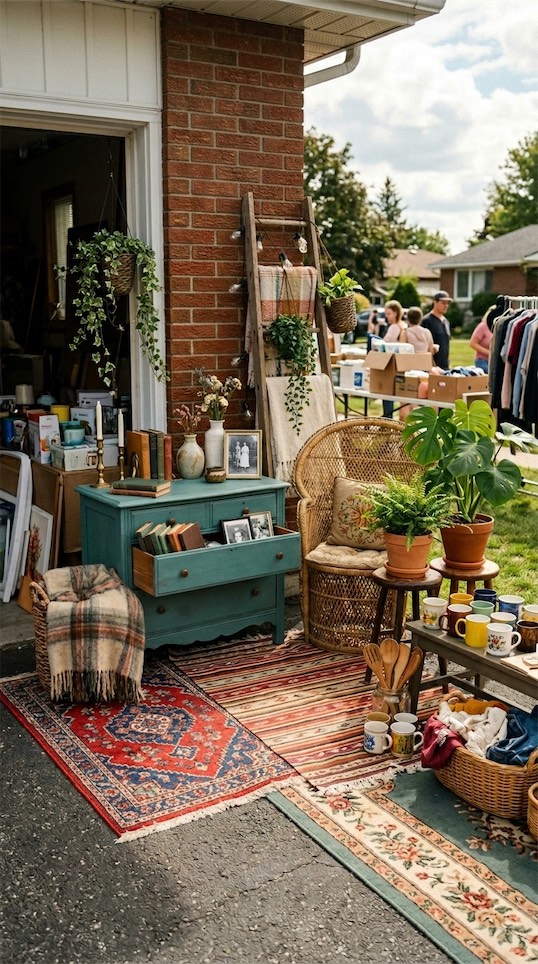
Instead of displaying furniture separately, show shoppers how the pieces could look together.
Create a tiny living-room scene using a vintage chair, side table, lamp, rug, cushions, books, and framed artwork.
Every item can still be individually priced.
The styled arrangement makes ordinary objects look much more desirable because shoppers can immediately imagine them in their own homes.
This is one of my favorite sources of Antique Booth Displays Inspiration, particularly if you sell furniture or home decor.
Even a 4-foot corner can work.
Place a small rug underneath everything to visually define the space and suddenly you have a little room rather than a random collection of secondhand furniture.
9. Use Vintage Suitcases as Display Tables
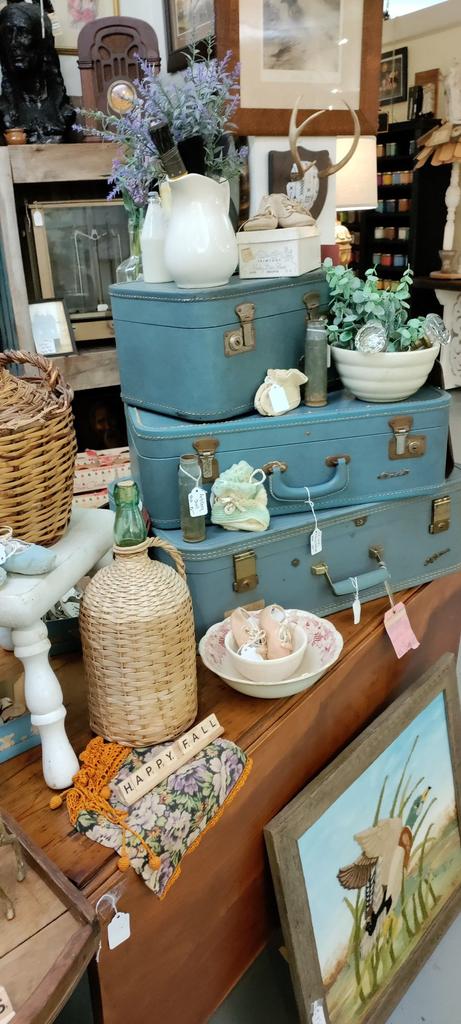
Old suitcases are far too useful to leave closed on the floor.
Stack two or three vintage cases to create different heights, then open the top suitcase and fill it with scarves, jewelry, postcards, records, books, or other small finds.
The suitcase becomes merchandise and display furniture at the same time.
It also encourages people to investigate. An open case filled with interesting objects feels a little like discovering someone’s old travel trunk.
That sense of discovery fits perfectly with Flea Market Style.
If the suitcases are for sale, attach the prices somewhere obvious so shoppers know they are not simply display props.
10. Create a $5 Treasure Table
Give bargain hunters somewhere irresistible to start.
Set up a small table or collection of crates with one clear price point, such as “Everything $5.”
Fill it with attractive lower-value items rather than actual junk. Small frames, mugs, baskets, books, costume jewelry, candleholders, and quirky decor are ideal.
A single-price section removes hesitation because shoppers can immediately start picking things up without checking tags.
Position it near the entrance to pull people into the rest of your Flea Market Set Up.
Once someone has found one $5 treasure, there is a good chance they will start looking for another.
11. Make a Wall of Frames and Artwork

Artwork becomes far more noticeable when shoppers can actually see it.
Instead of stacking every frame against a table leg, use a pegboard, grid panel, folding screen, or secure temporary wall to create a gallery-style display.
Mix paintings, prints, mirrors, embroidery, photographs, and empty vintage frames.
Different sizes make the arrangement more interesting, but leave enough space between pieces for each one to register.
This gives you vertical merchandising space while creating a dramatic backdrop for the entire booth.
For Antique Booth Displays Inspiration, this is particularly effective because the display itself can feel like an old-fashioned gallery wall.
Keep larger pieces leaning safely at ground level beneath it.
12. Put Small Treasures in Glass Jars
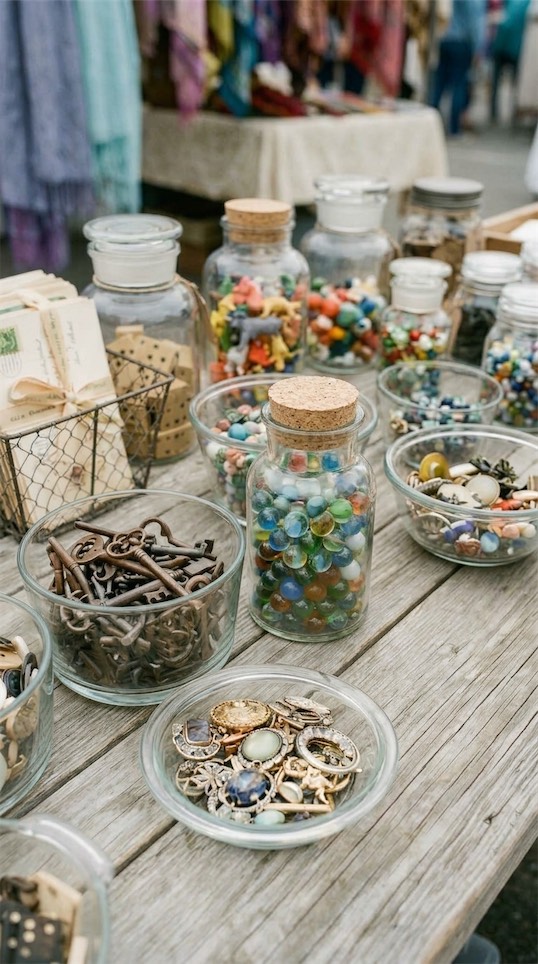
Tiny products disappear surprisingly easily on large tables.
Use clear jars, apothecary containers, glass bowls, or shallow dishes to display buttons, brooches, keys, marbles, beads, small toys, postcards, or other miniature collectibles.
Shoppers can immediately see what is inside without digging through messy boxes.
You can price items individually or make the entire container one simple price category.
Vintage jars also add texture and height to your Flea Market Booth Display, particularly when mixed with wooden crates and old books.
Just avoid overfilling them. The objects should look interesting enough to inspect rather than like miscellaneous clutter you poured into a container.
13. Create a Mystery Grab Bag Basket
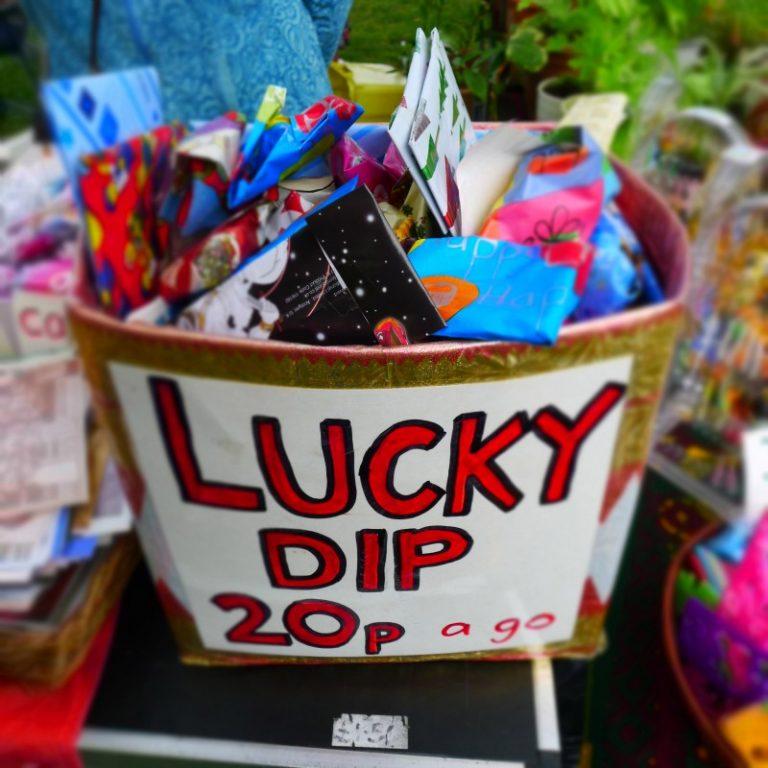
Turn inexpensive leftover stock into something people actually want to investigate.
Fill kraft paper bags with small items and price each mystery bag at $3, $5, or whatever suits the contents.
You could create themes such as:
Vintage Mystery Bag
Kids’ Treasure Bag
Craft Mystery Bag
Retro Kitchen Surprise
Jewelry Lucky Dip
Give shoppers a small clue about what category they are buying without revealing the exact contents.
This is particularly useful for lower-value items that would otherwise clutter your tables.
Put the bags inside a large basket with a handwritten “Pick Your Mystery Find” sign.
Who can resist squeezing a mystery bag and trying to guess what is inside?
14. Turn Pegboard Into a Jewelry and Accessories Wall
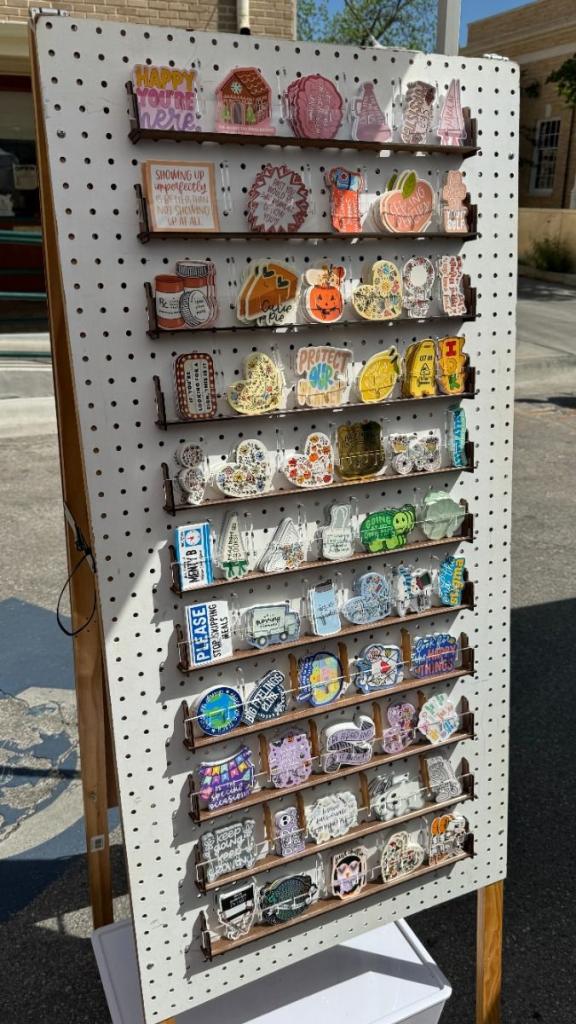
Small accessories deserve to be at eye level.
A freestanding pegboard or wire grid panel can display necklaces, sunglasses, handbags, belts, scarves, hats, watches, and costume jewelry without consuming valuable table space.
Arrange pieces loosely by type or color rather than covering every inch.
People can see individual items much more easily and remove the one they want without disturbing everything around it.
For a Thrift Booth, this can make inexpensive accessories feel much more like a boutique collection.
Add a small mirror beside it and shoppers can immediately try things against themselves.
It is practical, compact, and visually much stronger than a tangled box of necklaces.
15. Create a “Pick a Basket” Shopping Station
Make it ridiculously easy for shoppers to carry more.
Place several small baskets near the entrance with a sign saying “Grab a Basket and Go Treasure Hunting.”
It sounds simple, but shoppers with free hands can only comfortably carry a few objects. Give them a basket and suddenly they can continue browsing after finding the first two things they want.
Wicker baskets look particularly good if you are creating a vintage or rustic booth.
You can even sell the baskets themselves. Add a small tag explaining that the basket is available for purchase too.
This is one of those Market Set Up Ideas that is both decorative and genuinely useful for increasing how much people can browse.
16. Create a Color Story at the Front
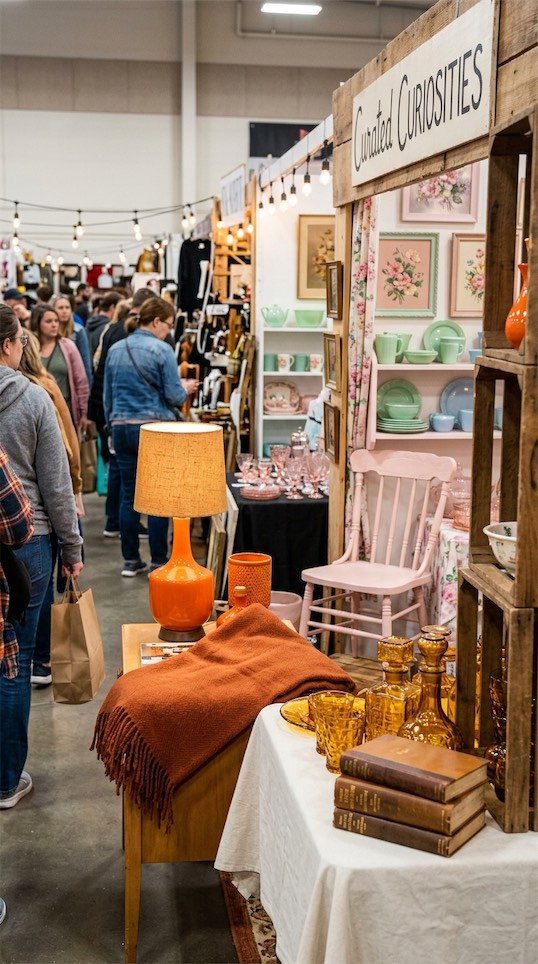
Use color to make your booth visible in a busy aisle.
Choose three or four pieces with similar colors and group them near the entrance. You might combine an orange retro lamp, rust-colored blanket, amber glassware, and brown vintage books.
Another booth could use pink glass, floral artwork, pastel ceramics, and a blush chair.
The products do not need to match perfectly. The repetition of color is enough to make the display feel intentional.
This technique is especially useful when your inventory is naturally eclectic.
Instead of your Flea Market Finds looking random, the color grouping gives the eye a clear place to start.
Change the combination whenever major pieces sell.
17. Build a “Dig for Treasure” Crate
Not everything needs to look perfectly curated.
In fact, flea market shoppers often love the thrill of digging through a box that looks like it might contain something unexpected.
Use one large wooden crate or shallow trunk and fill it with inexpensive objects worth exploring. Records, old photographs, postcards, magazines, small frames, vintage kitchen tools, fabric remnants, and paperback books are perfect.
Add a sign saying “DIG FOR TREASURE, EVERYTHING $2.”
The fixed price keeps it easy while the rummaging creates interaction.
Keep this section contained rather than letting your entire Thrift Booth become a digging zone.
One treasure crate feels exciting. Twenty overflowing boxes feel like work.
18. Add Funny Signs That Make People Stop
Your signage does not have to sound like a department store.
A funny handwritten sign can make someone smile, stop, and actually look around.
Try:
“YOUR HOUSE CALLED, IT WANTS SOMETHING WEIRD.”
“YES, YOU DEFINITELY NEED ANOTHER VASE.”
“OLD STUFF, NEW OBSESSIONS.”
“COME IN, YOUR NEXT IMPULSE PURCHASE IS WAITING.”
“THRIFT NOW, EXPLAIN IT TO YOUR PARTNER LATER.”
Keep one or two funny signs visible from the aisle, then use normal clear signage for practical information such as prices.
Personality helps shoppers remember your Vintage Market Booth, particularly if you sell regularly.
And if someone stops to photograph the sign, they are already standing in front of your merchandise.
19. Make a “Before You Leave” Checkout Display
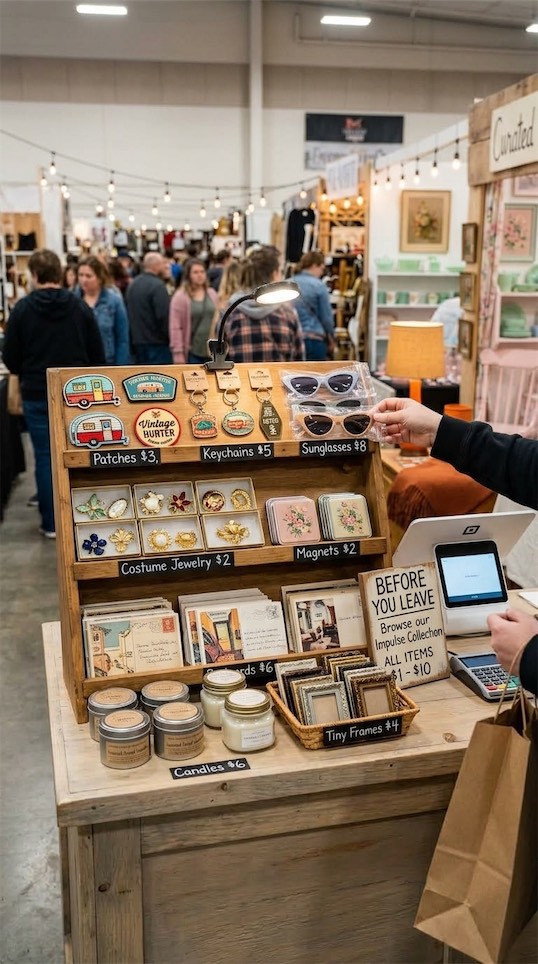
Your checkout area is valuable selling space.
Place a small tiered display beside your payment point containing inexpensive impulse purchases.
Think brooches, postcards, keychains, small candles, sunglasses, magnets, patches, tiny frames, costume jewelry, and other $1 to $10 items.
Someone waiting while you wrap their purchase has time to notice these products.
Use a little sign such as “ONE LAST FIND?” or “TINY TREASURES.”
Keep this area neat because it is also where shoppers form their final impression of your booth.
It is the flea market equivalent of the tempting little products beside a store register, only considerably more fun when those products include a 1970s brooch and somebody’s old Las Vegas postcard.
20. Add a Spin-the-Wheel Deal
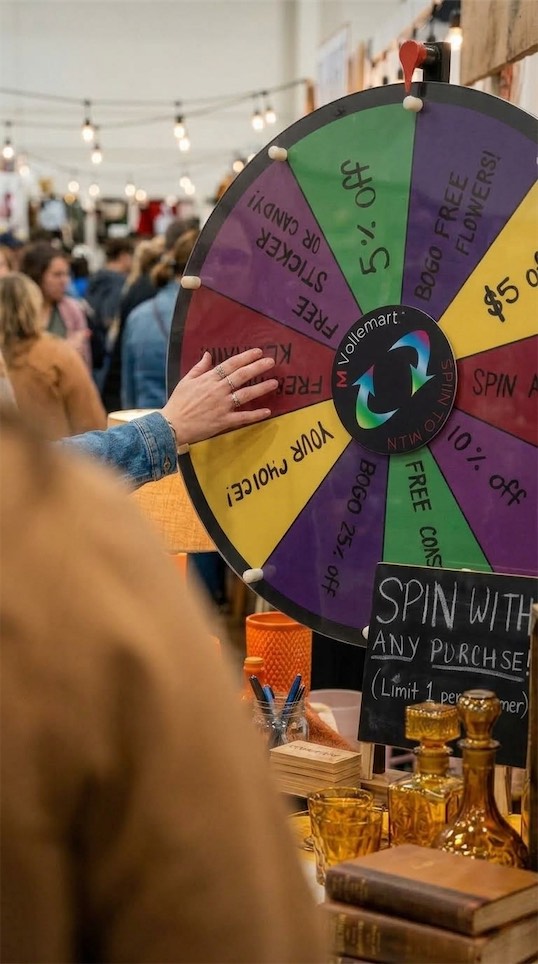
Give shoppers a reason to interact with your booth.
Set up a small prize wheel with offers such as:
10% Off
$5 Off $30
Free Mystery Find
Buy 2, Get 1 From the $5 Table
Free Vintage Postcard
You can require a minimum purchase before spinning so the game encourages spending rather than simply giving discounts to everyone.
Position the wheel where people walking through the market can see it.
Movement attracts attention, and seeing another shopper spin naturally creates curiosity.
It is particularly effective at community markets, outdoor flea markets, and lively Thrift Market events where people are shopping for entertainment as much as necessity.
Keep prizes simple so you are not doing complicated calculations every time somebody lands on a section.
21. Create a “You Found the Golden Tag” Surprise
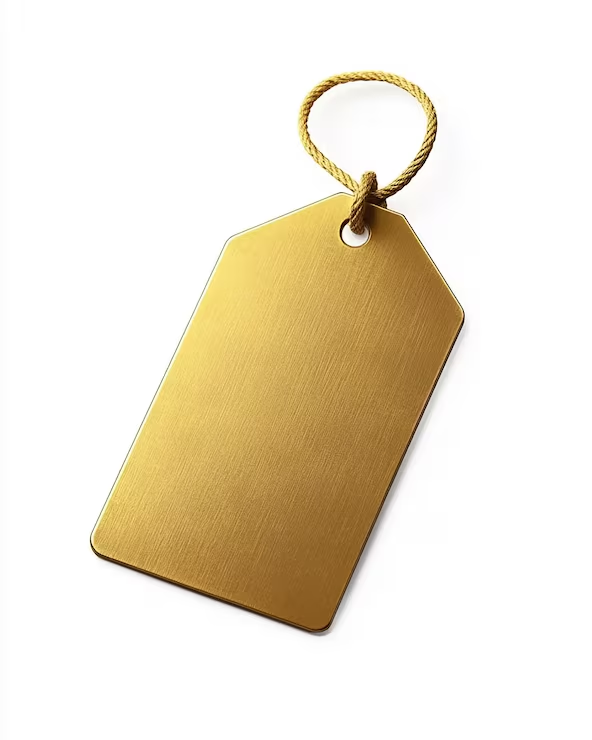
Hide a little reward somewhere inside your booth.
Choose one ordinary item and attach a gold tag underneath or behind it. Put a sign near the entrance saying:
“FIND THE GOLDEN TAG AND WIN $10 TO SPEND IN THIS BOOTH.”
Now shoppers have a reason to look more closely at your merchandise.
They start opening books, examining decor, looking through racks, and wandering into corners they might otherwise skip.
You can make the prize smaller or larger depending on your average prices. A $5 booth credit, free item, or percentage discount can work just as well.
Move the golden tag after somebody finds it if you want to run the game more than once.
It turns browsing into a mini treasure hunt, which feels completely natural in a flea market environment. After all, hunting for unexpected treasures is half the fun of finding that perfect Flea Market Find.
If you liked this you may like our other posts
20 Yard Sale Pricing Guide Ideas to Price Things Right and Sell More
20 Garage Sale Ideas To Boost Sales