








The good news is that DIY chicken toys for the coop do not need to be complicated or expensive. Old branches, scrap wood, vegetables, PVC pipe, logs, and even a sturdy tire can become useful enrichment. Many of the best chicken toys simply give hens another way to use the natural behaviors they already enjoy.
These 15 chicken toys for coop DIY projects range from quick five-minute boredom busters to simple playground features that can stay in the run. Choose a few that suit the size of the flock and rotate smaller toys occasionally to keep the setup interesting.
1. Build a Simple Chicken Swing
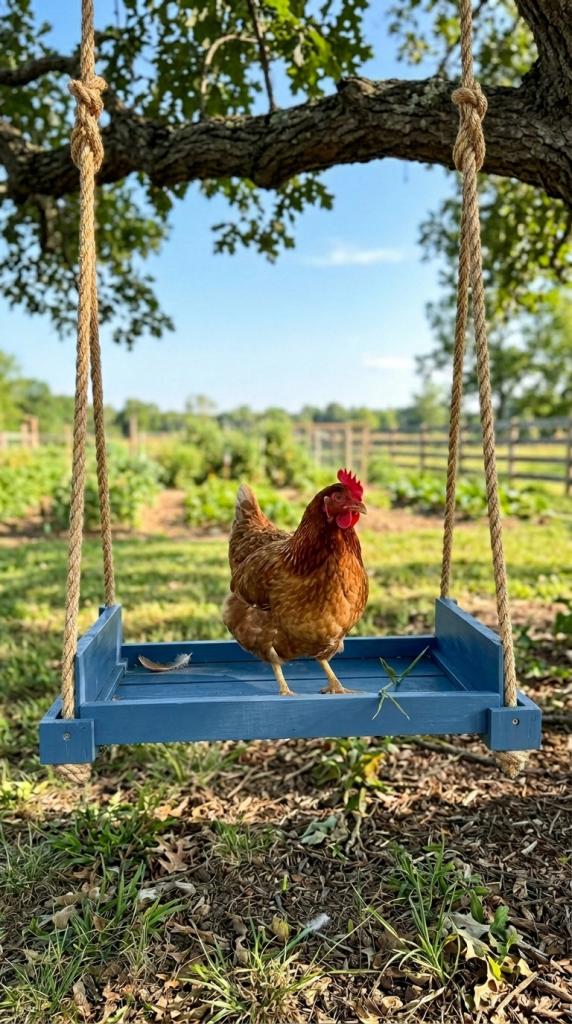
A sturdy wooden swing gives curious hens a moving perch that makes the run instantly more interesting.
Use a thick untreated wooden branch or a smooth piece of scrap lumber wide enough for chicken feet to grip comfortably.
Hang it fairly low at first so hesitant birds can step onto it without making a big jump. The gentle movement adds a small balancing challenge while still giving chickens somewhere to perch and watch the rest of the flock.
Attach both ends with strong hardware and keep loose rope, loops, or dangling material away from feet and legs.
2. Turn an Old Tire Into a Chicken Activity Station
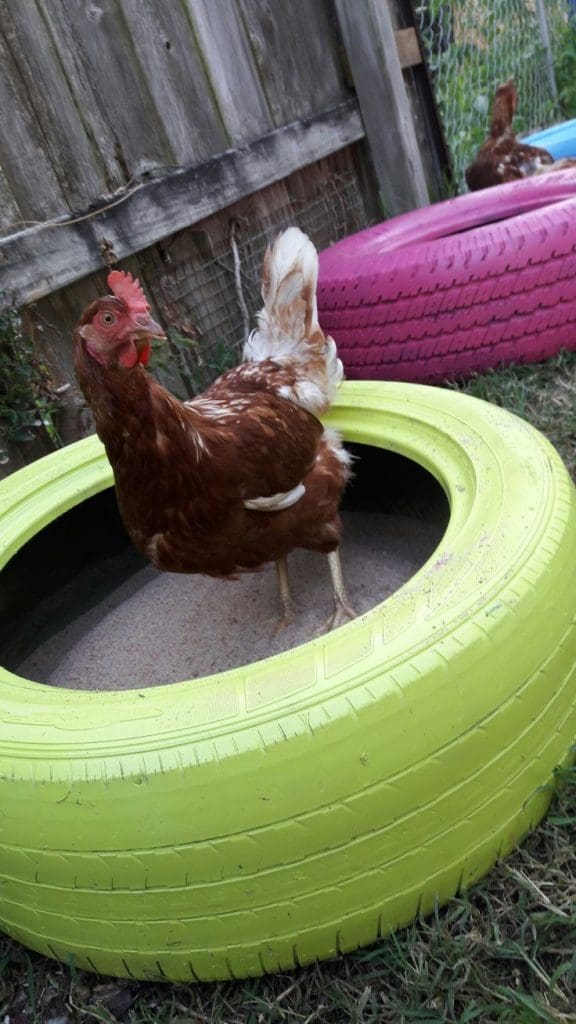
A clean old tire can become a scratching pit, dust bath, climbing feature, or treat-hunting station in one afternoon.
Lay the tire flat in a dry section of the run and fill the center with loose soil, sand, or an appropriate dust-bathing mixture.
Chickens can hop onto the rim, scratch through the filling, and settle into the center for a dusty afternoon bath. For extra enrichment, scatter a small amount of feed or dried mealworms through the loose material and let the flock search for them.
The raised rubber edge keeps much of the filling contained instead of allowing it to spread immediately across the run.
3. Make a Chicken Bicycle Wheel Spinner
A securely mounted bicycle wheel creates an unusual moving feature for chickens that enjoy exploring new objects.
Use a clean bicycle wheel with intact spokes and mount it vertically on a solid wooden frame so it can rotate without wobbling or falling. The spinning movement gives curious hens something different to investigate as they move around the run.
Small leafy greens can be attached securely around parts of the wheel during supervised enrichment sessions, encouraging chickens to move from spot to spot while pecking.
Keep the wheel high enough and positioned carefully so birds cannot become trapped underneath or between moving parts. Avoid loose strings, exposed sharp metal, damaged spokes, or anything that could catch toes or feathers.
4. Create a Hanging Cabbage Boredom Buster
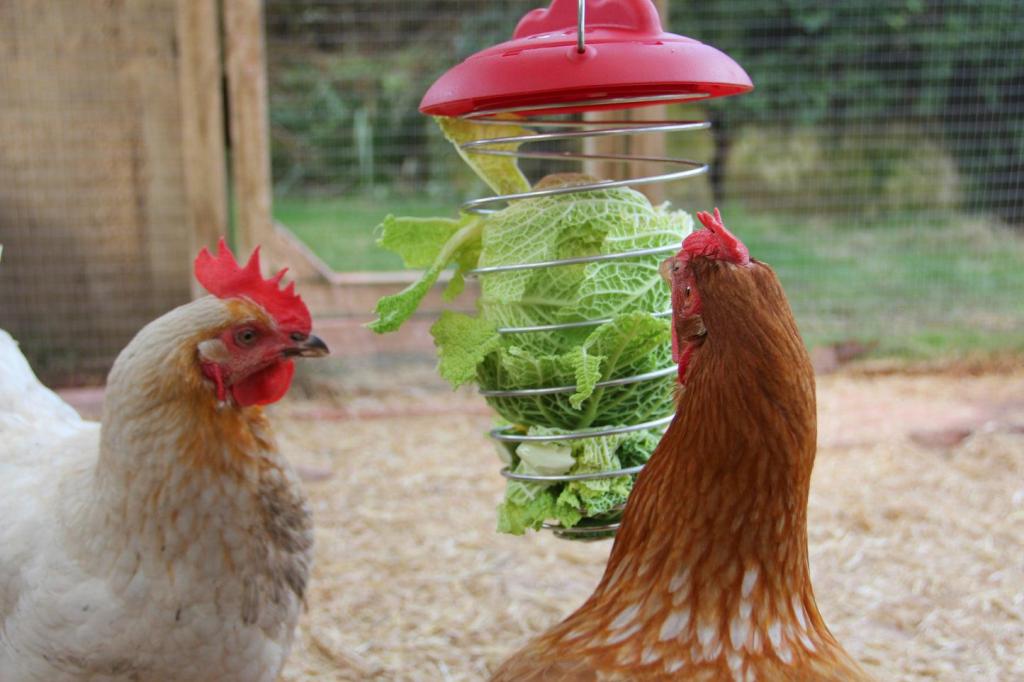
A whole cabbage can turn snack time into an activity instead of disappearing from a feeder in minutes.
Secure a cabbage in a purpose-made hanging vegetable holder or another sturdy setup that does not leave loose cord accessible to the birds. Hang it around comfortable pecking height so chickens need to stretch slightly and follow the cabbage as it moves.
Each peck makes the vegetable shift, which slows down eating and encourages more movement around the treat.
Cabbage is particularly handy when the flock spends more time inside the run and needs another object to investigate. The bright green leaves also make the activity visually obvious, so even timid chickens often become interested after watching bolder flock members.
5. Build a Chicken Grazing Box
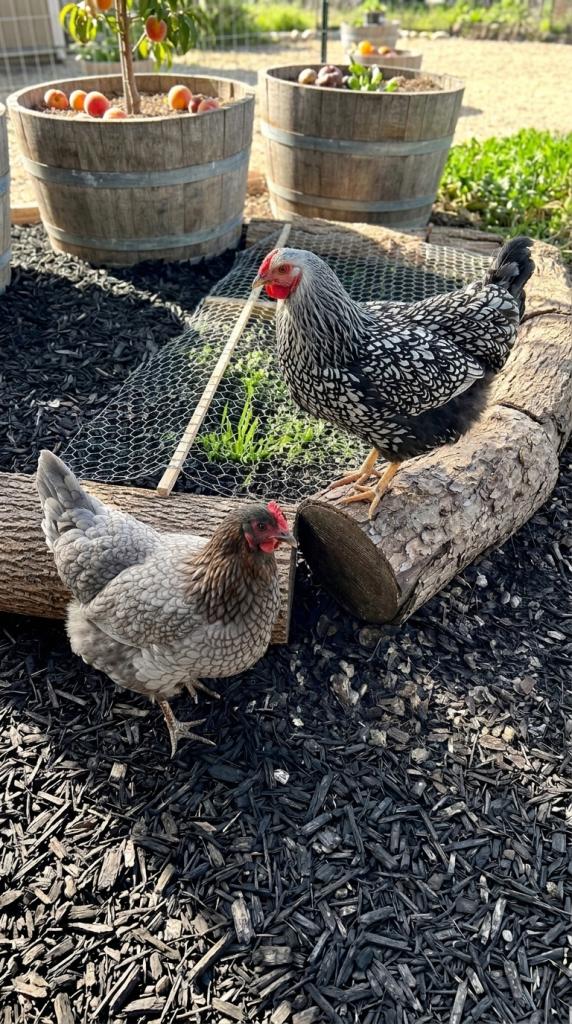
A grazing box gives chickens access to fresh green growth without allowing them to dig up the entire patch in minutes.
Build a shallow rectangular frame from untreated wood or logs and cover the top securely with sturdy wire mesh that birds can peck through safely.
Plant hardy grasses or chicken-safe greens beneath the mesh and allow them to become established before placing the box in the run. The chickens can trim leaves growing through the openings while the roots remain protected underneath.
That means the same small patch can provide enrichment for much longer than an uncovered tray of seedlings. A grazing box also brings a splash of fresh green into a bare run, especially during seasons when the surrounding ground becomes muddy or picked clean.
6. Add a Branch Climbing Jungle Gym
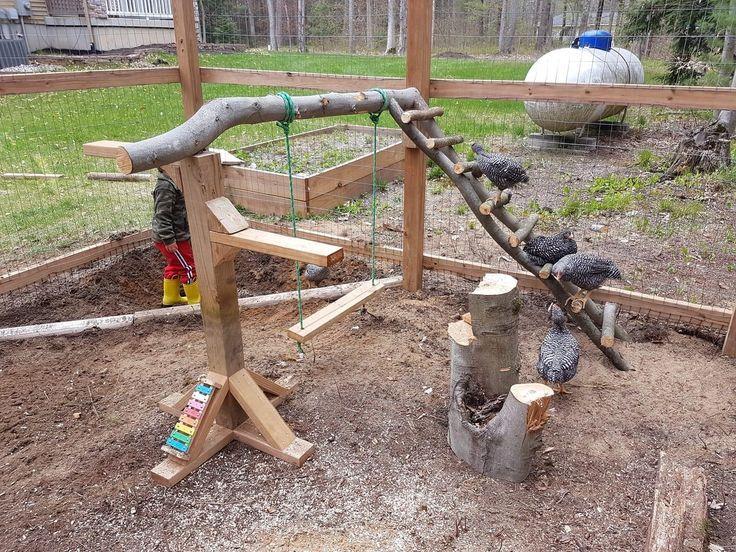
A few sturdy branches can transform an empty corner into a miniature chicken playground.
Choose thick, untreated branches in several widths and arrange them between solid supports at different low heights.
The changing levels encourage chickens to hop, balance, perch, and move through the space instead of spending the whole day on the ground.
Natural bark provides useful texture underfoot and makes the structure feel more like the branches chickens naturally choose for perching. Keep the arrangement open enough for birds to move around each other without becoming cornered by more dominant flock members.
Branches can also be replaced or rearranged occasionally, giving the flock something slightly different to explore without building an entirely new toy.
7. Freeze Corn and Greens Into Summer Treat Blocks
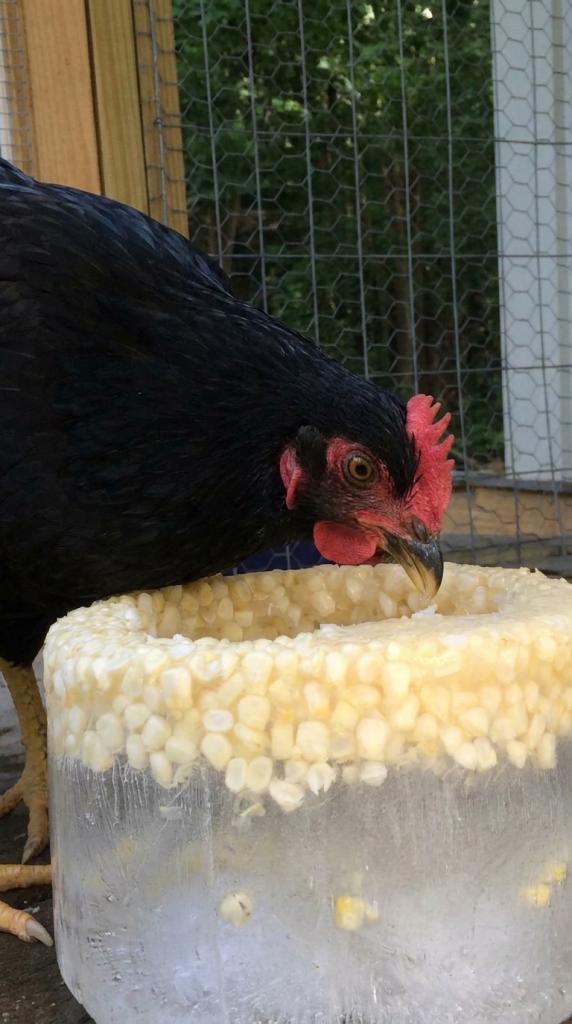
A frozen treat block gives chickens something cool to peck at during warm weather while stretching snack time much longer.
Fill a shallow container with water and small amounts of chicken-safe vegetables, leafy greens, peas, or corn, then freeze it solid.
Tip the frozen block into a clean tray in a shaded section of the run rather than placing it directly onto dirty bedding.
As the surface softens, chickens can peck at the visible pieces and gradually uncover more treats. The melting ice adds an interesting texture and can provide a refreshing seasonal activity during hot afternoons.
Keep treats as an extra rather than replacing the flock’s nutritionally balanced regular feed, and always provide fresh drinking water separately.
8. Make a Pecking Bottle Treat Dispenser
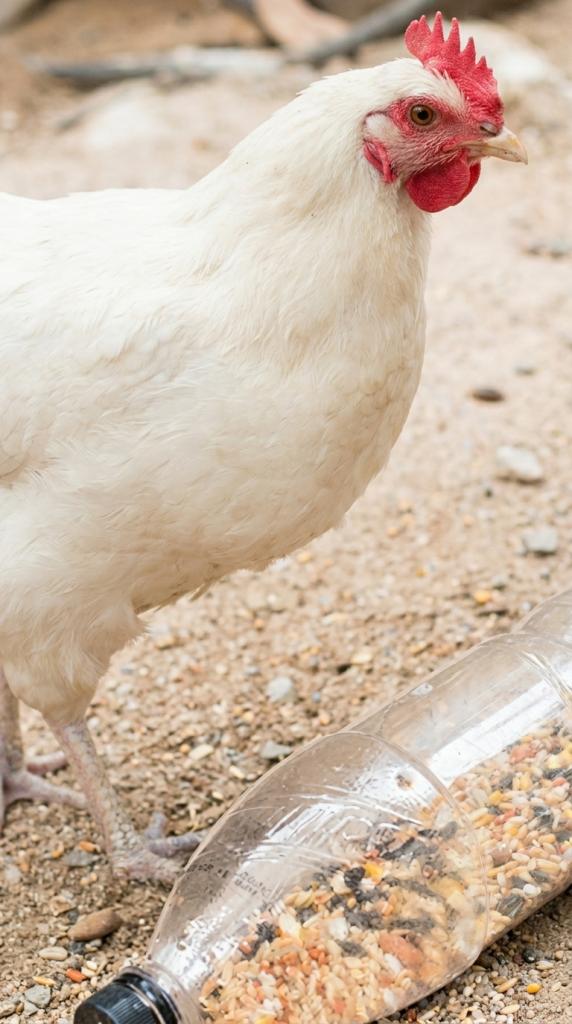
Turn a sturdy plastic bottle into a rolling treat puzzle that makes chickens search for every bite.
Use a clean bottle with the lid firmly secured and make several smooth openings large enough for a small amount of feed to fall through as the bottle moves.
Place a little of the chickens’ normal feed inside rather than filling the container completely. When birds peck and nudge the bottle, pieces tumble out at unpredictable points around the run.
That movement keeps the flock walking, investigating, and pecking rather than standing over one stationary treat bowl.
Check every cut edge carefully and smooth any rough plastic before the toy goes into the coop area.
9. Create a Log and Stump Adventure Area
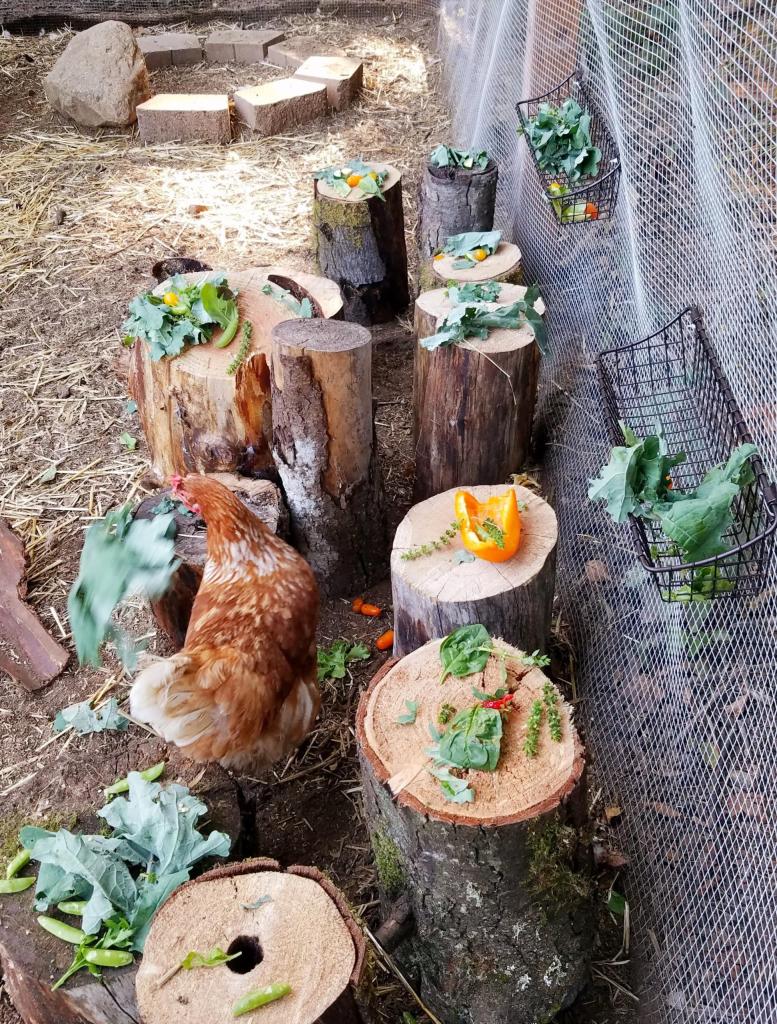
Logs and tree stumps add height, texture, scratching opportunities, and natural hiding places for insects.
Place several stable logs or broad stumps around the chicken run at different heights, making sure none can roll when a bird jumps onto them.
Chickens can perch on top, scratch around the bark, and investigate the tiny spaces where bugs sometimes hide. Turning a log occasionally exposes different patches of soil and can trigger an immediate round of curious scratching.
Large pieces also break up a completely flat run, giving lower-ranking birds additional routes around the space. Untreated natural wood looks right at home beside a rustic coop and costs very little when suitable fallen branches are already available.
10. Build a Low Chicken Seesaw
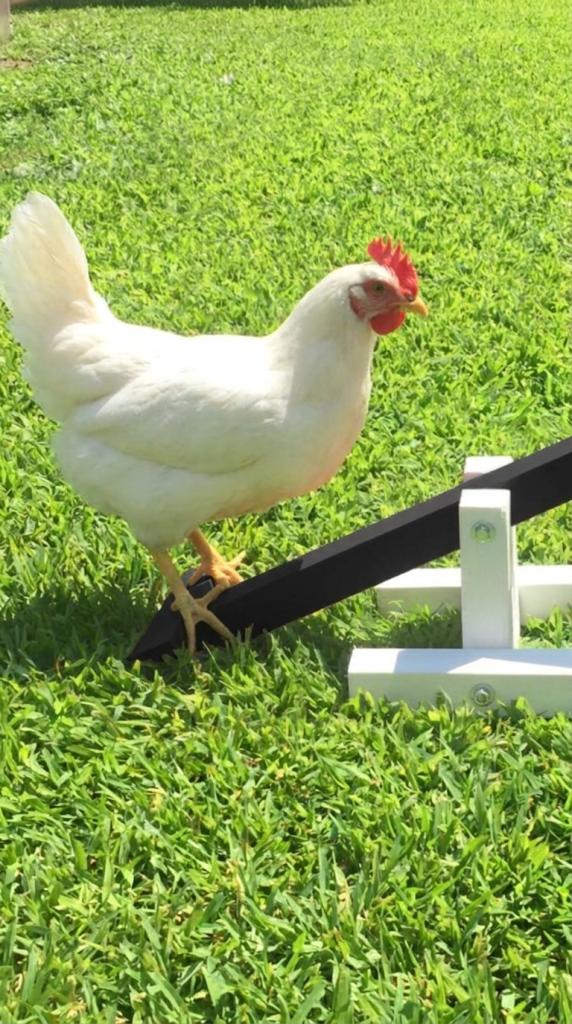
A small wooden seesaw adds movement and balance without taking up much room inside the run.
Start with a wide piece of sturdy untreated timber resting over a secure rounded support or purpose-built pivot. Keep the board low to the ground so the movement stays gentle when a chicken steps from one side to the other.
The slight tipping sensation encourages balancing and makes the platform more interesting than another fixed perch. Some birds may hop aboard immediately, while others may spend several days simply inspecting it from the ground.
Make sure the board cannot pinch toes against the support, slide sideways, or tip at a steep angle.
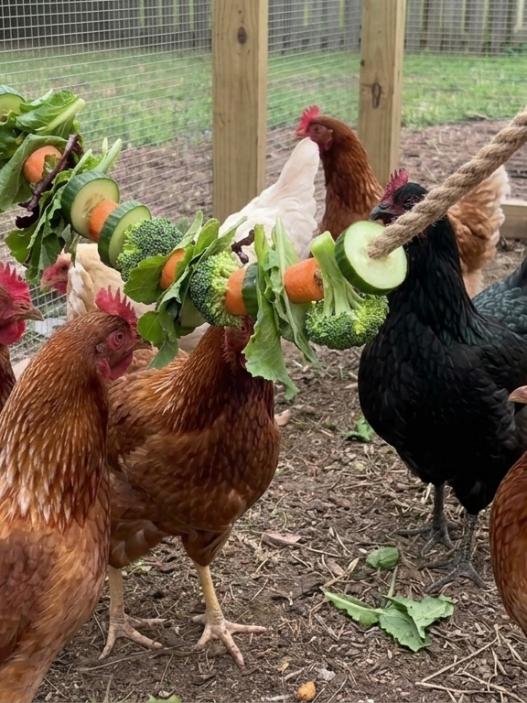
11. Make a Chicken Treat Garland With Vegetables
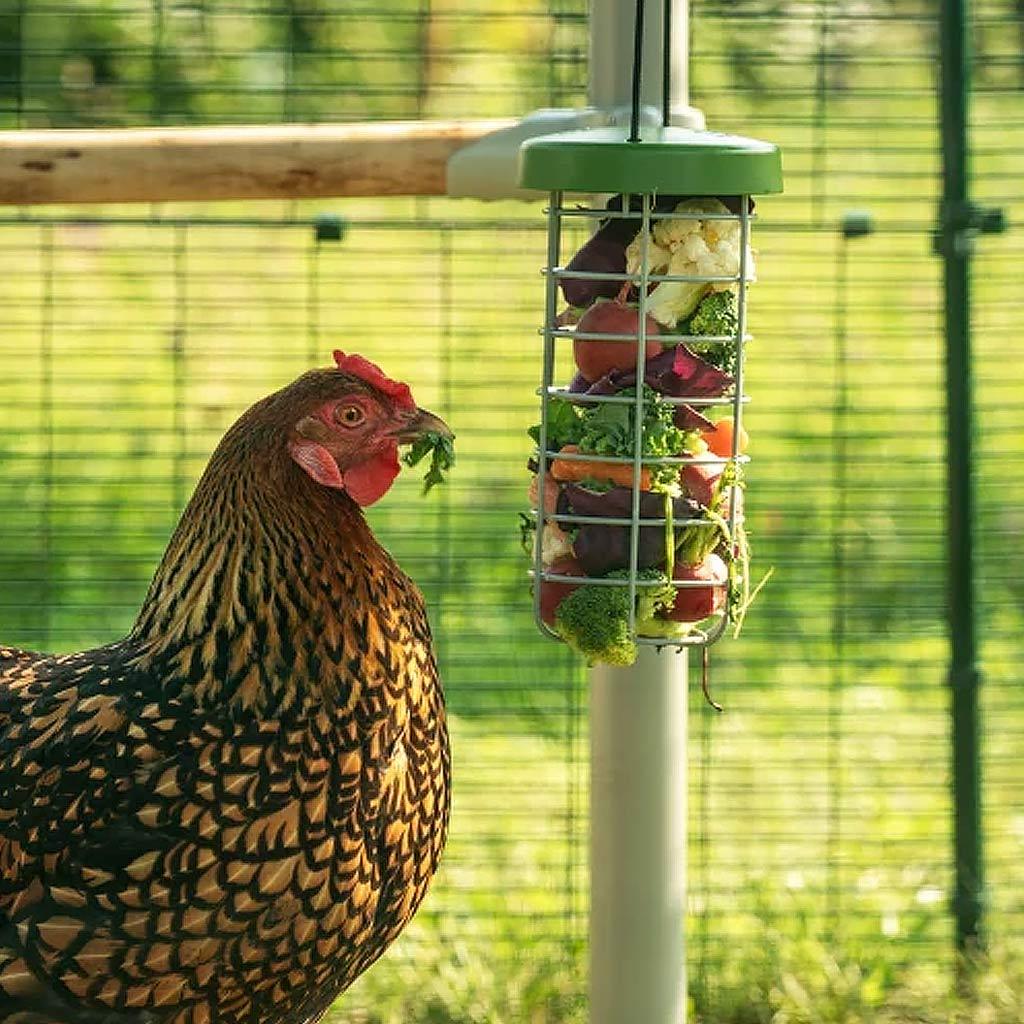
A row of securely held vegetables creates several pecking stations instead of one crowded snack spot.
Use purpose-made vegetable holders or firmly fixed wire baskets to position chicken-safe produce along a solid fence or wooden board.
Space the treats apart so several hens can participate without competing around the same small area.
Leafy lettuce, cabbage leaves, cucumber, zucchini, or other suitable vegetables can provide different textures for the flock to investigate. Changing the arrangement occasionally adds novelty even when familiar foods are being used.
Secure every holder carefully and avoid dangling strings, elastic, hooks, or loose wire that could catch feet or feathers.
12. Add a Chicken Tunnel Course
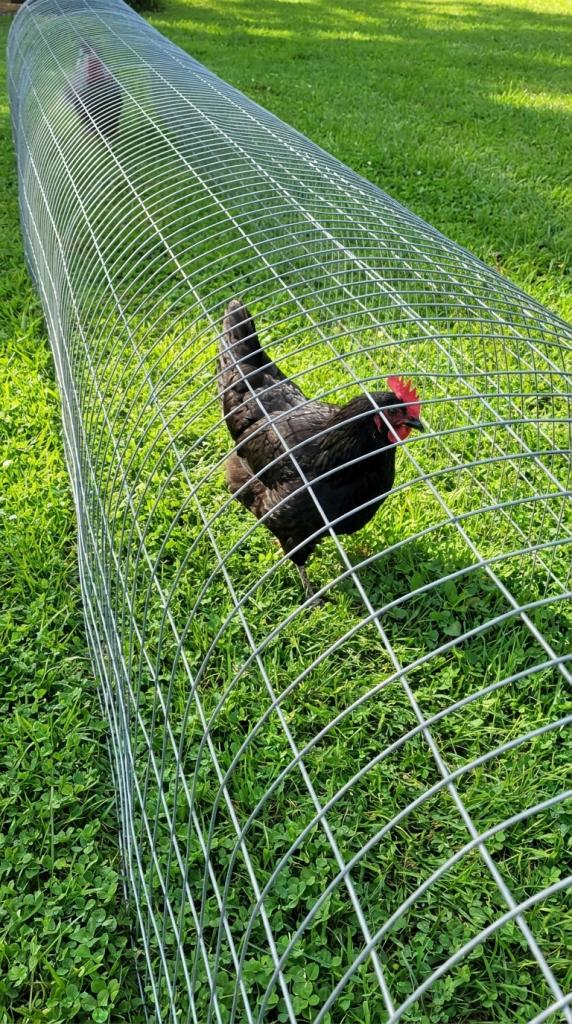
A short tunnel gives chickens a new route through the run and can turn an empty strip of ground into an exploration area.
Create a wide tunnel using securely fastened wire livestock panels, a sturdy open-ended wooden frame, or another chicken-safe structure.
The tunnel should be roomy enough for birds to walk through comfortably without squeezing against sharp surfaces.
Place it between two familiar areas, such as the main run and a grazing section, so chickens naturally begin using the route. A couple of low logs or safe leafy treats inside can encourage reluctant birds to investigate.
Tunnels will add shape and visual variety to a large open run while giving chickens another place to wander and forage.
13. Build an Herb Pecking Box
A raised herb box turns chicken-safe plants into a fragrant little enrichment station.
Use a sturdy planter or wooden box positioned where chickens can reach the leaves without standing inside the soil.
Fill it with chicken-safe herbs selected for the flock and local growing conditions, then protect the roots with secure mesh if enthusiastic scratching becomes a problem.
Leaves moving in the breeze naturally attract attention and give chickens something fresh to peck and inspect. Different plant shapes, scents, and textures make the area more interesting than a bare run wall.
A box can also be moved or temporarily removed when plants need time to recover from heavy pecking.
14. Make a Scratch-and-Search Foraging Tray
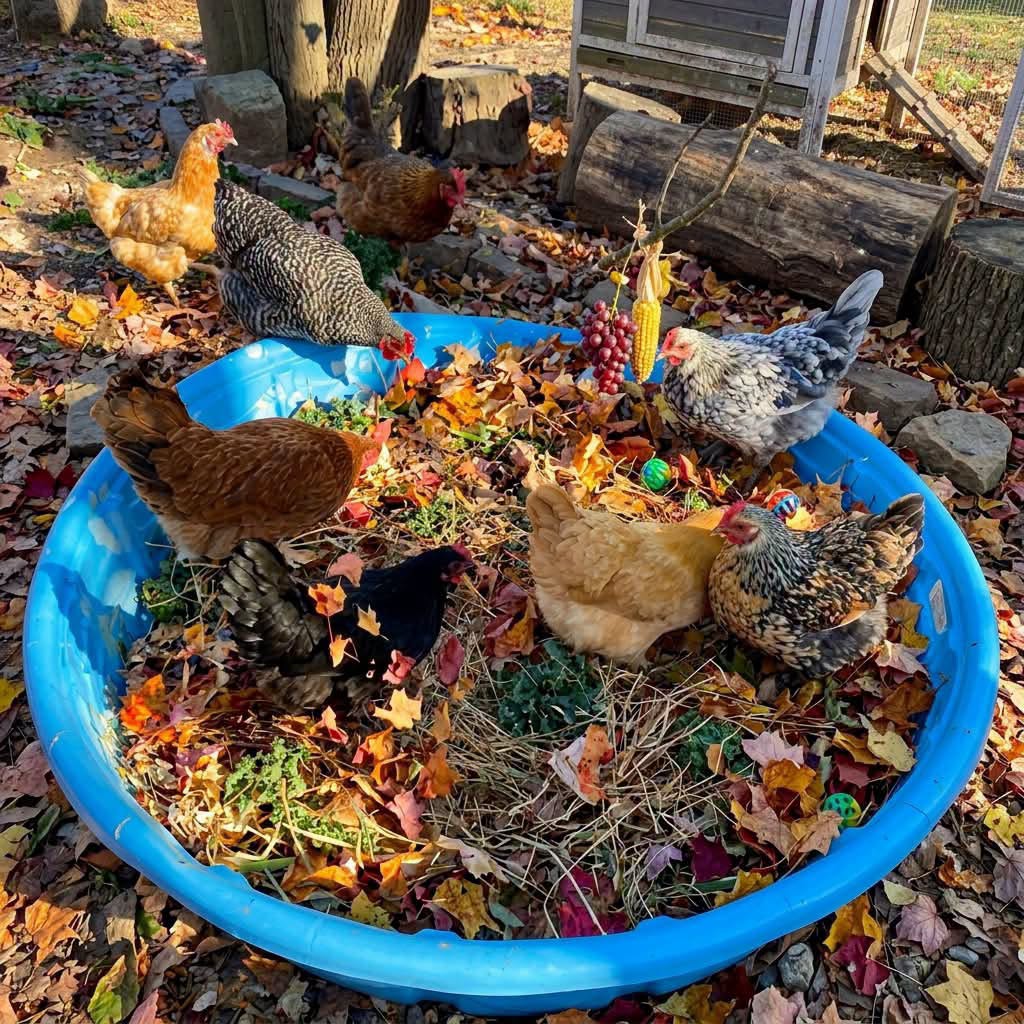
A shallow tray filled with loose natural material can turn a small handful of feed into a much longer activity.
Use a sturdy low-sided container and add dry leaves, clean straw, or another suitable loose material that chickens can scratch through safely.
Scatter a small amount of their regular feed throughout the tray and mix it below the surface rather than leaving everything visible on top.
The chickens need to scratch, shuffle, and search to uncover each piece, closely matching the foraging behavior they already use outdoors.
Several trays can be placed around a large run if one container creates too much competition between birds. Change the dry filling regularly and remove anything wet, moldy, sharp, or heavily soiled.
15. Create a Multi-Level Pallet Playground
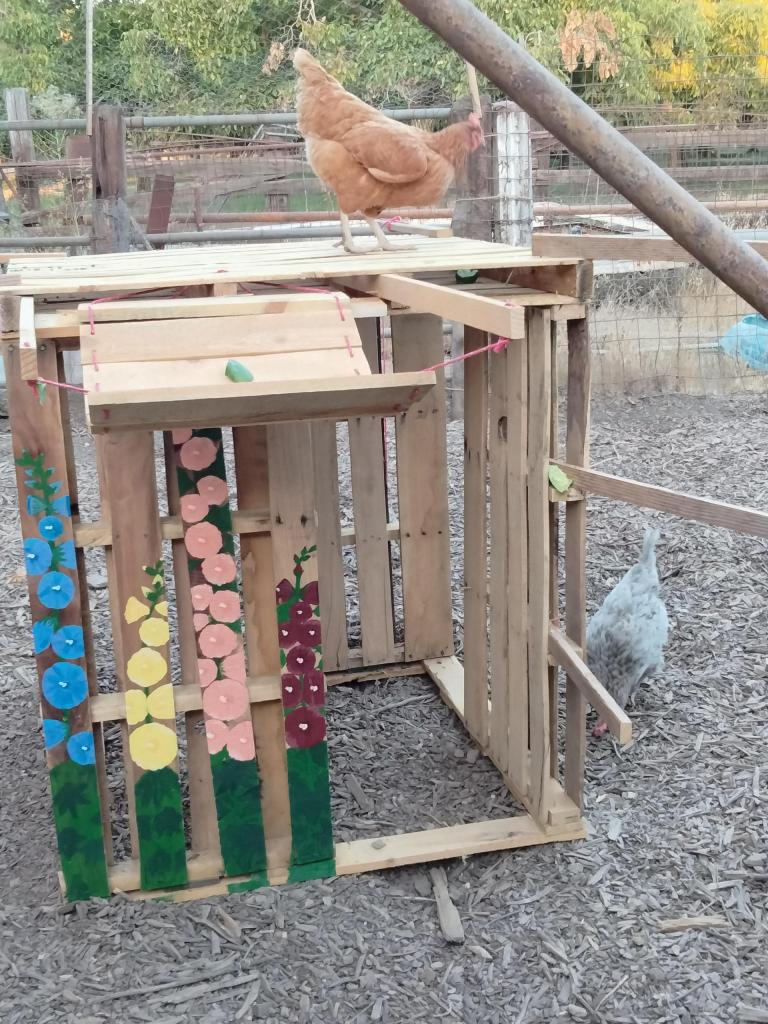
A carefully rebuilt pallet can become a compact climbing station with platforms, ramps, and low perches.
Start with clean, untreated, chicken-safe lumber rather than placing an unknown shipping pallet directly into the run.
Use the boards to build two or three broad platforms connected by a gently sloped ramp with small wooden grip strips. Different levels give chickens places to hop, perch, look around, and move away from busier areas of the flock.
A few sturdy branches can be added between sections to combine natural perches with the wooden structure.
Sand rough edges, remove exposed nails or screws, and keep each platform low enough that an awkward landing is unlikely to cause injury.