








Chicken Run Activities become especially useful once your hens have scratched every last patch of grass into bare, compacted dirt. When there is nothing left to dig through or investigate, even a decent-sized run can start feeling pretty boring.
That is where a few simple chicken activities can make a big difference. Adding leaves, logs, forage areas, climbing spots and other chicken enrichment gives hens new reasons to scratch, peck and explore.
These ideas are practical, inexpensive and easy to add to an existing run, with plenty of simple chicken coop hacks and DIY chicken coop toys you can create from everyday materials.
1. Give Them a Fresh Pile of Leaves to Destroy
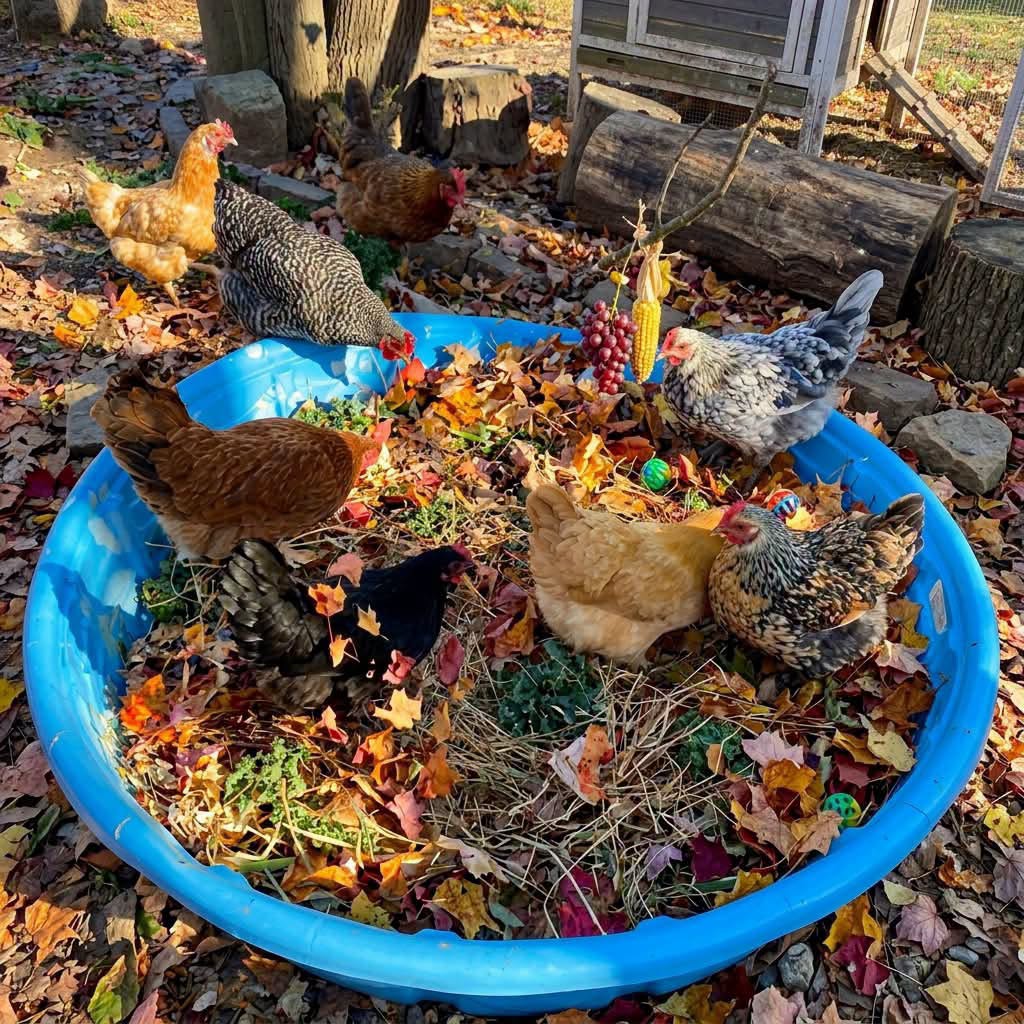
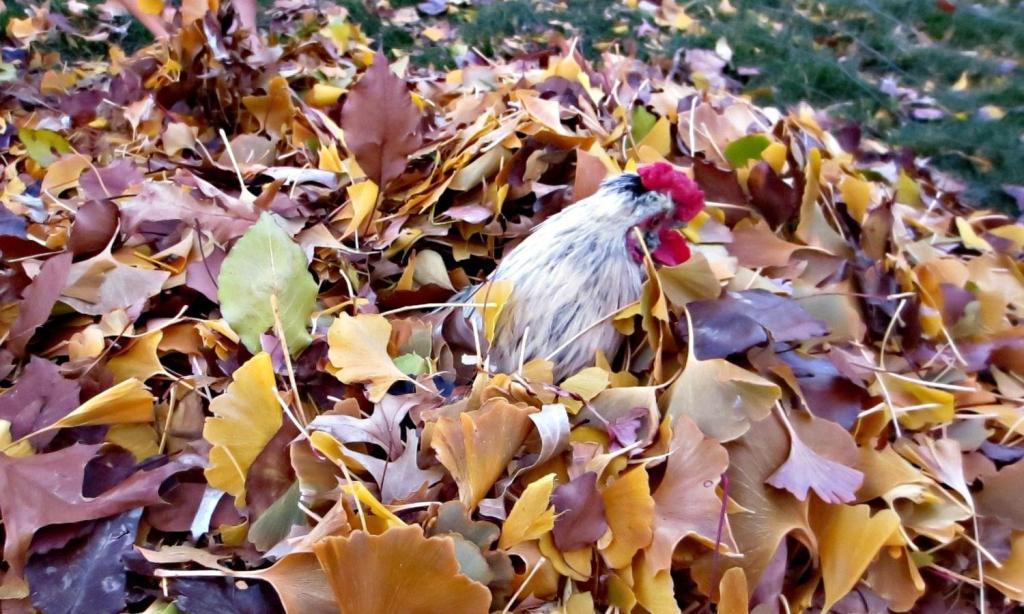
A big pile of dry leaves can turn a boring patch of bare dirt into an instant chicken playground.
Dump a generous mound of dry, untreated leaves into one section of the run and let the flock do the rest. Chickens can scratch through leaves looking for tiny seeds, insects and interesting bits, which gives them much more to investigate than hard, compacted soil. Backyard chicken keepers regularly use leaf piles and mixed scratching materials as enrichment for exactly this reason.
Make the pile deep enough that they actually have to kick through it rather than simply walking across the top. I would start with several large garden bags if you have a medium-sized run.
For extra interest, scatter a very small amount of their normal feed through the leaves before you pile them up.
Suddenly breakfast takes a little longer because they have to search for it.
You can also mix in pine needles, dried herb stems or untreated garden trimmings that are safe for chickens.
2. Build a Chicken Scratch Box
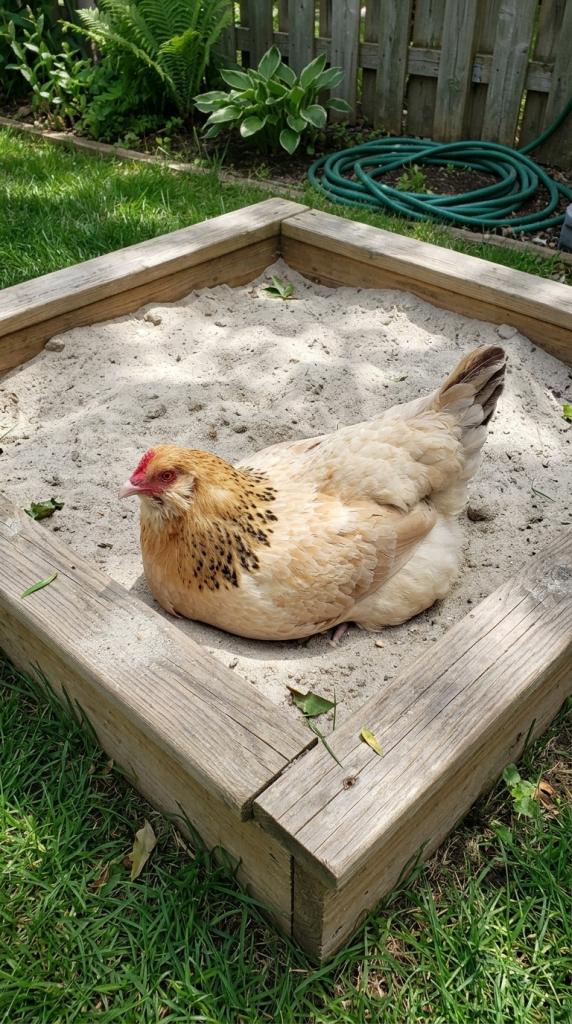
Think of this as a miniature digging pit created specifically for hens that no longer have anything interesting left to scratch.
Use a shallow wooden box, old raised garden bed, large under-bed storage tray or sturdy plastic mixing tray. Fill it with loose materials such as clean soil, coarse sand, dry leaves and untreated wood chips.
The contrast between loose material and the hard ground around it immediately creates something new for chickens to investigate.
Hide a few pieces of their regular feed inside instead of pouring treats over the top. Your hens have to scratch, push and dig before finding anything worthwhile, turning feeding time into a genuine chicken boredom buster.
Refresh the contents whenever everything becomes flattened.
3. Add a Log Pile They Can Climb and Explore
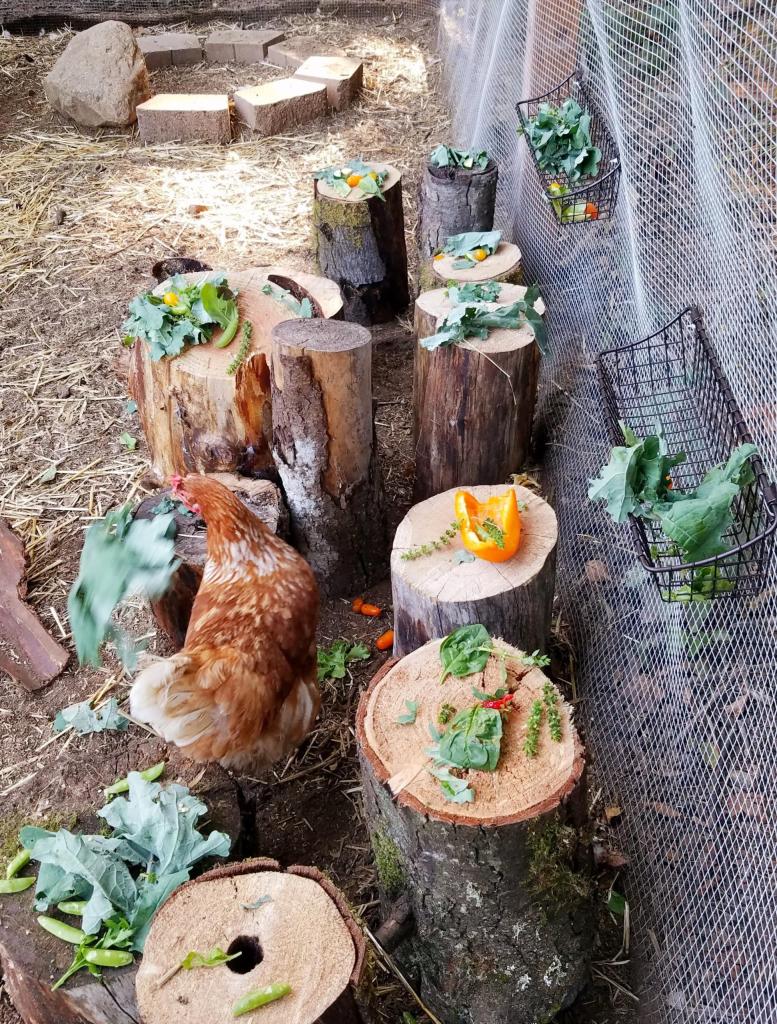
A few sturdy logs can completely change a flat chicken run.
Lay two or three thick logs on the ground, then arrange another securely across them to create different heights. You do not need anything elaborate. Fallen branches, untreated firewood rounds and tree stumps can all become useful chicken enrichment when positioned safely.
Chickens can hop onto them, walk along them, perch for a while and investigate the bark.
Logs also develop tiny cracks and textured areas that are much more interesting to peck around than smooth dirt.
Keep everything low and stable, particularly if you have heavier breeds that are not graceful jumpers.
4. Hang a Cabbage Just Above Head Height
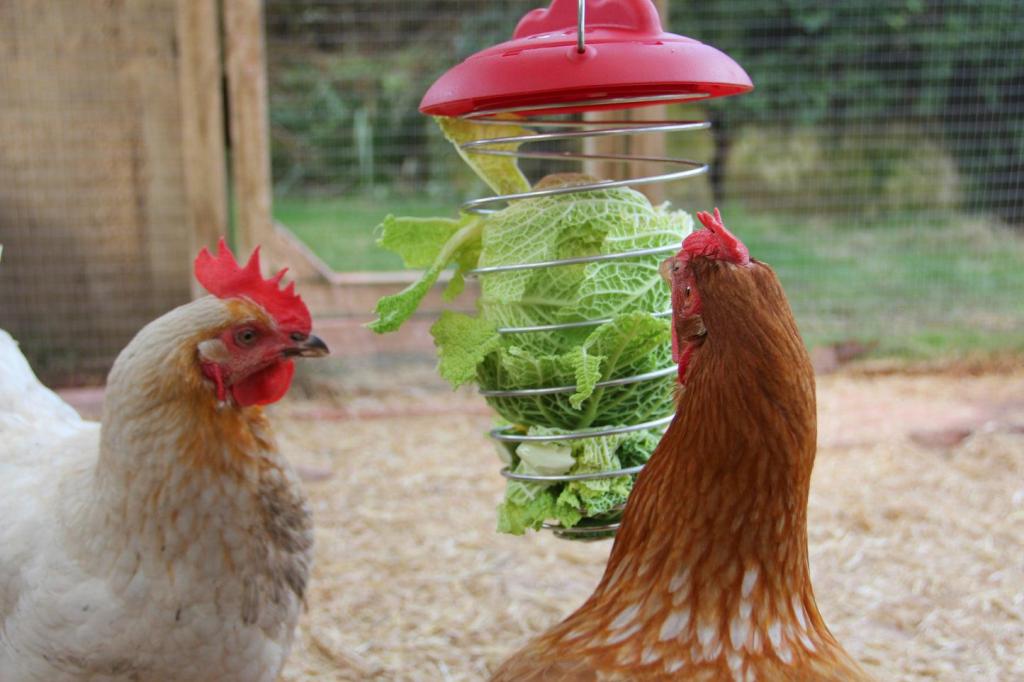
A hanging cabbage turns an ordinary vegetable into an activity rather than a five-minute snack.
Thread sturdy cord through the cabbage or secure it inside an appropriate hanging vegetable holder, then suspend it where the hens need to stretch slightly to peck at it.
The gentle movement makes them reposition, reach and peck repeatedly rather than simply standing around a vegetable lying on the floor.
Hanging fruit and vegetables are commonly suggested as chicken enrichment, although extras should remain extras rather than replacing a nutritionally complete everyday feed.
Try cabbage, romaine lettuce or another chicken-safe leafy vegetable your flock already eats.
5. Make a Rotating Forage Tray
Instead of trying to keep grass alive across the entire run, grow a small patch that chickens can access only from above.
Use a shallow planting tray or low wooden frame and sow chicken-safe greens underneath a securely attached piece of strong wire mesh. The plants grow through the openings while the roots remain protected from enthusiastic scratching.
Once the greenery reaches the mesh, place the tray inside the run.
The hens can nibble the fresh growth without immediately digging up every root.
It gives chickens something fresh and green to investigate even when the actual ground resembles a miniature desert.
6. Create a Deep Wood Chip Scratching Zone
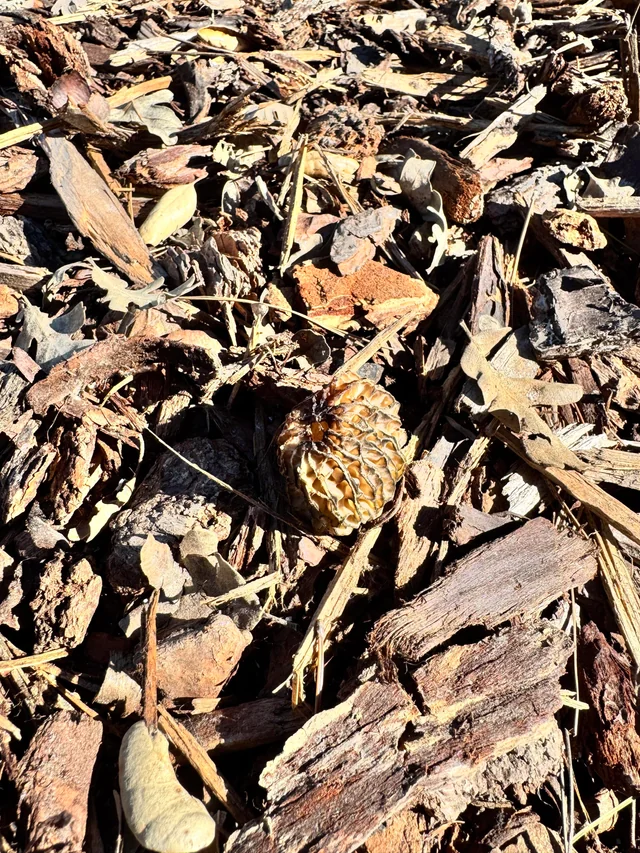
Give your hens something much more satisfying to kick around than compacted earth.
Spread a thick layer of untreated arborist wood chips over one area of the run rather than adding a thin decorative sprinkle. You want enough depth for chickens to move material around with their feet.
The irregular pieces create texture, little gaps and plenty of places to investigate.
Scatter a handful of their usual feed through the chips occasionally and you will quickly see why this makes such effective chicken enrichment.
Pinterest results around chicken boredom and run ideas frequently feature wood chips and scratching areas, which makes sense for runs where vegetation has already disappeared.
Wood chips can also visually transform a muddy or bare section of run, making the space look more intentional.
7. Turn an Old Ladder Into a Chicken Jungle Gym
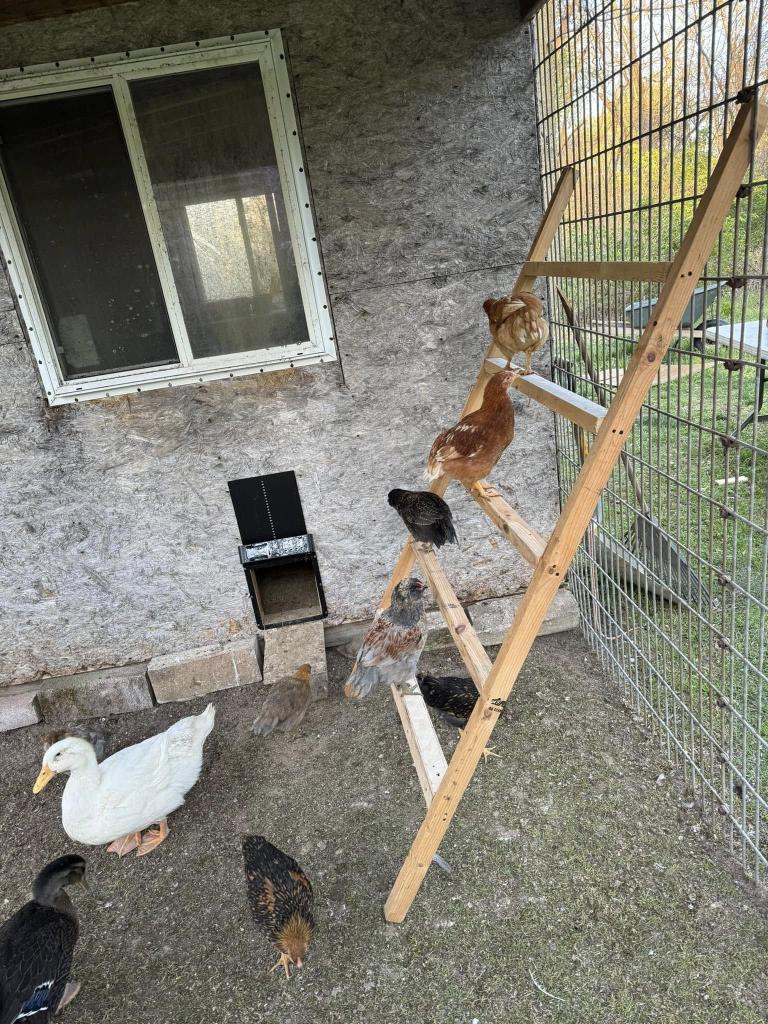
An old wooden ladder can give hens several new places to stand without taking up much ground space.
Lay a short ladder at a gentle angle against a secure platform or build a simple ladder from untreated timber offcuts.
The different rungs encourage chickens to hop upward, balance and choose where they want to sit.
Ramps, platforms, ladders, stumps and branches are all recommended ways to create more varied physical environments for chickens.
Keep the structure stable and make sure there are no sharp screws, splinters or gaps where toes could become caught.
For a bare run, vertical space becomes particularly valuable because you are creating activities without needing additional square footage.
You can occasionally place a small amount of feed on one platform so curious hens have a reason to investigate it.
8. Give Them a Dedicated Dust Bath Station
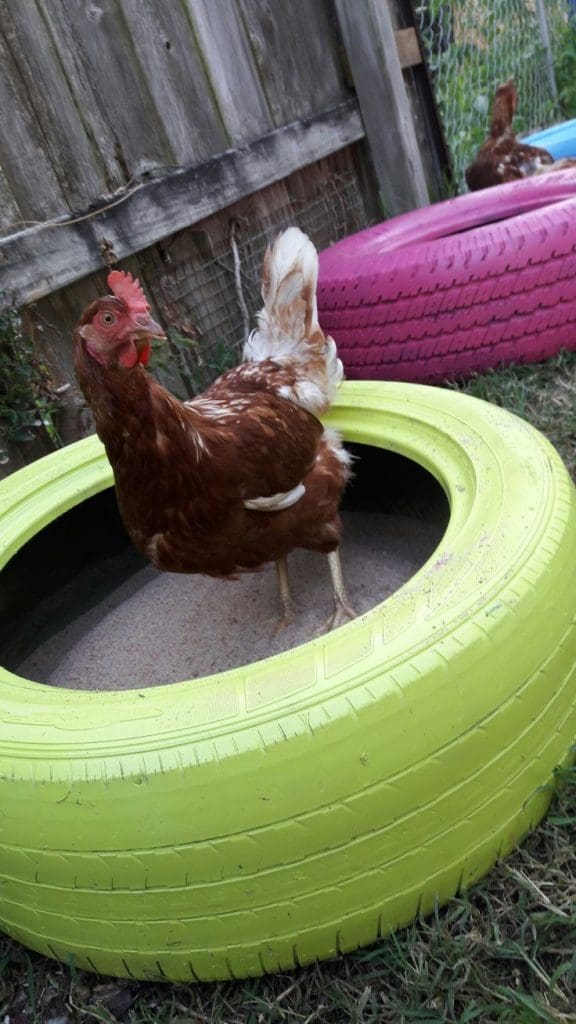
If your hens have turned the entire run into hard-packed ground, give them a softer place where they can properly settle in and dust bathe.
Use a wide, shallow tub, old sandpit, large planter base or low wooden box and fill it with dry, loose chicken-safe soil or sand suitable for dust bathing.
The container should be large enough for a chicken to lower herself into the material and shuffle around comfortably.
Place it under cover if your run gets a lot of rain.
A communal dust bath can become one of the most frequently used pieces of chicken enrichment in a plain run.
9. Build a Mini Compost Scratching Corner
Give your flock a controlled pile of materials they are actually allowed to tear apart.
Choose one corner of the run and contain it loosely with boards, logs or a low garden edging panel. Add appropriate dry leaves, chopped plant material and other chicken-safe compostable garden matter, avoiding anything moldy, toxic, sprayed with chemicals or unsuitable for poultry.
A compost-style scratching pile creates layers.
Backyard chicken keepers often recommend piles of dirt, straw, leaves or compost-style material to give confined birds more opportunities to search and scratch.
Turn the pile occasionally, then let the chickens rearrange it all over again.
10. Hide Their Regular Feed Inside Cardboard Tubes
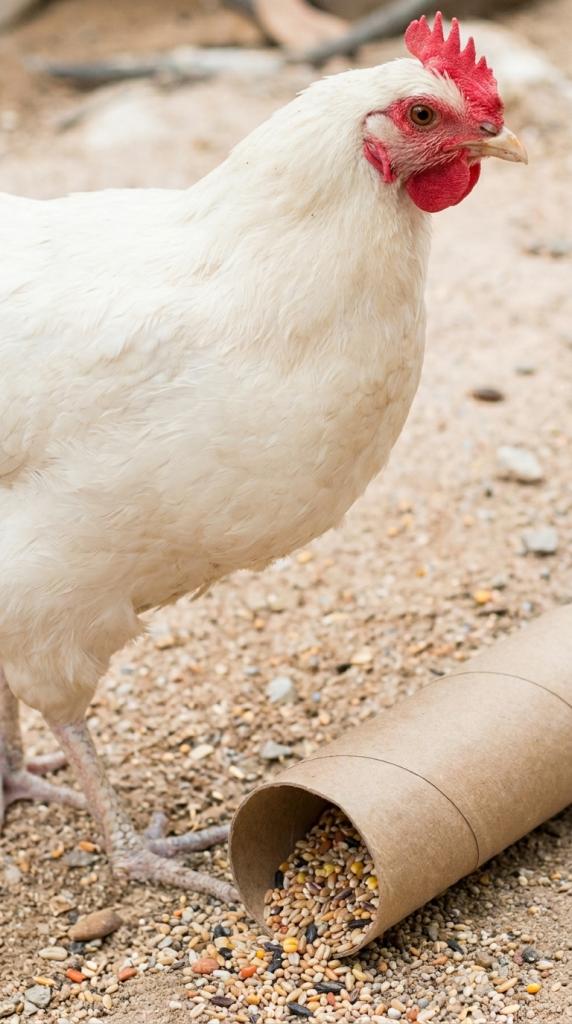
You do not need expensive chicken toys when the recycling bin is sitting right there.
Take plain cardboard toilet-roll tubes, fold one end loosely, add a small portion of the hens’ normal feed and fold the other end.
Make several small openings so a little food can fall out as chickens peck and move the tube.
You can place several around the run so one dominant hen cannot claim everything. Remove soggy or heavily torn cardboard afterwards, particularly in wet weather.
This is an easy chicken boredom buster for days when you want something different but do not want to feed lots of extra treats.
11. Make a Pecking Garland From Chicken-Safe Greens
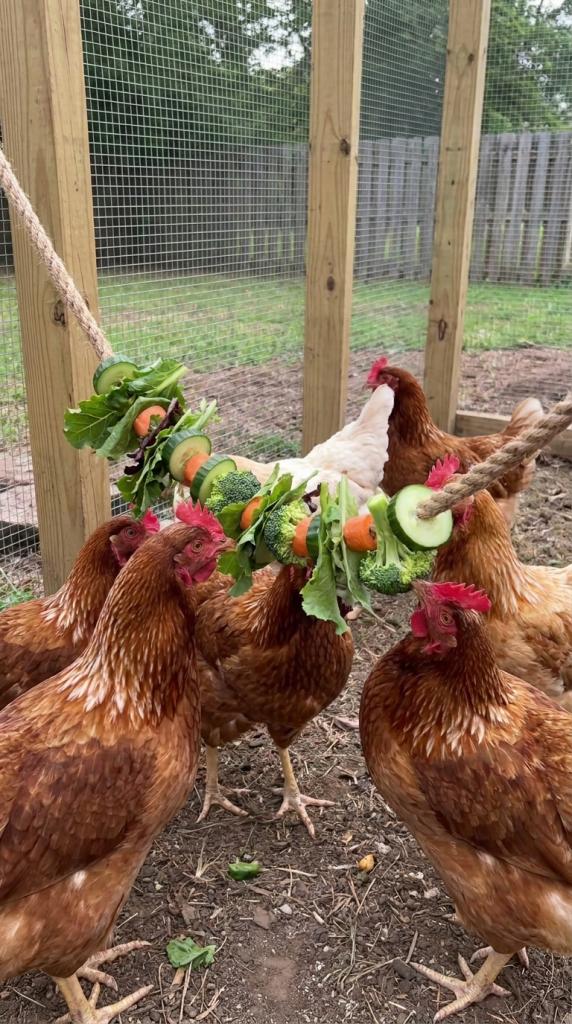
A vegetable garland gives your hens several little targets instead of one large pile of food.
Thread chunks of suitable chicken-safe vegetables onto a sturdy hanging system designed so birds cannot become tangled in loose string.
Space the pieces apart so the hens need to move along the garland rather than crowding one spot.
Cucumber slices, leafy greens or pieces of bell pepper can create different shapes and textures.
Keep portions modest, especially when you are offering extras alongside their regular diet.
12. Move a Few Flat Stones and Let the Hens Investigate Underneath
This might be the cheapest enrichment idea in the entire run.
Place several broad, stable stones or untreated pieces of timber flat on the ground for a day or two. Then move them while the hens are nearby.
The previously covered ground suddenly becomes new territory to inspect.
Depending on your conditions, chickens may find tiny insects, seeds or simply fresh loose earth worth scratching through. It is basically a reset button for an area they thought they had already explored.
You can rotate the stones between several positions instead of continually adding new objects. Just use pieces you can move safely, make sure nothing can roll onto a bird and avoid creating damp hiding places that become problematic.
13. Create a Pumpkin Pecking Station
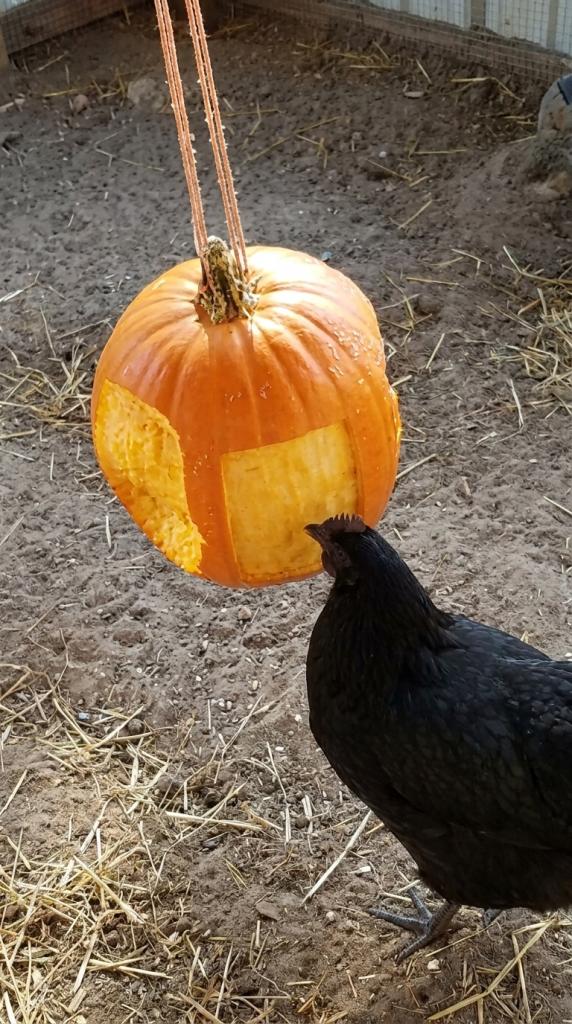
When pumpkins or squash are in season, turn one into a slow pecking activity rather than chopping everything into small pieces.
Use a chicken-safe variety, cut the pumpkin open and place a portion securely inside the run.
Leaving larger sections intact means the hens have to peck and pull at the softer interior instead of swallowing a pile of ready-cut pieces. That extra effort stretches the activity out.
The bright orange flesh also makes this one of the more visually appealing chicken enrichment ideas, particularly during autumn.
Treat foods should still remain a small part of the overall diet, so think activity first rather than unlimited buffet.
Remove leftovers before they spoil.
14. Build a Low Platform With Several Ways Up
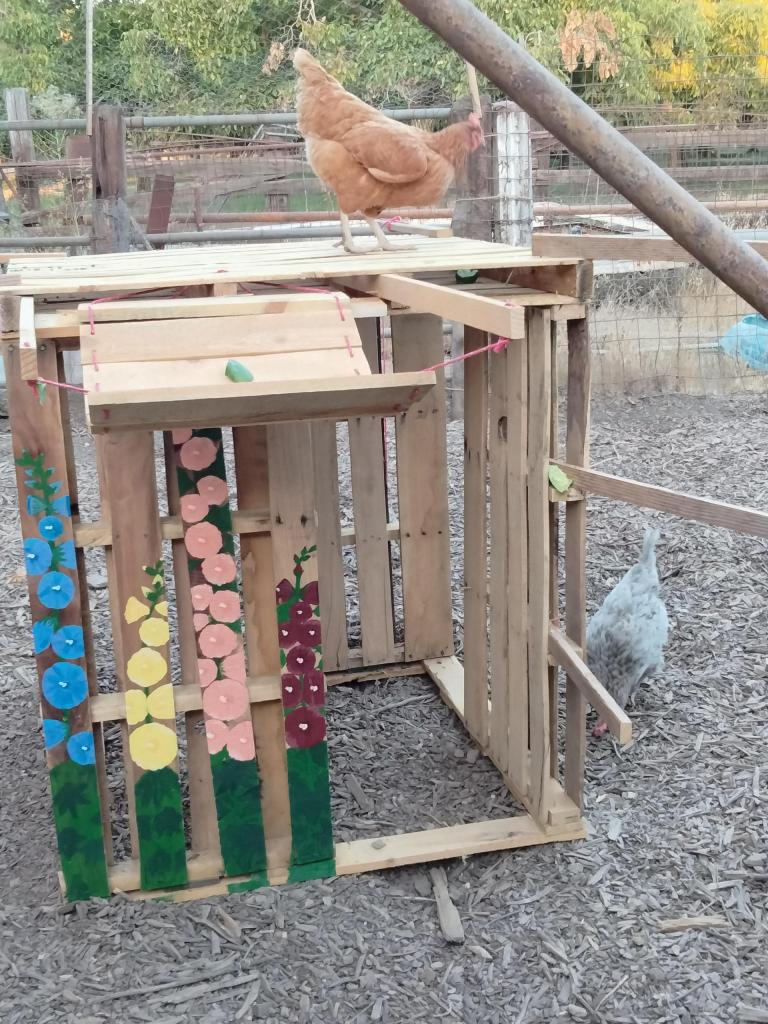
Give the hens somewhere new to go rather than another object sitting on the ground.
Build a low, sturdy wooden platform with a ramp on one side, a short stump on another and enough open space underneath for birds to walk through.
Suddenly one square metre of run has several usable levels.
One hen might stand on top to preen, another can investigate underneath and another can use the stump as a stepping stone.
Platforms and other structural additions increase the variety of ways chickens can use their environment.
Keep everything low enough for your breeds and make sure all surfaces are stable, dry and free from sharp edges.
You can occasionally scatter a tiny amount of regular feed underneath the platform to encourage exploration.
15. Create a Weekly Chicken Run Activity Rotation
The smartest enrichment idea may be not leaving every activity in the run permanently.
Choose four or five of your favorite Chicken Run Activities, then rotate them instead of putting everything out at once.
For example, Monday could mean a deep leaf pile, Wednesday might bring out the forage tray and Saturday could be the day you move logs and reveal fresh ground underneath.
Meanwhile, permanent features such as the dust bath, platforms and wood-chip scratching area can stay in place.
Rotation helps familiar objects feel interesting again without requiring you to continually buy new chicken coop toys.
I would keep a small basket beside the feed supplies with simple enrichment items such as vegetable holders, cardboard tubes and feeder toys so changing things takes a minute rather than becoming another chore.
You can also move existing logs, branches or platforms into slightly different arrangements.
When hens have already scratched the ground bare, the goal is not to somehow stop them wanting to forage. It is to keep giving that curiosity somewhere useful to go.