







If traditional lattice feels dated or doesn’t suit your home, there are plenty of stylish lattice alternatives for under deck spaces that provide better coverage and a more finished appearance. From horizontal wood boards and decorative metal screens to faux stone and modern slatted designs, these ideas offer practical alternatives for different budgets and home styles.
1. Horizontal Pallet Board Skirting
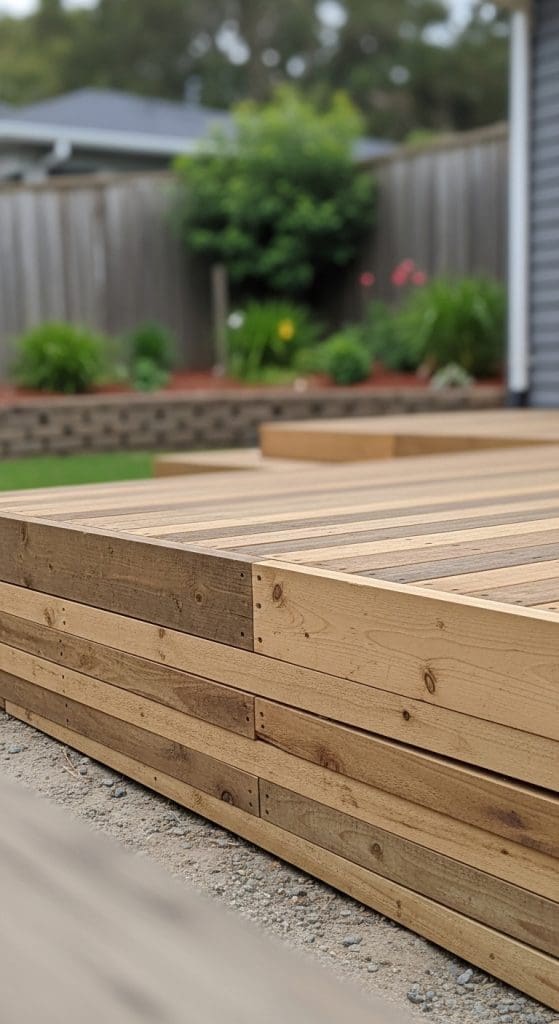
We recommend repurposed pallet boards if you want an inexpensive alternative to traditional lattice with a rustic appearance.
Sand the boards and install them horizontally with small, even gaps to maintain airflow beneath the deck.
A stain or exterior paint can make inexpensive pallet wood look much more polished.
This approach works especially well for farmhouse, rustic, and casual backyard designs while providing more visual coverage than standard lattice.
2. Corrugated Metal Panels
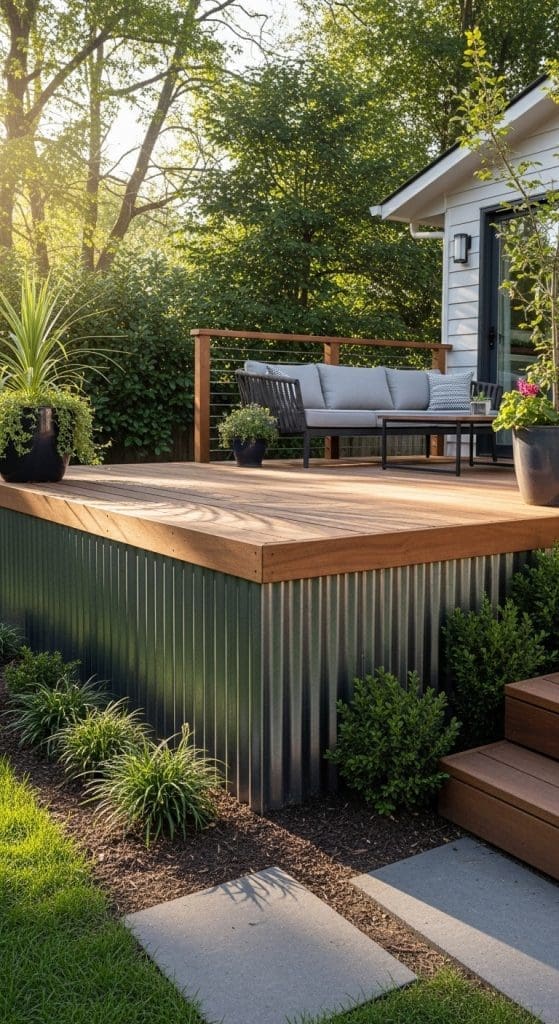
Corrugated metal is a durable lattice alternative that works particularly well with modern farmhouse and industrial-style homes.
Install the panels vertically or horizontally beneath the deck to create solid coverage that hides storage and other clutter.
Galvanised metal handles outdoor conditions well and requires relatively little maintenance.
Pairing the metal with a simple wood frame can soften the industrial appearance and create a more intentional finish.
3. Bamboo Reed Screening
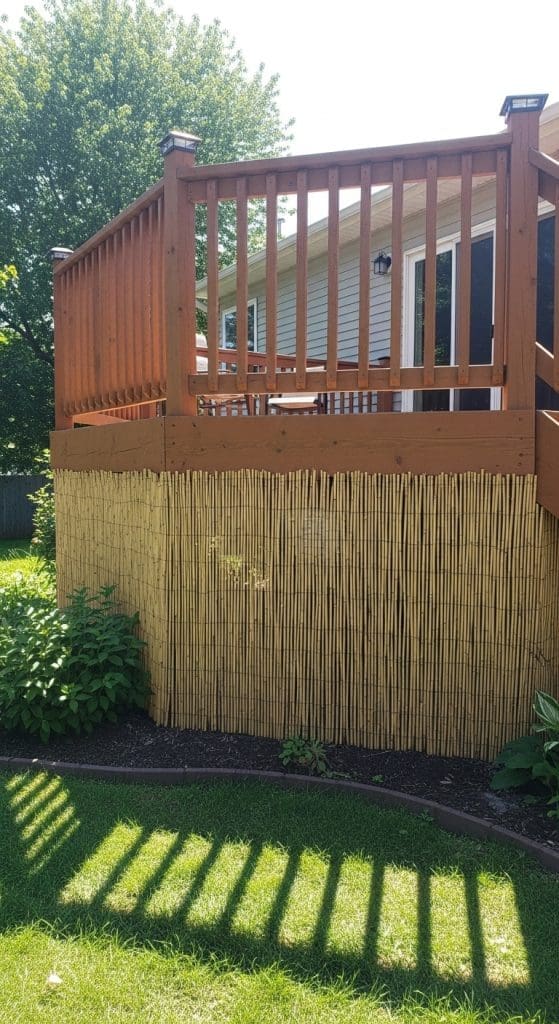
For a softer, more natural look, bamboo reed screening can disguise an open under-deck area without making it feel completely enclosed.
Bamboo rolls are lightweight, easy to trim, and can be attached to a basic wooden frame.
The natural texture works particularly well in tropical, coastal, bohemian, and garden-focused backyards.
Choose outdoor-rated bamboo and keep it slightly above the soil to help extend its lifespan.
4. Pressure-Treated Vertical Slats
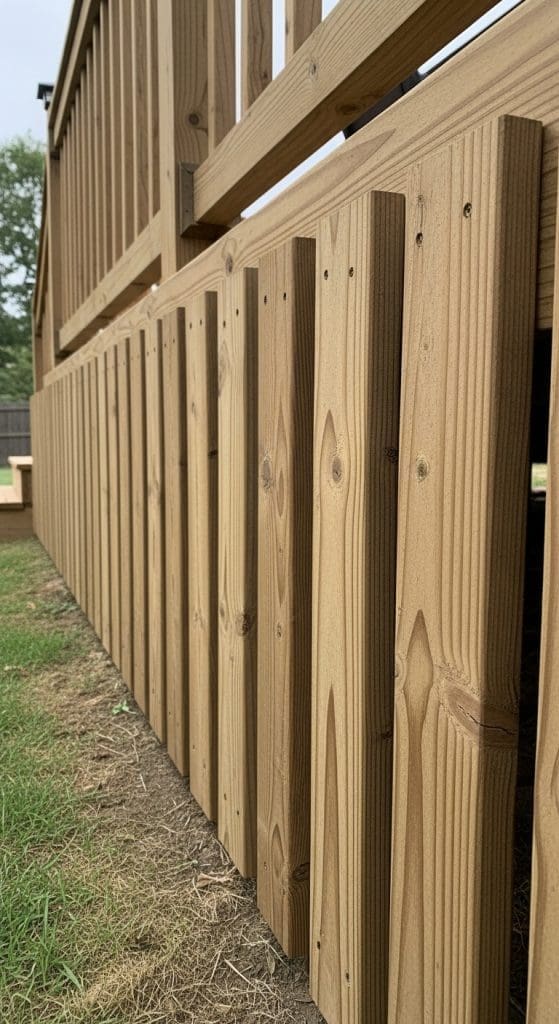
Vertical wood slats are one of the most versatile alternatives to lattice.
Pressure-treated boards can be spaced evenly around the deck perimeter, providing privacy while still allowing ventilation underneath.
Adjusting the spacing lets you control how much of the under-deck area remains visible.
Paint the boards to match the deck for a seamless appearance, or stain them to highlight the natural wood grain.
5. Faux Stone Panels
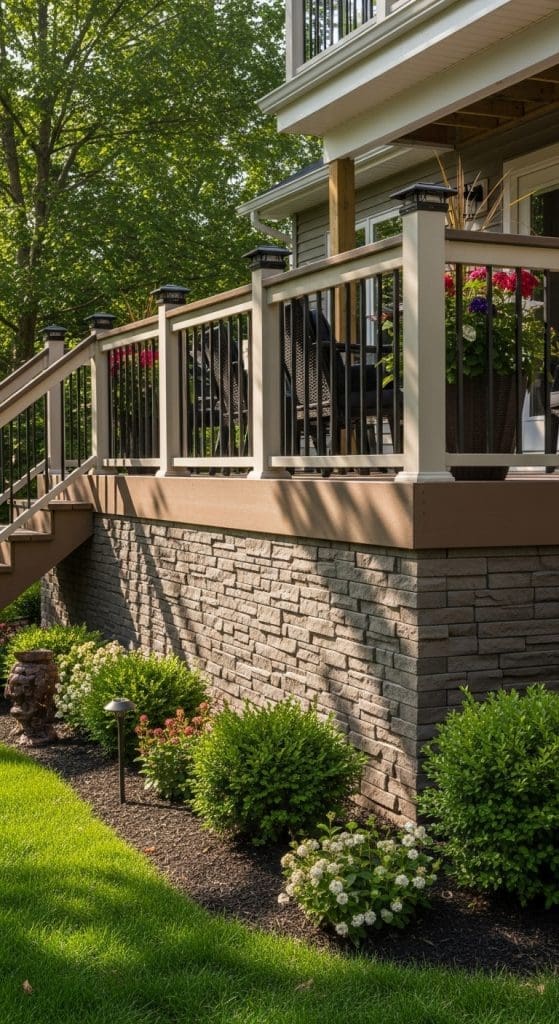
Faux stone panels are worth considering when you want the underside of the deck to look more like part of the home’s foundation.
Lightweight manufactured panels recreate the appearance of stacked stone without the weight, labour, and expense associated with traditional masonry.
They provide excellent coverage and can give an elevated deck a more substantial, high-end appearance.
This option works particularly well on decks visible from the street.
6. Galvanised Wire Panels with Wood Frames
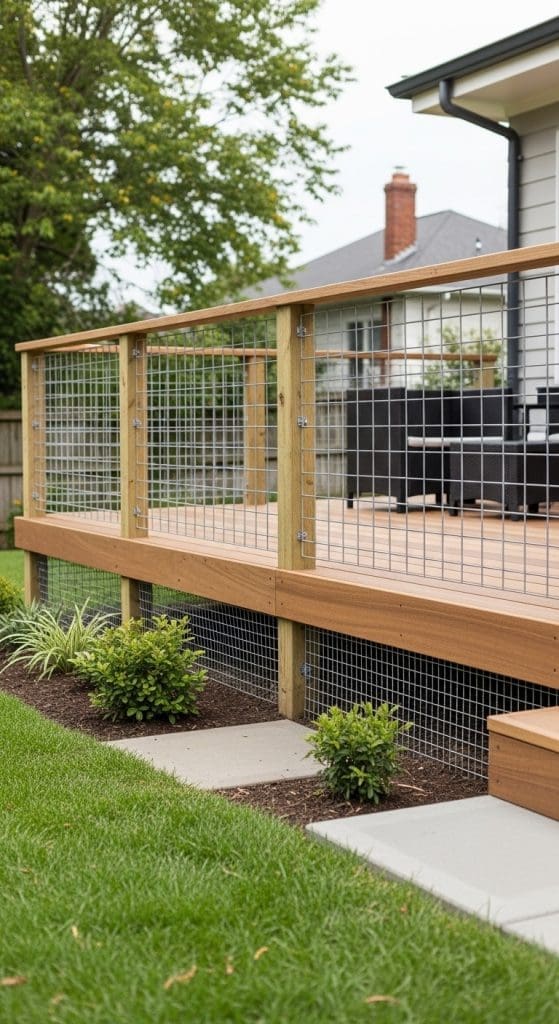
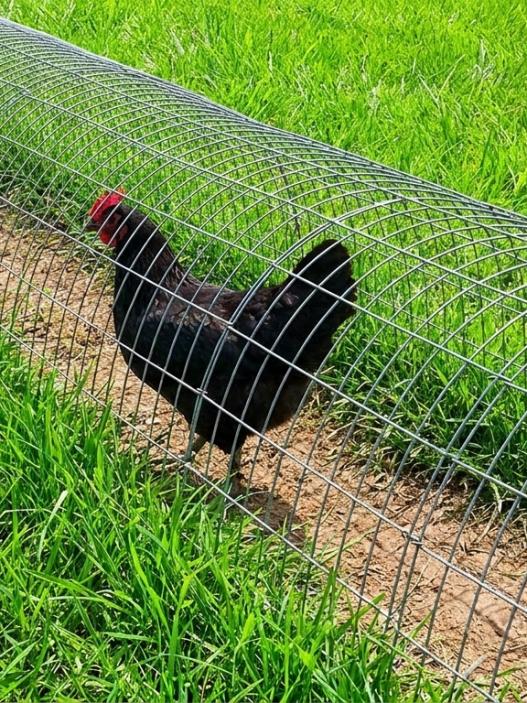
Galvanised wire panels framed with timber provide a more open alternative to lattice.
The wire helps discourage larger animals from entering beneath the deck while maintaining excellent ventilation and visibility.
A substantial wooden frame gives the simple wire material a finished appearance.
This combination is especially suitable for farmhouse, country, and rustic outdoor spaces.
7. Composite Deck Board Skirting
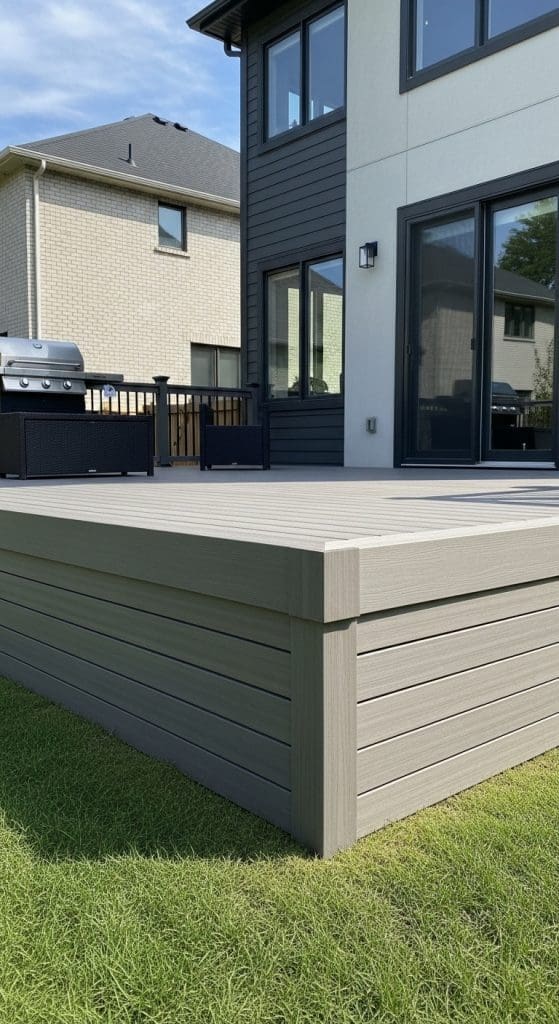
Composite boards can create sleek, low-maintenance skirting that coordinates with the deck above.
Install the boards horizontally or vertically with consistent spacing to create a modern slatted effect.
If new composite boards are outside your budget, ask deck installers or suppliers about leftover pieces and offcuts.
Using the same or complementary material as the deck creates a cohesive appearance while avoiding the maintenance associated with natural timber.
8. PVC Board Skirting
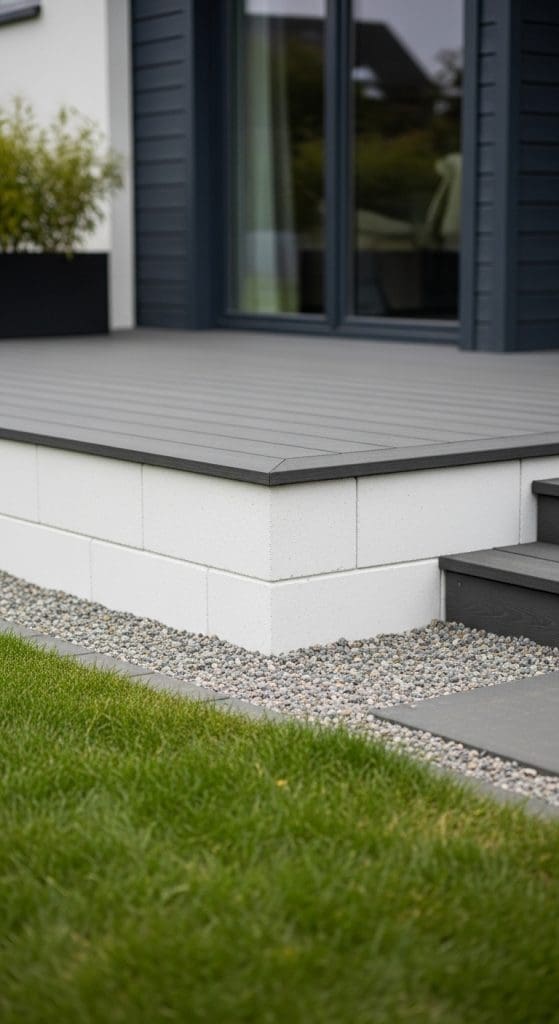
PVC boards are a practical option when moisture and maintenance are major concerns.
Unlike traditional wood, PVC will not rot or attract wood-damaging insects and generally does not require staining.
Boards can be arranged vertically or horizontally with narrow gaps for ventilation.
The clean lines make PVC particularly suitable for contemporary homes, coastal properties, and decks where a crisp painted appearance is preferred.
9. Recycled Shutter Skirting
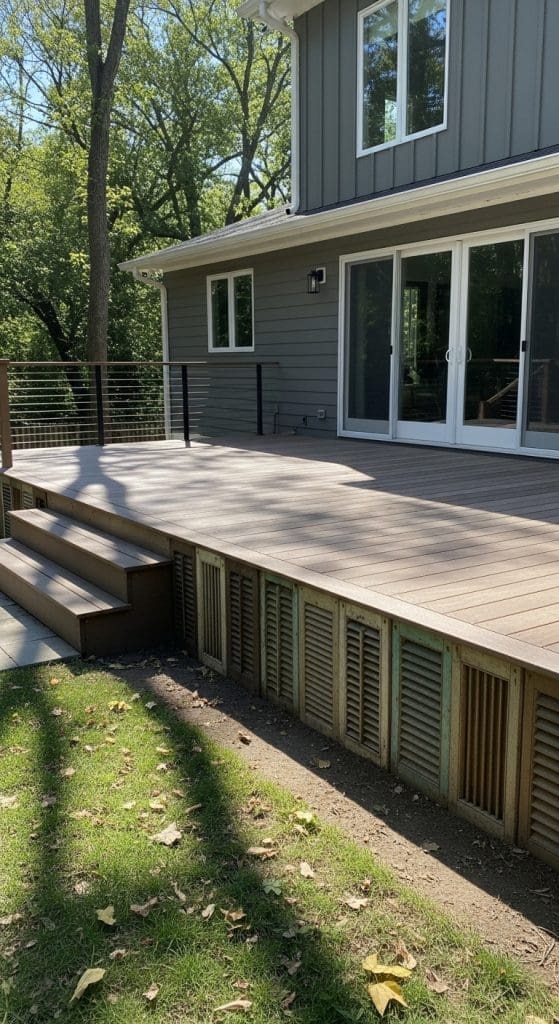
Old shutters can turn an awkward under-deck opening into an intentional architectural feature.
Install matching shutters side by side beneath the deck, using their existing slats to provide ventilation.
Salvaged shutters can be painted one colour to create a more cohesive result, even if they originally came from different sources.
This idea works particularly well with cottage, coastal, vintage, and traditional homes.
10. Rope and Post Skirting
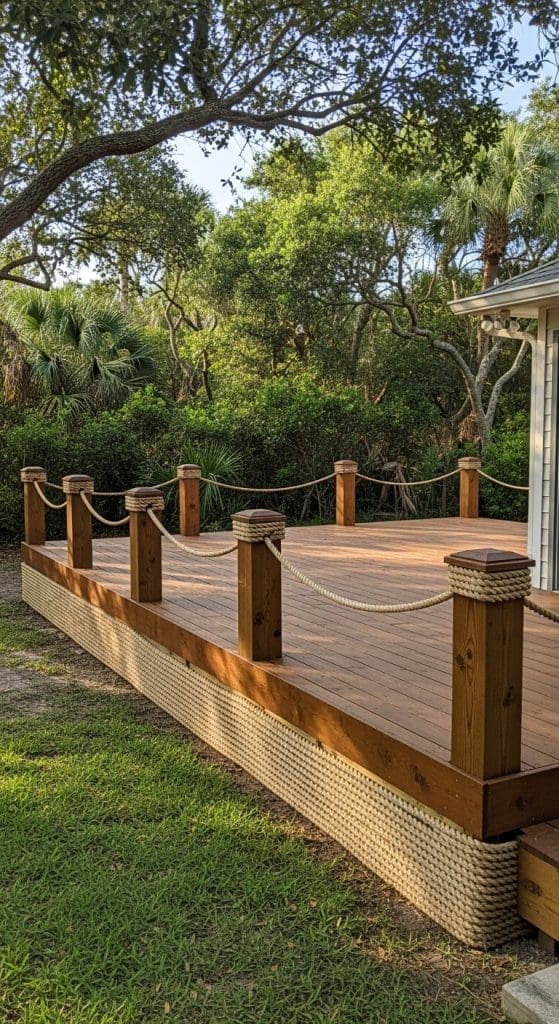
Rope and posts provide a decorative solution when you want to define the area beneath a deck rather than completely conceal it.
Install simple posts around the perimeter and run thick exterior-grade rope horizontally between them.
The result creates a relaxed nautical appearance without blocking airflow.
Because it offers limited concealment, this option works best when the space underneath is already relatively tidy.
11. Trellis Panels with Climbing Plants
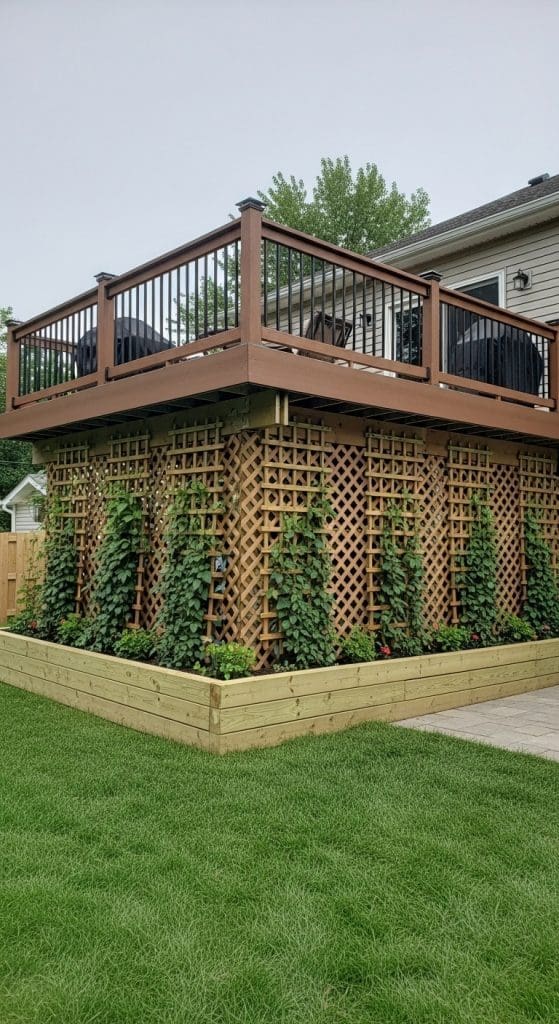
Instead of hiding the deck with conventional lattice, use simple trellis panels as supports for climbing plants.
As vines mature, they soften the exposed underside and create a living screen of foliage.
This approach works particularly well when the deck borders a garden or landscaped area.
Choose climbing plants appropriate for your climate and avoid varieties that may damage timber or become difficult to control.
12. Salvaged Fence Panel Skirting
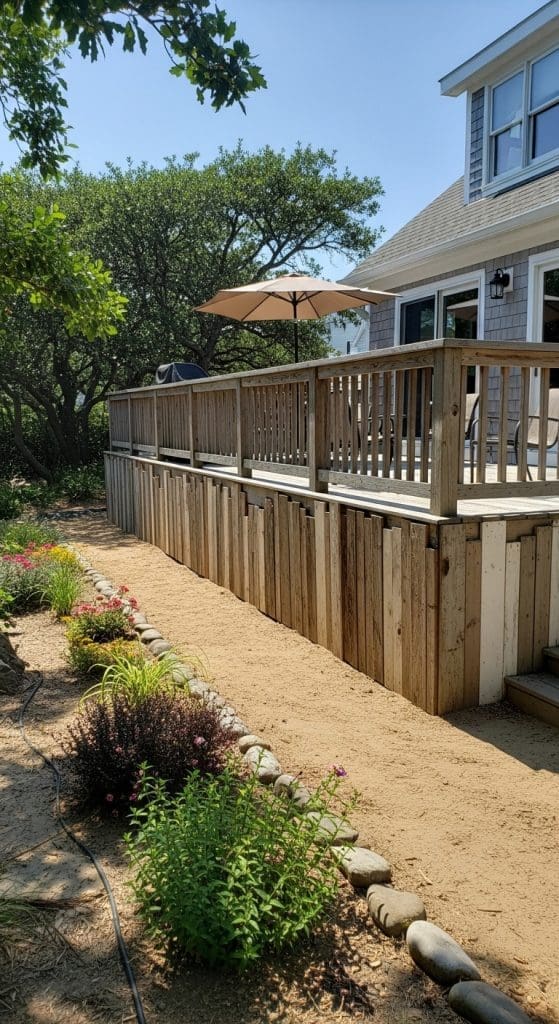
Old fence panels can be resized and repurposed into substantial under-deck skirting.
Picket, board-on-board, or slatted fence sections provide more coverage than lattice while adding architectural detail.
Painting or staining all the panels the same colour helps mismatched salvaged pieces look intentional.
It is a particularly useful approach when you already have leftover fencing from another outdoor project.
13. Wooden Crate Slat Skirting
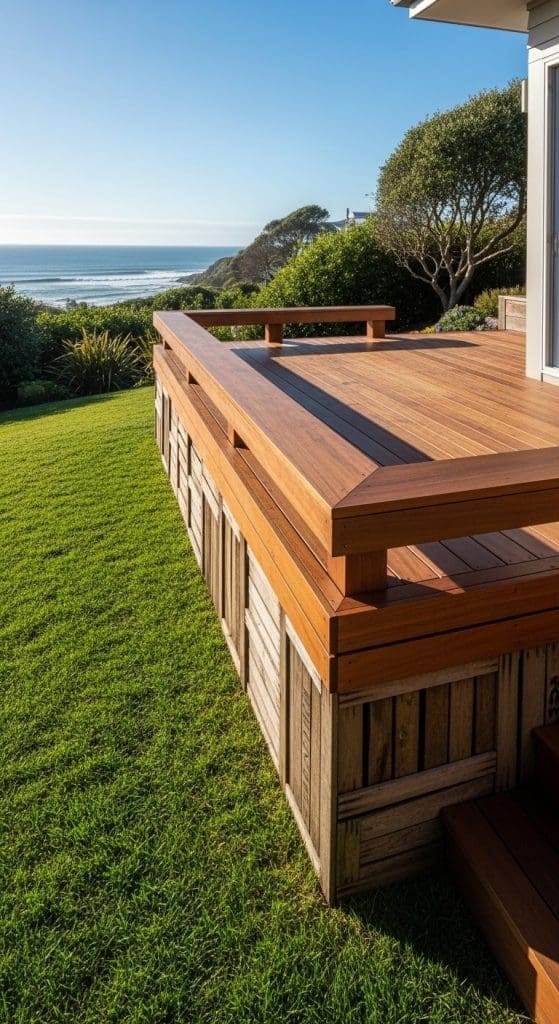
Wooden crates can be dismantled to provide narrow boards for DIY deck skirting.
Arrange the slats horizontally or vertically with consistent gaps rather than installing them randomly.
The spacing maintains airflow while the repeating boards create a more contemporary appearance than lattice.
Sanding and staining the wood helps transform reclaimed material into something that looks deliberately designed.
14. Reclaimed Barn Wood Skirting
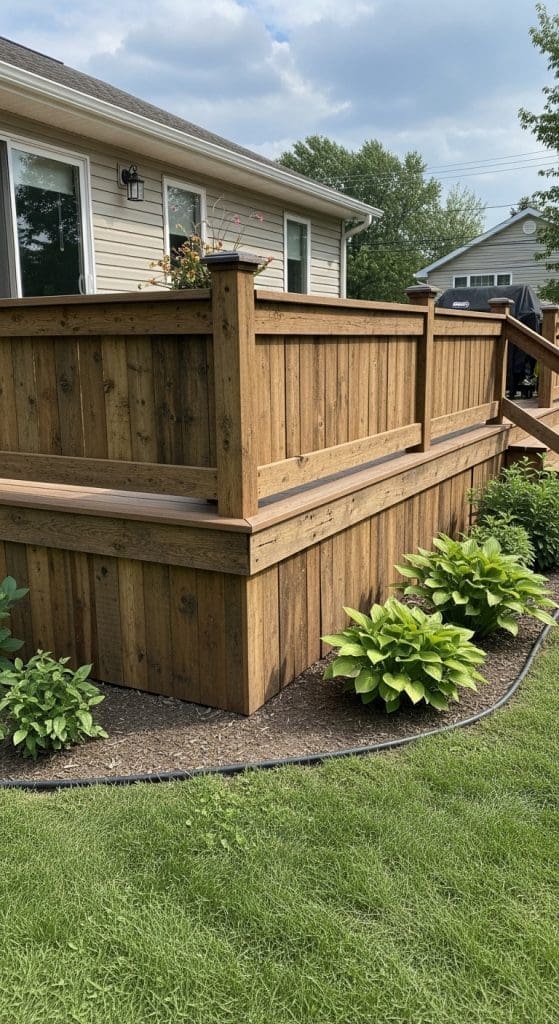
Reclaimed barn wood adds texture and character beneath decks on farmhouse, cabin, and rustic-style homes.
Install boards vertically or horizontally, depending on the proportions of the deck.
Leaving small gaps between boards improves ventilation and prevents the skirting from looking too heavy.
Because reclaimed wood varies considerably in condition, inspect it carefully for rot, insects, and structural damage before installation.
15. Painted Plywood Panels
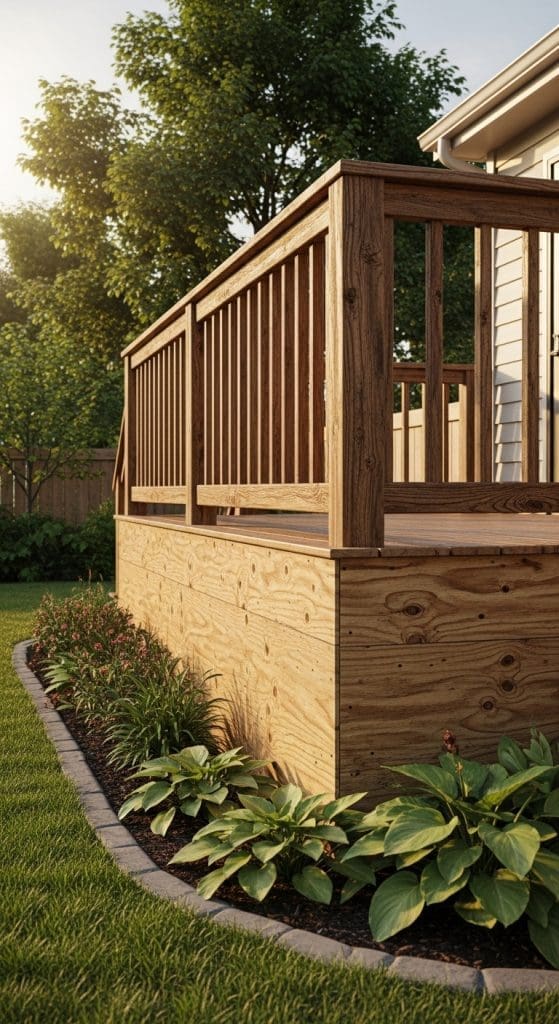
Exterior-grade plywood offers an inexpensive way to create solid under-deck coverage when you prefer a smooth appearance over lattice.
Cut sheets into manageable panels, seal the edges carefully, and finish them with exterior paint.
Adding simple wood battens over the joints can create a board-and-batten effect and make basic plywood look considerably more polished.
Adequate ventilation should be incorporated rather than completely sealing the under-deck area.
16. Fabric Privacy Screens
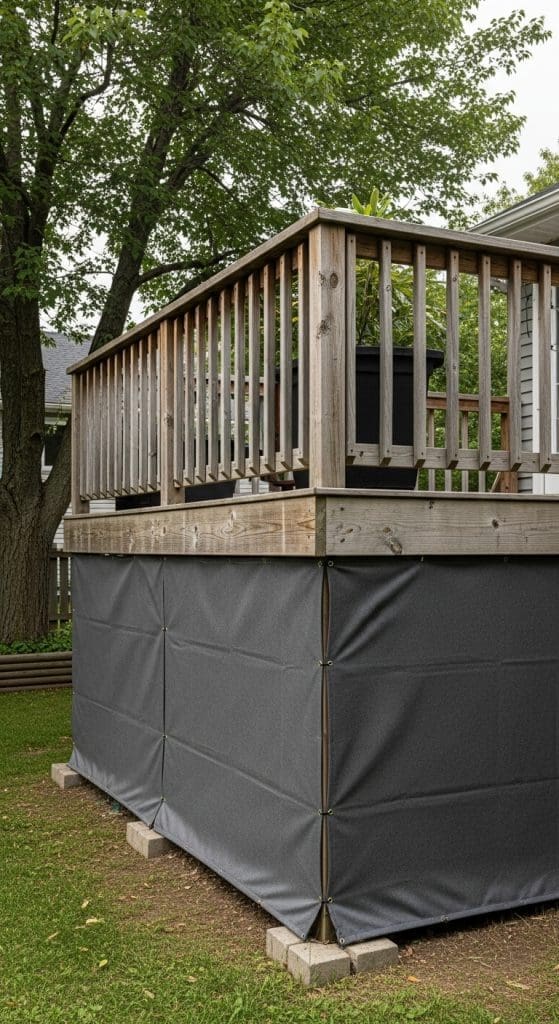
Outdoor privacy fabric can provide a quick lattice alternative when permanent construction is not practical.
Secure exterior-rated screening to a simple frame beneath the deck to conceal stored items while retaining some airflow.
It is particularly useful for renters, seasonal spaces, or homeowners looking for a temporary improvement.
Choose a taut installation rather than loosely hanging fabric to keep the finished result neat.
17. Cinder Blocks with Wooden Slats
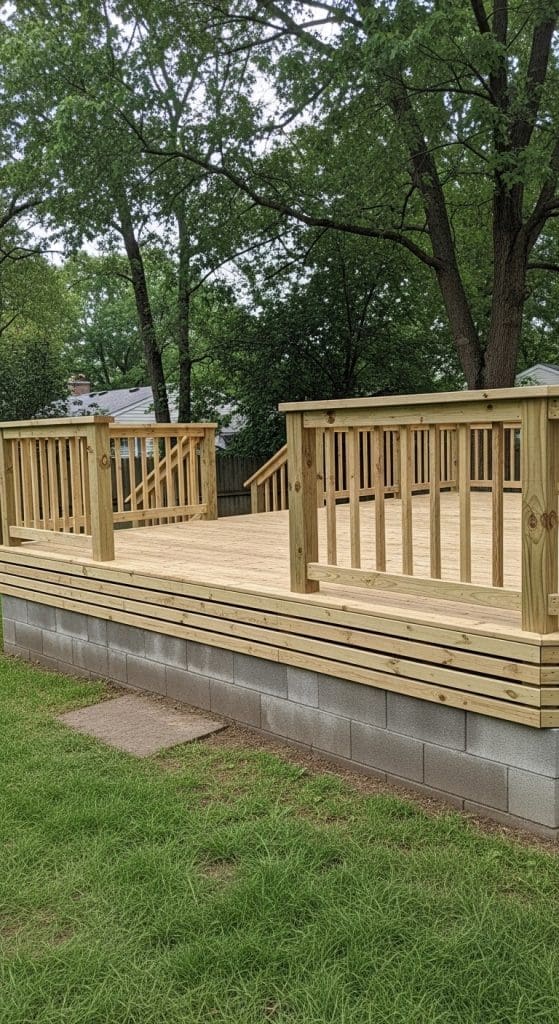
Combining masonry blocks with horizontal timber creates a mixed-material look that feels more substantial than standard lattice.
Use the blocks as solid lower sections or supports, then install evenly spaced wood slats above or between them.
The contrast between masonry and timber works well with modern, industrial, and rustic homes.
Properly anchored framing is important rather than relying on loosely stacked blocks.
18. Cedar Picket Skirting
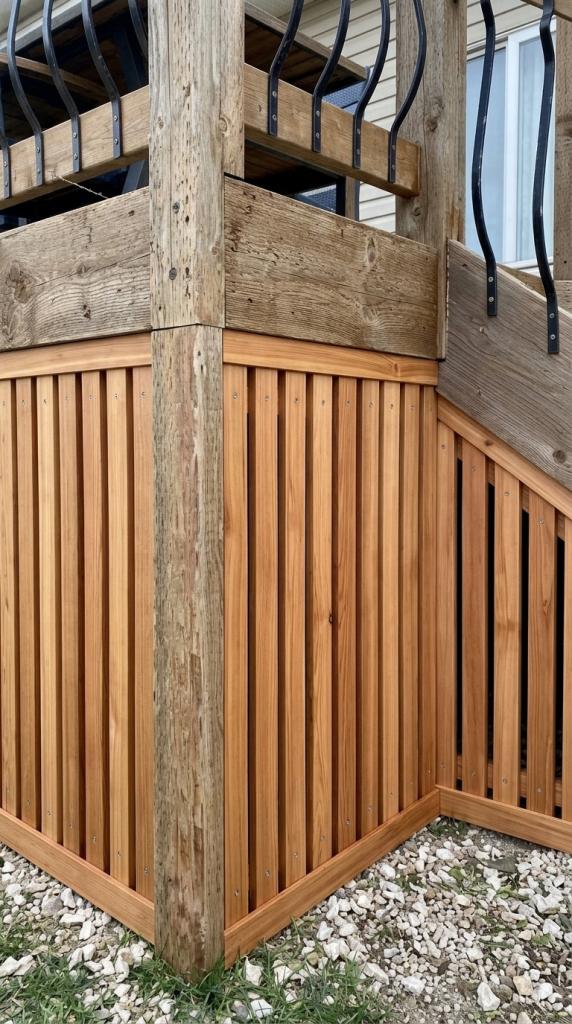
Cedar pickets provide a warm, natural alternative to lattice and can create an attractive vertical screen beneath the deck.
Install the pickets with consistent narrow gaps to maintain airflow while reducing visibility into the space.
Cedar naturally performs well outdoors, although applying an appropriate finish can help maintain its appearance.
This style works particularly well with traditional, craftsman, rustic, and contemporary decks.
19. Outdoor Shade Cloth Skirting
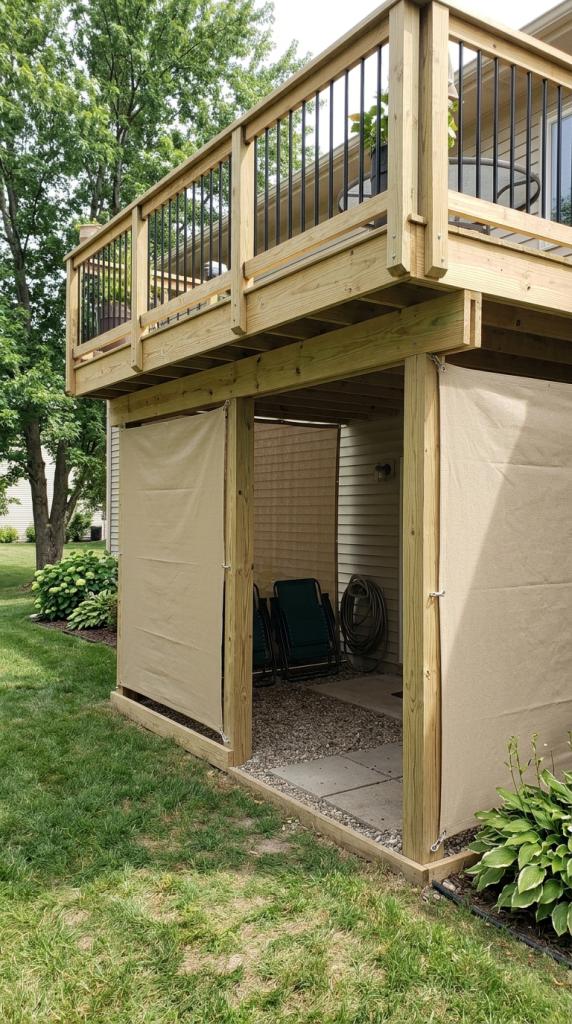
Shade cloth is another lightweight option for concealing an exposed under-deck area without restricting ventilation.
Stretch the material tightly across a sturdy frame and secure it with appropriate exterior fasteners.
Dark neutral shades can visually recede beneath the deck, making the structure above more prominent.
It is best suited to informal backyard areas where affordability and function matter more than creating a permanent architectural feature.
20. Perforated Metal Panel Skirting
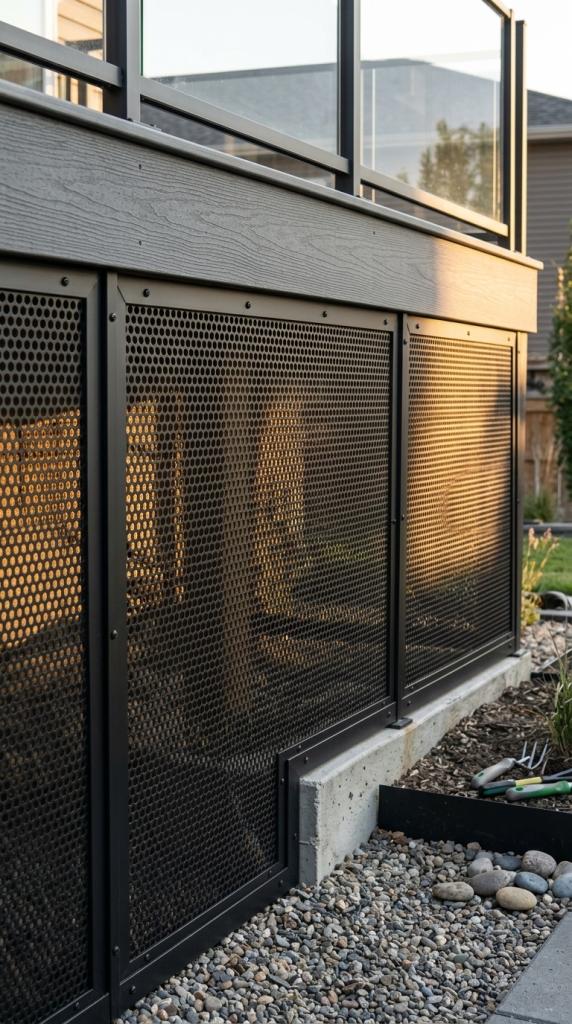
Perforated metal panels are one of the strongest choices for a modern alternative to lattice.
Small openings provide airflow while the overall panel conceals much of the space underneath.
Depending on the pattern and finish, perforated metal can suit contemporary, industrial, or minimalist homes.
Framing each panel neatly helps create a custom-built appearance rather than making the material look purely functional.
21. Decorative Cement Board Panels
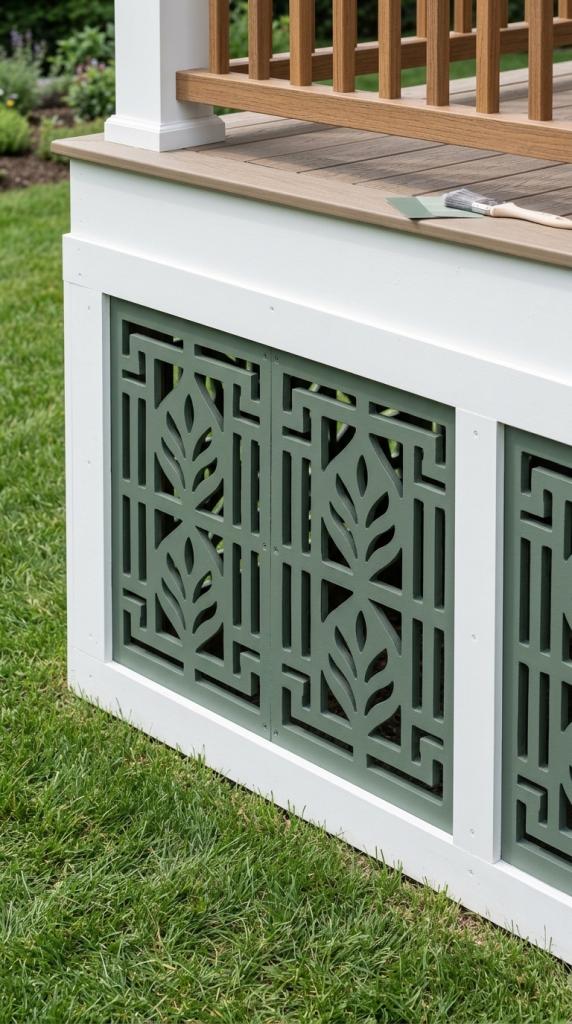
Exterior cement board can be transformed into clean, substantial under-deck panels.
Smooth painted panels work well for contemporary homes, while carefully designed cut-outs can introduce ventilation and decorative detail.
Cement-based materials are useful in areas exposed to moisture, but the product selected must be rated for the intended exterior application.
Framing the panels also makes individual sections easier to remove when access beneath the deck is required.
22. Decorative Garden Screen Panels
Decorative outdoor screen panels offer a more stylish alternative to the familiar diamond pattern of lattice. Available in geometric, botanical, and abstract designs, they can be mounted between posts beneath the deck to create an intentional architectural feature. Metal and exterior-rated composite screens are particularly useful for modern spaces. Using decorative panels only on the most visible sections can also help control the overall project cost.
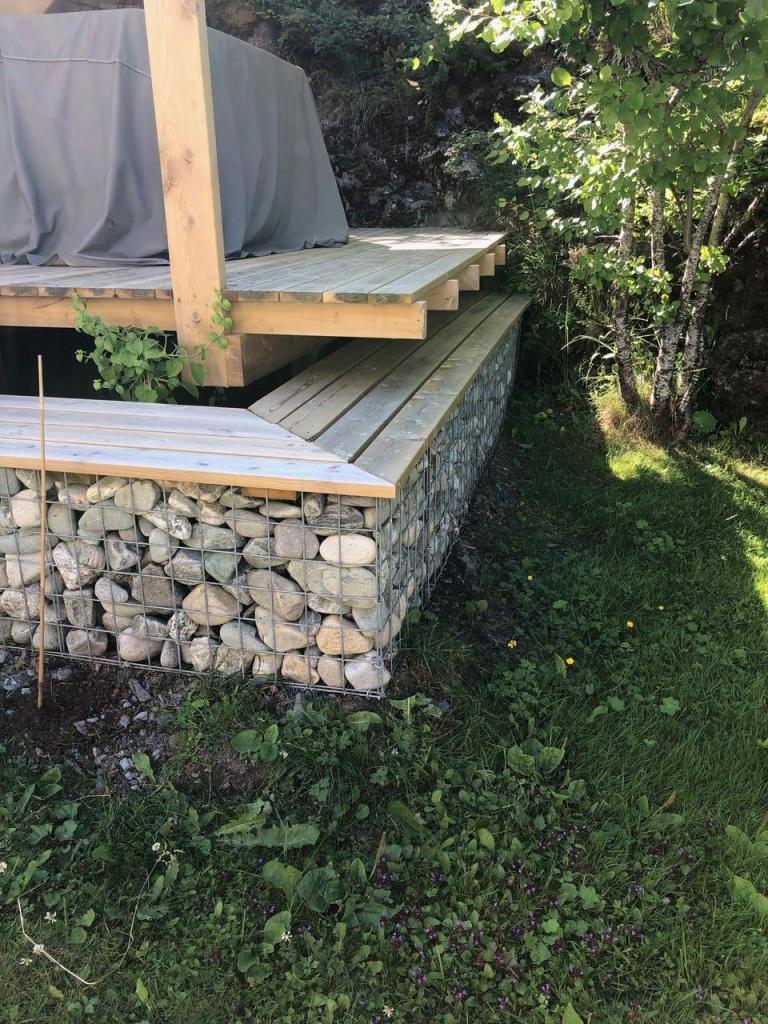
23. Gabion Basket Skirting
Gabion baskets create a dramatically different look by combining wire cages with stone.
They can be positioned around portions of a low deck to disguise the open underside while introducing texture that complements surrounding landscaping.
Filling the baskets with locally sourced or leftover landscaping stone can help reduce costs.
Because gabions are heavy and occupy more space than conventional skirting, they are best suited to decks where the ground and layout can accommodate them safely.
24. Decorative Laser-Cut Metal Panels
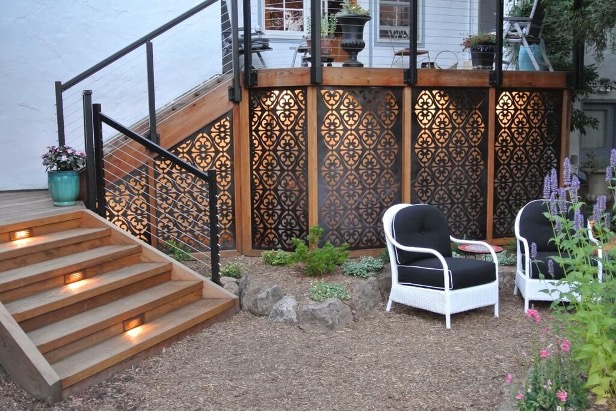
Laser-cut metal panels are an excellent option when you want the skirting itself to become a design feature.
Intricate geometric, botanical, or abstract patterns conceal the under-deck area while allowing light and air to pass through.
Panels can be framed individually beneath the deck and finished to complement railings, furniture, or other exterior details.
If covering the entire deck is too expensive, use laser-cut panels on the most prominent side and a simpler material in less visible areas.