








A Thanksgiving cactus is one of those houseplants that really earns its place on a windowsill in fall. Just as many other plants are beginning to slow down for winter, it can suddenly become covered in bright pink, red, white or purple flowers.
They are not particularly difficult plants to look after either. The main thing is getting the balance of light and water right throughout the year, then making a few small changes in fall to encourage the plant to produce flower buds.
With the right conditions, a Thanksgiving cactus can live for years and flower again every fall.
Find the Right Spot for Your Thanksgiving Cactus
Thanksgiving cacti like plenty of light, but strong direct sunshine can be a little too much for them. Somewhere with bright, indirect light is usually ideal, particularly during the warmer months.
An east-facing window can work well because the plant gets some gentler morning sunshine without spending the afternoon baking behind hot glass. If you only have a very sunny window available, move the pot a little farther into the room or use a sheer curtain to filter the strongest light.
Keep an eye on the green segments too. If they begin developing a reddish color or look slightly shriveled, the plant may be receiving more direct sun than it would like. On the other hand, a very dark position can result in slower growth and fewer flowers.
How Often to Water a Thanksgiving Cactus
Watering is probably the part of Thanksgiving cactus care that causes the most problems. These plants do not want permanently soggy soil, but they should not be treated like desert cacti and forgotten about for weeks at a time either.
The easiest approach is to check the soil rather than watering on a fixed schedule. Push your finger about an inch into the potting mix and, if it feels dry, give the plant a thorough drink. Allow the water to run through the drainage holes before putting the pot back in its usual position.
Never leave the plant sitting in a saucer of water. Thanksgiving cacti can develop root problems if the potting mix remains waterlogged for long periods.
How frequently you need to water will change throughout the year. During warmer weather and active growth, the soil may dry quite quickly. In cooler weather it can remain damp for considerably longer, so always check before reaching for the watering can.
Choose a Pot With Good Drainage

A pot with drainage holes makes looking after a Thanksgiving cactus considerably easier because any excess water has somewhere to escape.
If you want to use a decorative pot, basket or planter without drainage, simply keep the cactus inside its original nursery pot and place that inside. When it is time to water, lift the nursery pot out, water it thoroughly and wait until it has finished draining before returning it to the decorative container.
Thanksgiving cacti do not need enormous pots either. A container that comfortably accommodates the roots is usually enough.
The Best Soil for a Thanksgiving Cactus
A light, well-draining potting mixture works much better than heavy garden soil. You want something that holds enough moisture for the roots without remaining wet and compacted for days.
A simple mixture could include:
- 2 parts regular potting soil
- 1 part orchid bark or perlite
- 1 part compost or coco coir
You do not have to follow that mixture exactly. The important thing is that the finished soil feels loose and airy and that water can drain through it relatively easily.
If your cactus seems to stay wet for a very long time after watering, adding extra perlite or orchid bark can help open up the mixture.
Feeding Your Thanksgiving Cactus
During spring and summer, when you can see plenty of new growth appearing, a Thanksgiving cactus can benefit from occasional feeding.
A regular liquid houseplant fertilizer is perfectly suitable. Dilute it to around half the recommended strength and use it every couple of weeks during active growth rather than giving the plant a very strong feed all at once.
As fall approaches, stop feeding once flower buds begin to form. At this point the plant is moving into its flowering period rather than concentrating on producing lots of new green growth.
How to Get a Thanksgiving Cactus to Bloom
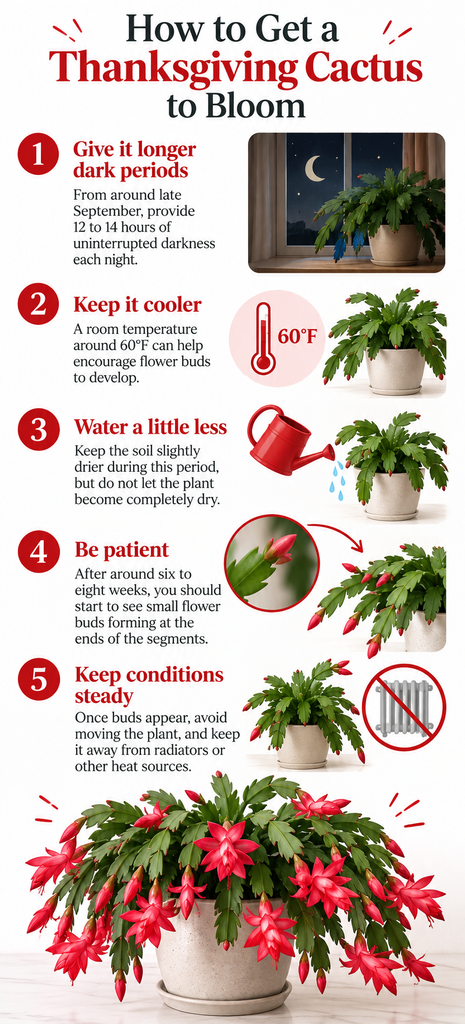
If your Thanksgiving cactus looks perfectly healthy but refuses to flower, the problem may have more to do with its fall conditions than anything you are doing during the rest of the year.
These plants respond to the shorter days and cooler temperatures of fall. From around late September, try to give the cactus approximately 12 to 14 hours of uninterrupted darkness each night. A cooler room, somewhere around 60°F, can also help encourage flower buds to develop.
Water slightly less during this period, but do not allow the plant to become completely dry and shriveled. After around six to eight weeks, you should begin to notice tiny buds appearing at the ends of the green segments.
Once the buds appear, avoid making lots of sudden changes. Moving the plant repeatedly, placing it beside a radiator or dramatically changing its watering routine can sometimes cause developing buds to drop before they open.
Keep It Away From Radiators and Drafts
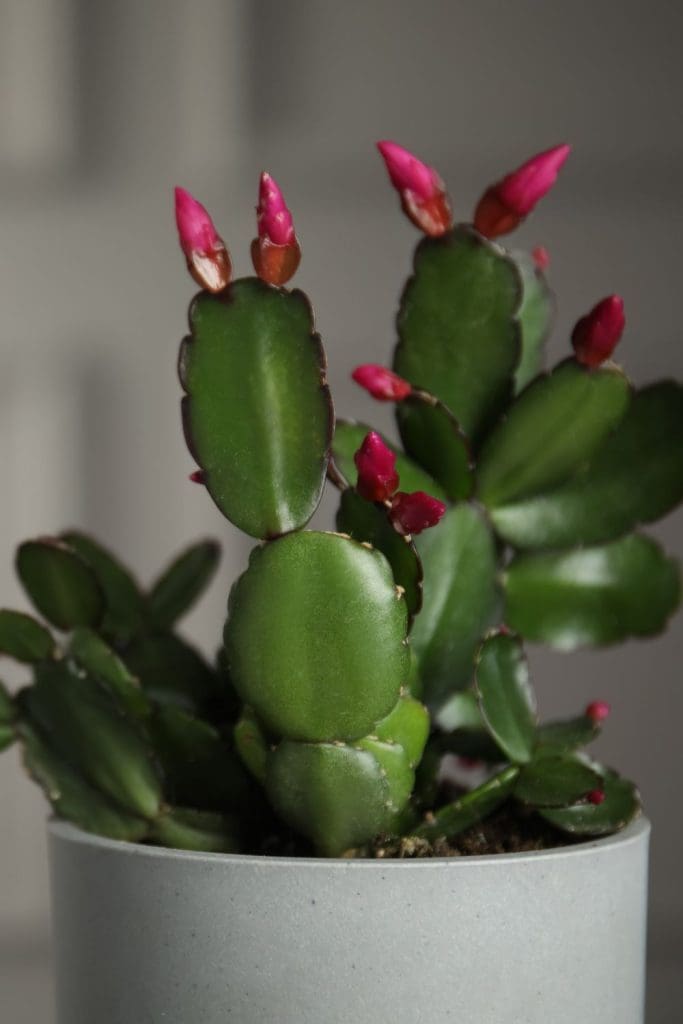
Normal household temperatures are generally fine for a Thanksgiving cactus for most of the year, but try to avoid placing it somewhere that experiences big temperature swings.
Radiators, heating vents and very cold drafts are particularly worth watching during fall and winter. A windowsill might seem like the perfect place for a flowering cactus, for example, but not if there is a radiator directly underneath it blasting hot air over the plant every evening.
Cooler nights can actually be useful while the plant is forming buds. Temperatures around 55 to 65°F at night can help encourage flowering, provided the plant is not exposed to freezing conditions.
What to Do After Flowering
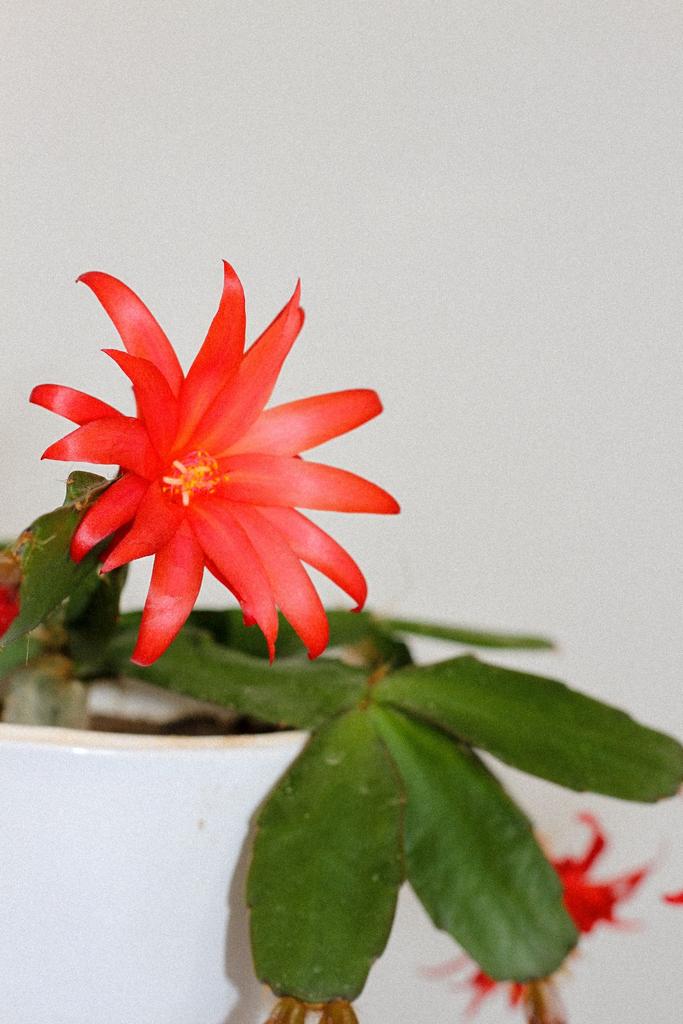
Once the last flowers begin to fade, your Thanksgiving cactus can have a quieter period before spring growth begins.
Reduce watering slightly and stop fertilizing for a while. There is no need to force lots of new growth immediately after flowering.
When you begin seeing fresh growth in spring, gradually return to your normal watering routine and start feeding again. The plant can then spend spring and summer producing healthy new segments before preparing for another round of flowers in fall.
Pruning a Thanksgiving Cactus
You do not have to prune a Thanksgiving cactus every year, but it can be useful if an older plant is becoming particularly large, uneven or leggy.
The easiest time to do it is after flowering. Rather than cutting randomly through the green segments, gently twist off sections at one of the natural joints. Removing a few of the longer tips can encourage the plant to branch, which helps create a fuller shape over time.
And there is no need to throw those pieces away because healthy sections can also be used for propagation.
How to Propagate a Thanksgiving Cactus
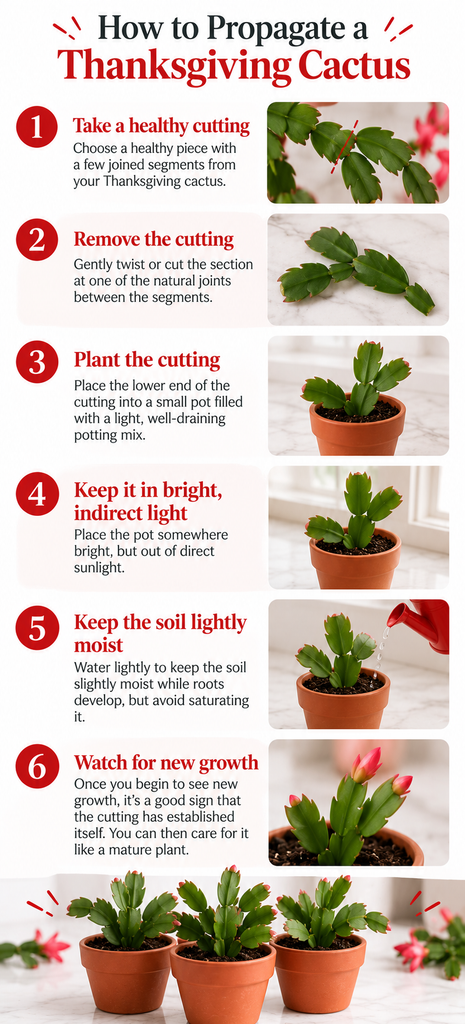
Choose a healthy piece with a few joined segments and use it as your cutting. Place the lower section into a small pot filled with a light, well-draining potting mixture and keep it somewhere with bright, indirect light.
Keep the soil lightly moist while roots develop, but avoid saturating it. Once you begin seeing new growth, it is a good sign that the cutting has established itself.
This is an easy way to make several smaller plants from an older Thanksgiving cactus, particularly if you are pruning it anyway.
Common Thanksgiving Cactus Problems
Why Is My Thanksgiving Cactus Shriveled?
A shriveled Thanksgiving cactus often needs water, but check the soil before assuming that is the problem.
If the potting mix is very dry, give the plant a thorough drink and allow the excess water to drain away. If the soil is already wet, however, adding more water could make the problem worse.
Plants with damaged or waterlogged roots can sometimes look dehydrated because the roots are no longer taking up moisture properly. If the soil remains wet for days at a time, check the drainage and consider whether the potting mixture is too heavy.
Why Are the Leaves Turning Yellow?
Yellowing can also be a sign that the roots are staying too wet. Make sure the pot has proper drainage holes and empty any water that collects in the saucer or decorative container.
Allow the upper layer of soil to begin drying before watering again. If the soil feels dense and compacted, repotting into a lighter mixture with additional perlite or orchid bark may help.
Why Are the Flower Buds Falling Off?
It is particularly frustrating to see a Thanksgiving cactus covered in buds only for them to start dropping before they open.
Sudden changes are often the problem. Moving the plant to a completely different position, exposing it to hot air from a radiator or allowing the soil to swing between extremely dry and very wet conditions can all cause stress.
Once your cactus has formed buds, try to leave it somewhere with fairly consistent light and temperatures and continue checking the soil regularly.
Thanksgiving Cactus Care Throughout the Year
The easiest way to look after a Thanksgiving cactus is to change its care slightly with the seasons rather than treating it exactly the same throughout the year.
In winter, allow the plant to rest after flowering and reduce watering slightly. During spring, increase watering as fresh growth appears and begin feeding again.
In summer, continue watering whenever the upper layer of soil dries and protect the plant from very strong afternoon sunshine. Then in fall, reduce watering slightly and give the plant cooler temperatures and longer periods of darkness to encourage those first flower buds to appear.
Once you get into this seasonal routine, Thanksgiving cactus care becomes fairly straightforward. Give it plenty of indirect light, avoid keeping the roots constantly wet and pay a little extra attention to temperature and light during fall.
With a little care, the same plant can come back into flower year after year, just when the rest of the garden is beginning to quieten down for winter.