








If you are searching for goat hay feeder DIY ideas, you are probably trying to solve the same things most goat owners face, wasted hay, messy pens, damp feed, or feeders that just do not fit your space. Some people need indoor stall solutions, others want weather-protected outdoor feeders, and many want to reuse materials already around the farm.
The ideas below cover pallets, hanging feeders, containers, corner builds, and roofed designs that help keep hay clean and accessible.
Pallet Front V-Shape Feeder
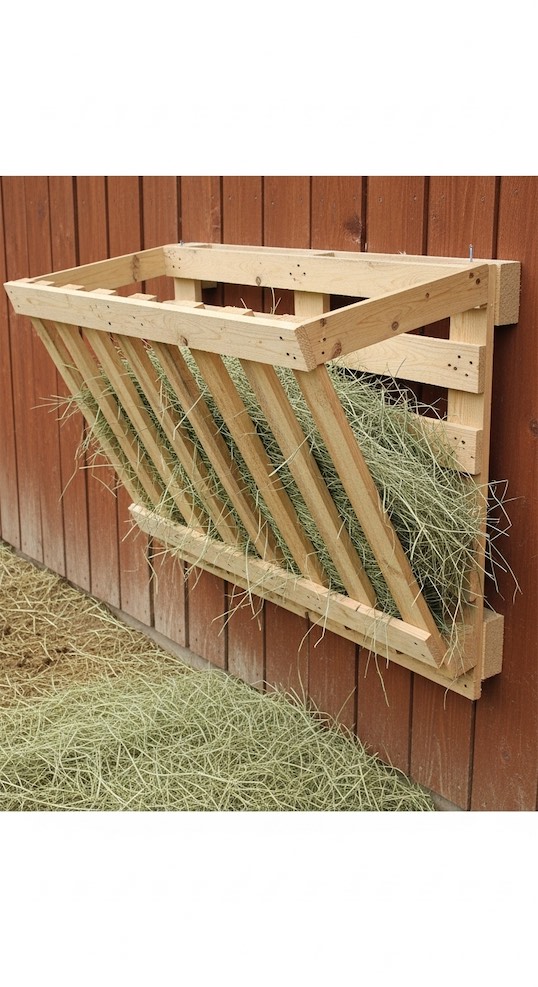
A front-mounted V rack made from pallet boards gives goats a natural pulling angle while keeping hay compressed inside the feeder.
When hay sits upright in a narrow V channel, goats take mouthfuls instead of yanking full flakes loose, which dramatically reduces what falls underfoot.
Mounting this goat hay feeder DIY style to a fence or shed wall also keeps it stable, so goats cannot tip or drag it around during feeding.
Sanded pallet slats spaced a few inches apart create comfortable access without allowing goats to shove their heads inside.
Many owners like loading a whole flake vertically so it slowly settles downward as goats eat.
Pallet Box Feeder With Solid Back
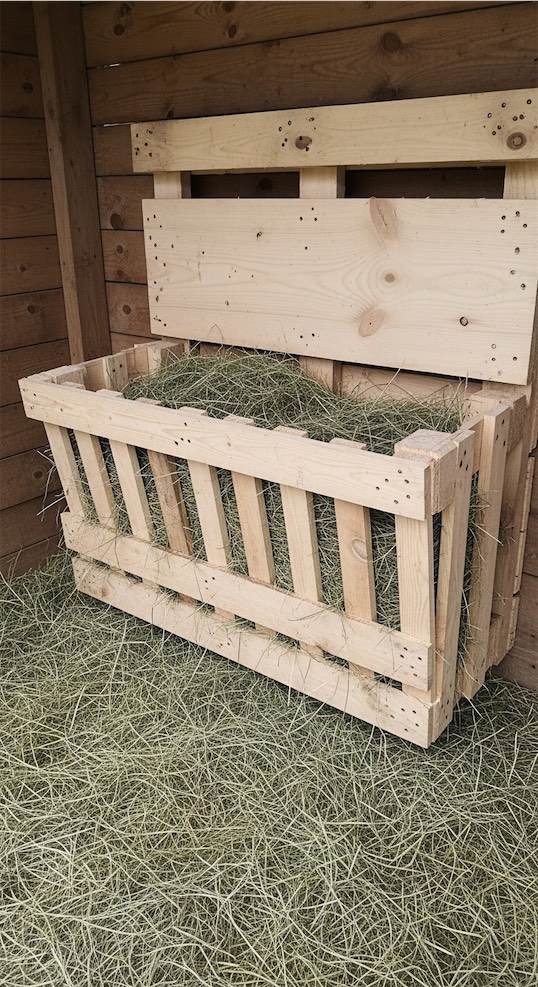
Turning a pallet into a deep box with a solid back panel keeps hay contained from every side except the feeding face.
That containment changes how goats pull hay, since they can only access strands through the front slats instead of grabbing from multiple angles.
Less side pulling means fewer flakes shaken loose and dropped.
A goat hay feeder DIY box also allows you to load larger amounts at once, which helps during busy mornings or cold weather routines.
Adding a small inner ledge near the bottom catches short pieces so goats can still reach them rather than stepping them into bedding.
This style works beautifully mounted inside shelters or along exterior walls where you want tidy feeding.
Goat Hay Feeder DIY Pallet With Roof
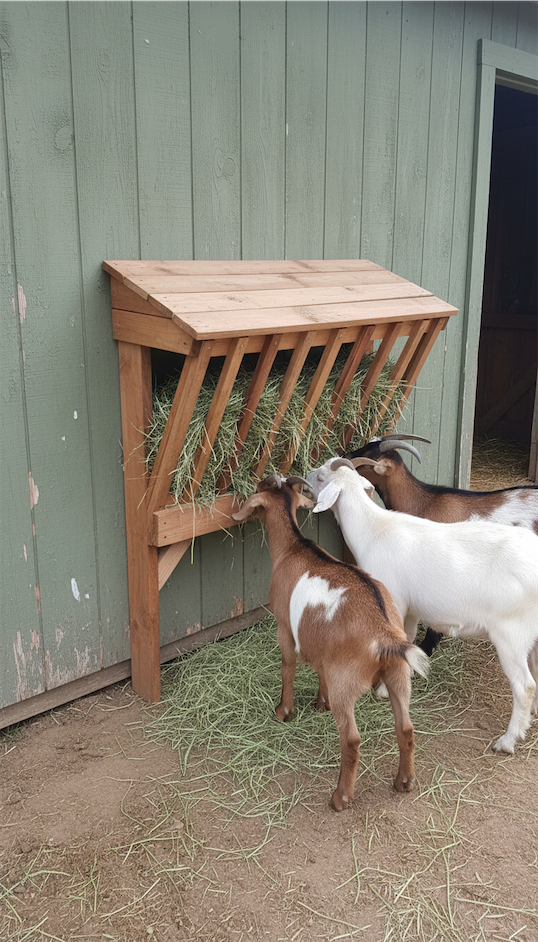
Adding a simple slanted roof to a pallet feeder protects hay from rain and keeps it appealing to goats.
Damp hay quickly becomes bedding instead of feed, so covering the feeder directly reduces waste and saves money.
Even a scrap sheet of tin, polycarbonate, or exterior plywood works well as a roof layer in a goat hay feeder DIY build.
Positioning the roof slightly forward helps water drip away from the feeding face instead of into the hay.
Goats tend to eat more consistently when hay stays dry and fresh smelling, especially in wet climates.
A small roof also keeps birds from perching and pulling strands out.
Corner Pallet Feeder
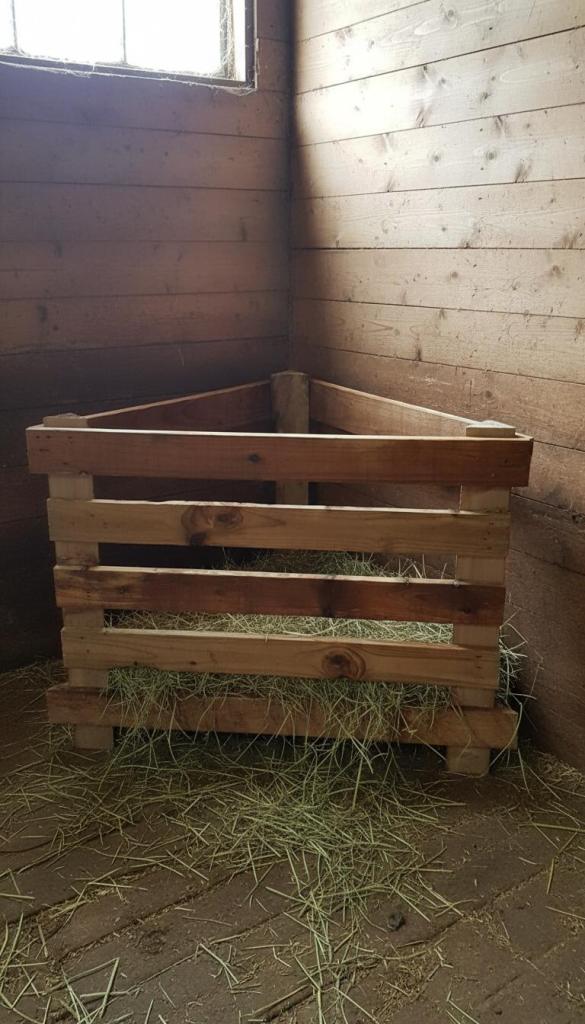
Using two pallet panels to form a corner feeder naturally limits feeding direction and reduces crowding.
Goats approach from the open side, so there is less pushing and side tugging compared to flat feeders.
That focused access helps keep flakes intact inside the feeder instead of shaken loose onto the ground.
Corner placement also saves wall space, which is helpful in smaller pens or shelters.
Mounting the feeder slightly above hoof height keeps dropped strands cleaner and easier for goats to retrieve.
Many goat keepers find corners become calm feeding zones when designed this way.
Hanging Slat Feeder From Chain
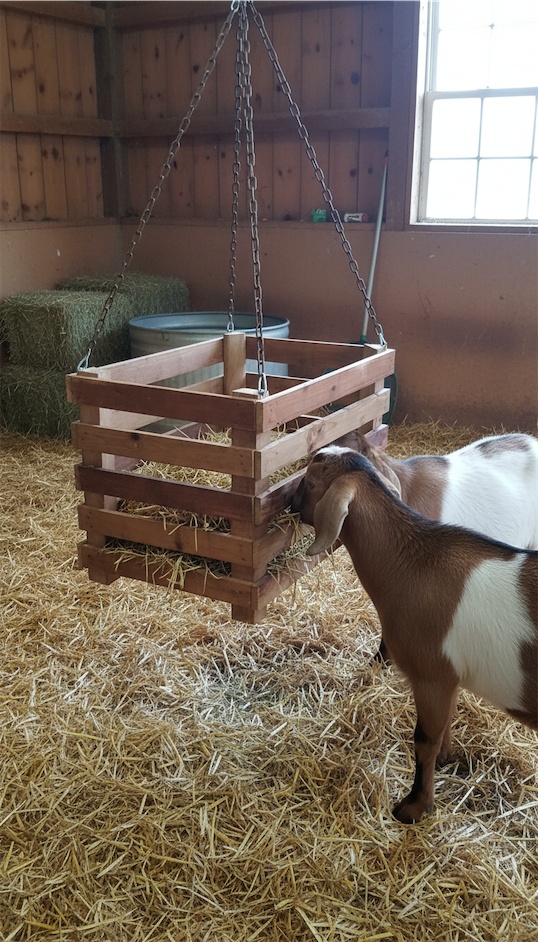
A wooden slat feeder hung on short chains adds slight movement that changes how goats pull hay.
When the feeder shifts a little, goats instinctively pull more gently rather than jerking hay outward.
That softer feeding motion keeps more hay inside the feeder and less scattered below.
Hanging height can also be adjusted as bedding levels change, which maintains proper feeding position over time.
A goat hay feeder DIY hanging design is easy to remove for refilling or cleaning, which many owners appreciate in stalls.
The gentle sway even adds a bit of enrichment during feeding.
DIY Hanging Goat Hay Feeder Frame
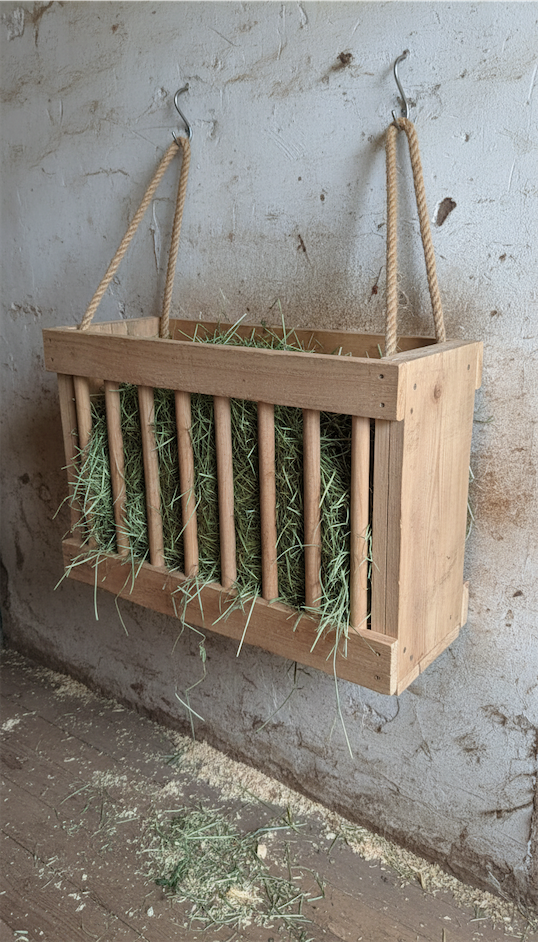
A rectangular wooden frame filled with vertical dowels or rods creates a tidy slow-pull feeding surface.
Narrow vertical openings encourage goats to pull strands gradually rather than grabbing clumps.
Hay remains compressed behind the rods, so far less drops out during feeding.
This goat hay feeder DIY style works especially well in barns where wall space is limited.
Dowels spaced around three inches apart suit most adult goats comfortably.
The clean, structured look also helps keep stalls organized and easy to sweep.
Goat Hay Feeder Trash Can Vertical
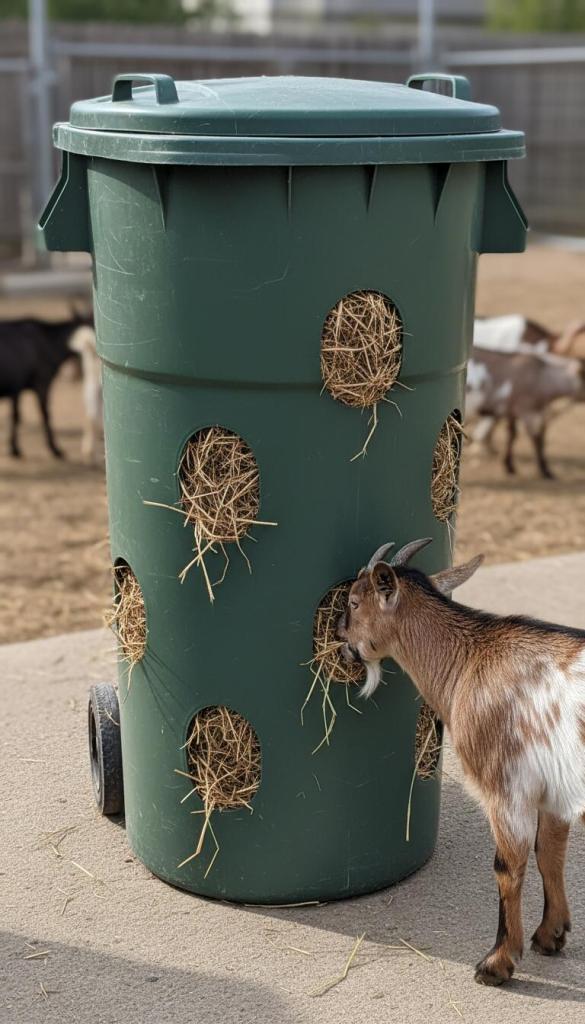
A sturdy plastic trash can with oval feeding holes keeps hay contained in a vertical chamber.
Because hay stays compact inside the container, goats can only pull small mouthfuls at a time.
That simple restriction alone reduces how much ends up trampled underfoot.
Plastic containers resist weather and are easy to move between pens, making them practical outdoor feeders.
Cutting openings at muzzle height allows comfortable feeding without strain.
Goat Hay Feeder Trash Can With Lid Roof
Keeping the trash can lid attached as a hinged cover protects hay from rain and snow.
Covered hay stays dry, fragrant, and appealing, which encourages goats to eat more completely.
A lid also keeps birds and rodents from pulling hay out overnight.
Adding a simple latch prevents goats from lifting the lid themselves.
This goat hay feeder DIY variation works well in exposed paddocks or winter feeding areas.
It turns an ordinary container into a weather-smart feeder with minimal effort.
Laundry Basket Goat Feeder Wall Mount
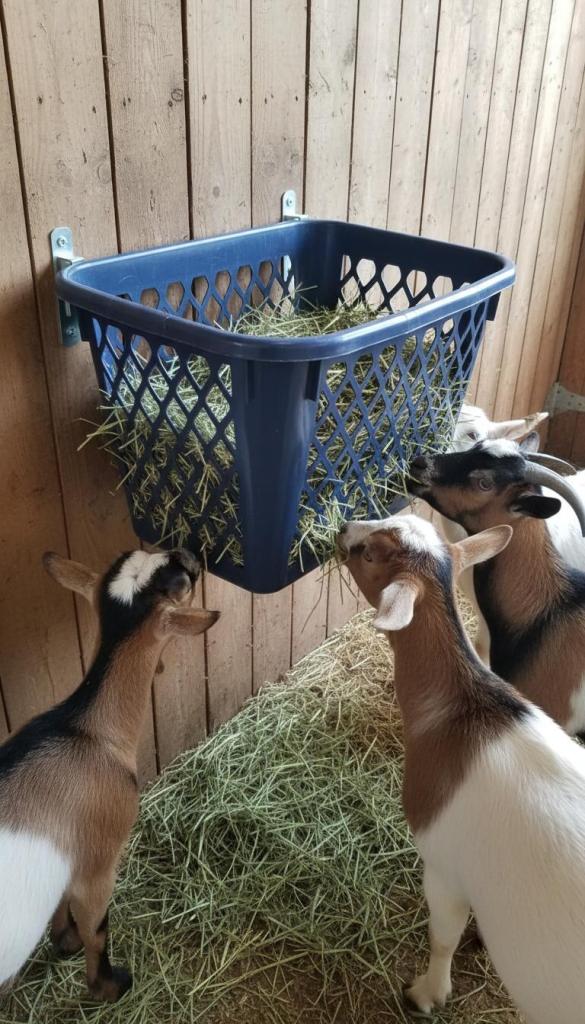
A rigid plastic laundry basket mounted sideways becomes an instant slow-feed hay holder.
The woven openings act like feeding slots, allowing goats to pull strands gradually instead of grabbing flakes.
That controlled access reduces scatter beneath the feeder.
Laundry baskets are lightweight, inexpensive, and often already available around the home.
Mounting them at chest height keeps hay clean and accessible.
This goat hay feeder DIY idea is especially popular for small herds or temporary setups.
Laundry Basket Corner Feeder
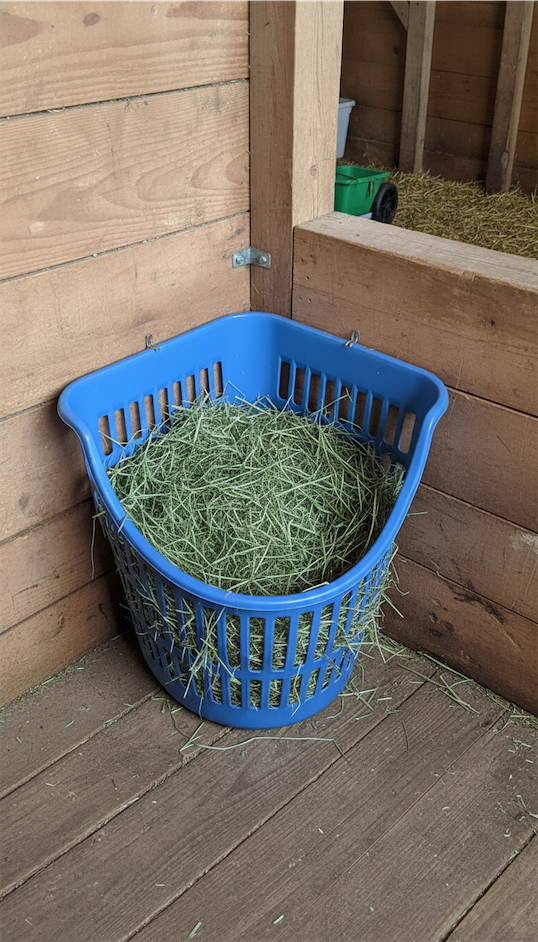
Trimming a laundry basket to fit snugly into a corner creates a compact feeding station.
Corners naturally stabilize goats while eating, which reduces head shaking and hay tossing.
The flexible plastic sides also absorb impact if goats push against it.
Less aggressive pulling keeps more hay inside the feeder.
Installation usually takes just a few screws or ties.
Indoor Goat Hay Feeder Wooden Rack
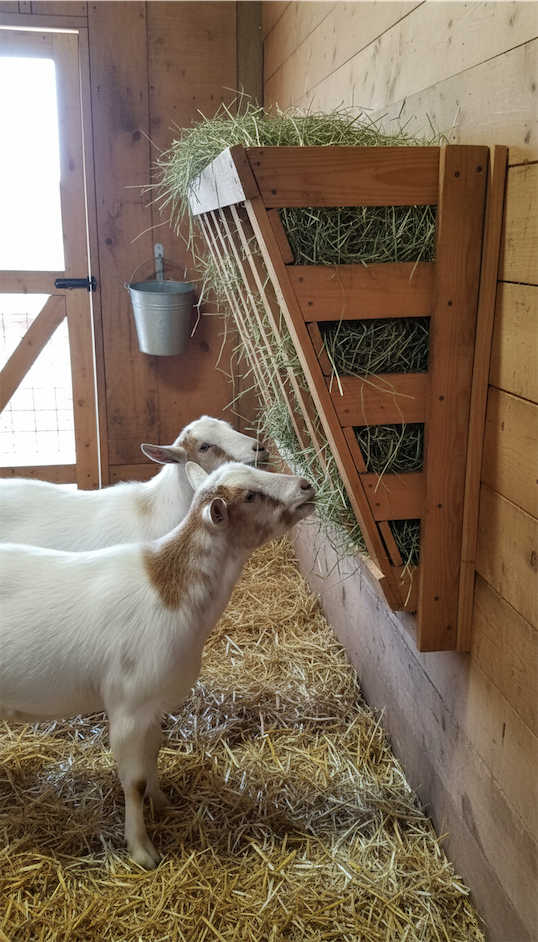
A slim wooden rack mounted inside a stall keeps hay off bedding and contained in a vertical plane.
Goats pull strands forward instead of stepping into loose hay piles, which keeps feed cleaner.
Vertical slats hold flakes upright so they settle downward gradually during feeding.
Indoor feeders benefit from this structure since space is limited and cleanliness matters more.
Narrow racks also slow feeding slightly, which reduces waste.
Indoor Corner Slat Feeder
A triangular slat rack fitted into a stall corner creates a stable feeding angle goats naturally prefer.
Facing into a corner helps goats brace themselves, so they pull hay calmly rather than jerking it free.
Calm feeding means fewer strands fall into bedding.
Corner placement also protects stall walls from rubbing damage.
Adding a shallow bottom lip catches short pieces so goats can still reach them.
Repurposed Baby Crib Goat Hay Feeder
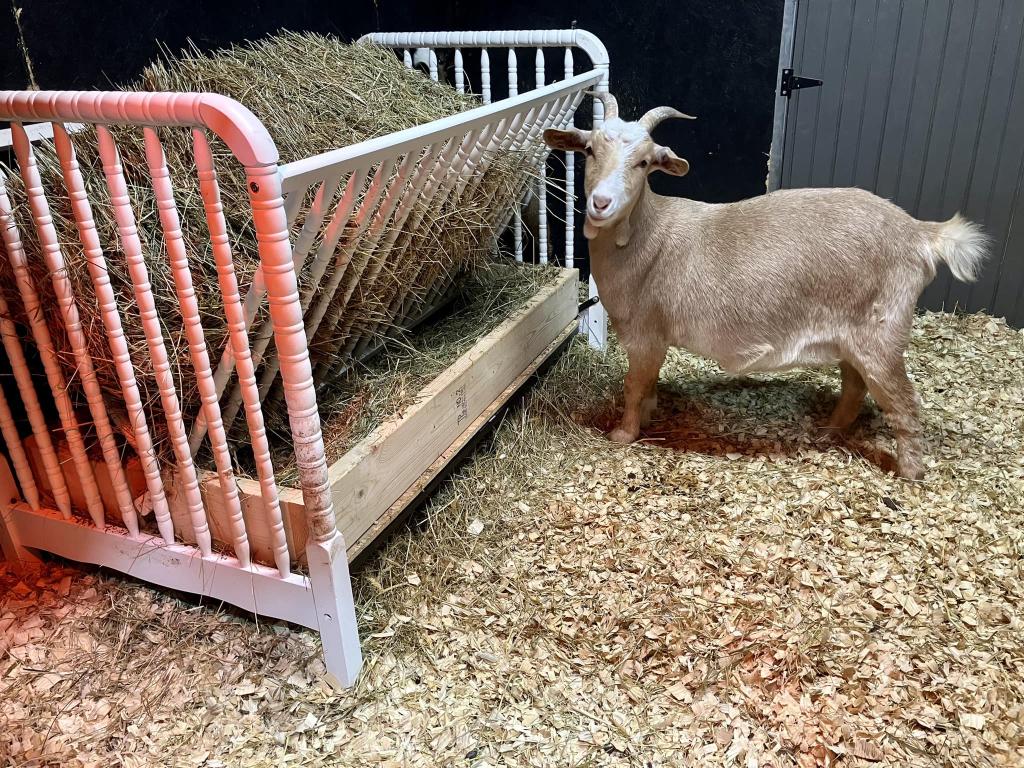
An old wooden baby crib can transform into a spacious hay feeder with evenly spaced slats that already suit goat feeding perfectly.
The vertical bars naturally control how goats pull hay, so they take strands instead of yanking whole flakes loose and dropping them.
Because crib sides are tall and enclosed, hay stays contained inside the frame rather than spilling outward during feeding.
Sanding and sealing the wood makes it safe and weather resistant, especially for outdoor use.
Barrel Half-Cut Hay Feeder
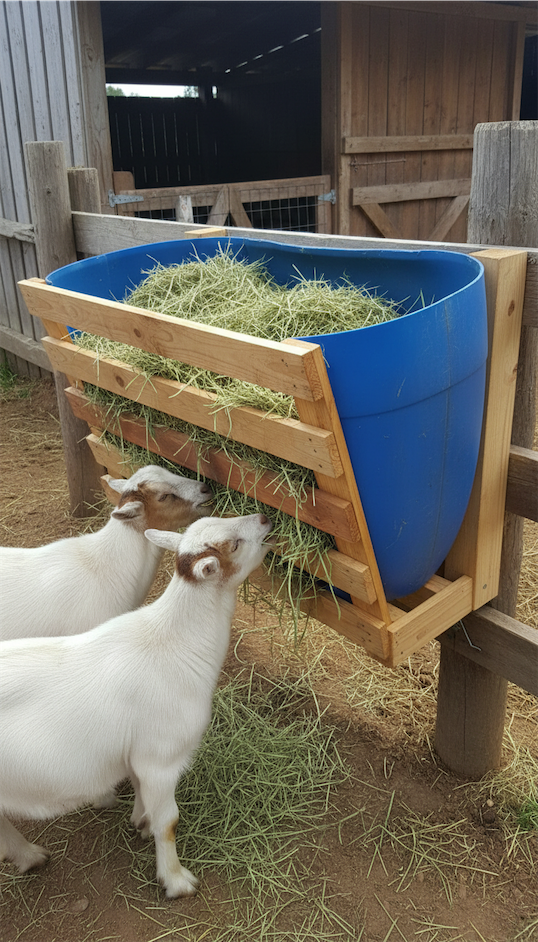
Cutting a plastic barrel lengthwise creates a curved trough that naturally holds hay inward.
Adding a slatted front converts it into a controlled feeding surface.
The curved back prevents hay from spreading outward during pulling.
Goats reach through openings rather than stepping into hay piles.
Barrels are durable, weather resistant, and easy to mount.
This goat hay feeder DIY build suits outdoor pens well.
Wall-Mounted V Rack With Roof
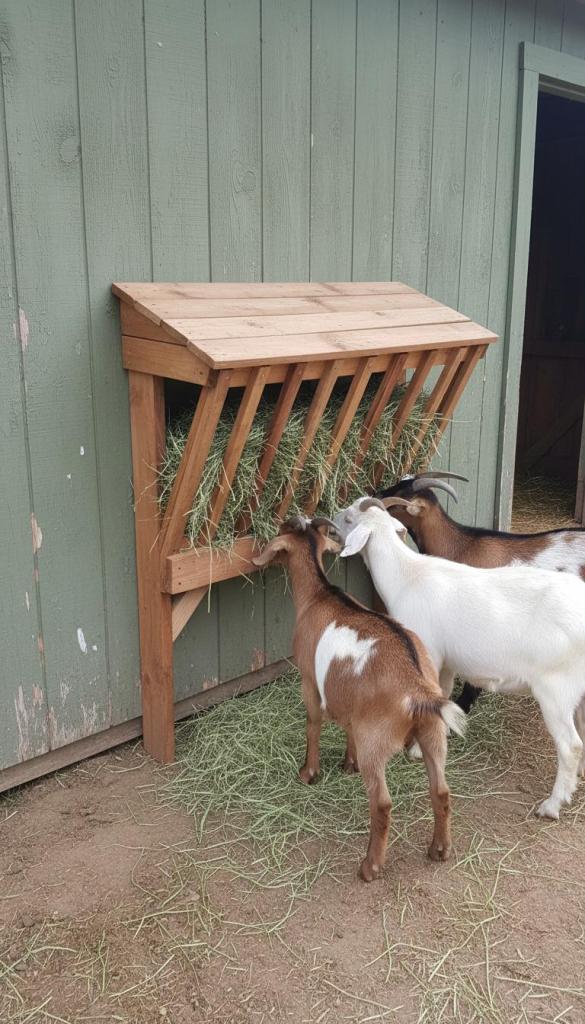
A wooden V rack fixed to a shed wall stays stable while keeping hay centered inside the feeder.
Centered hay reduces how much goats can tug outward.
Adding a small roof cap keeps flakes dry and appealing in outdoor conditions.
Wall mounting prevents tipping or dragging during feeding.
Goats approach from one direction, which reduces crowding.
This goat hay feeder DIY station keeps feeding areas clean and organized.
Freestanding A-Frame Hay Feeder
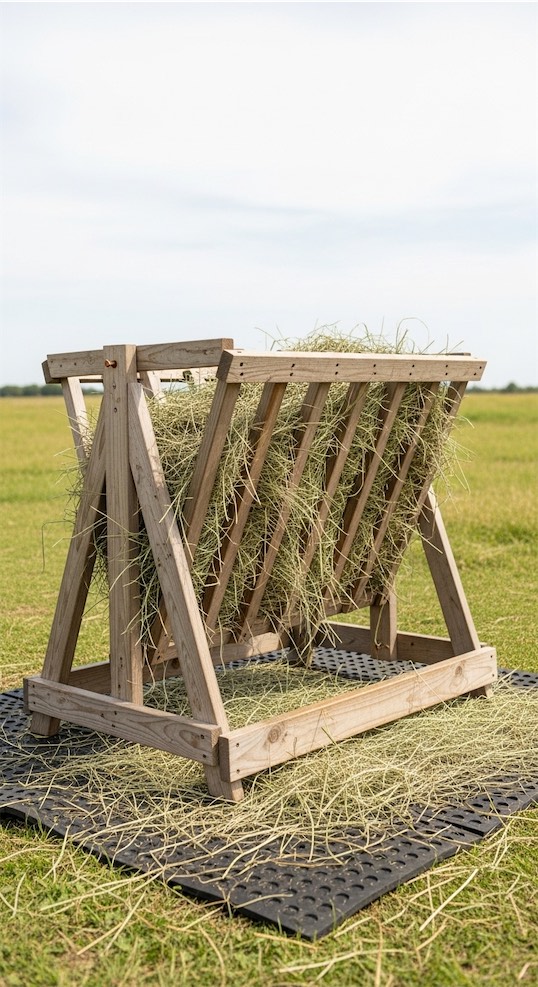
A small A-frame feeder compresses hay between two slanted panels accessible from both sides.
Compressed hay limits how much goats can pull at once. That restriction keeps flakes from scattering widely.
Freestanding designs are portable and useful in pasture rotations.
Placing the frame on a rubber mat helps catch dropped strands. A-frames remain a classic goat hay feeder DIY choice for good reason.
Hanging Net Inside Frame Feeder
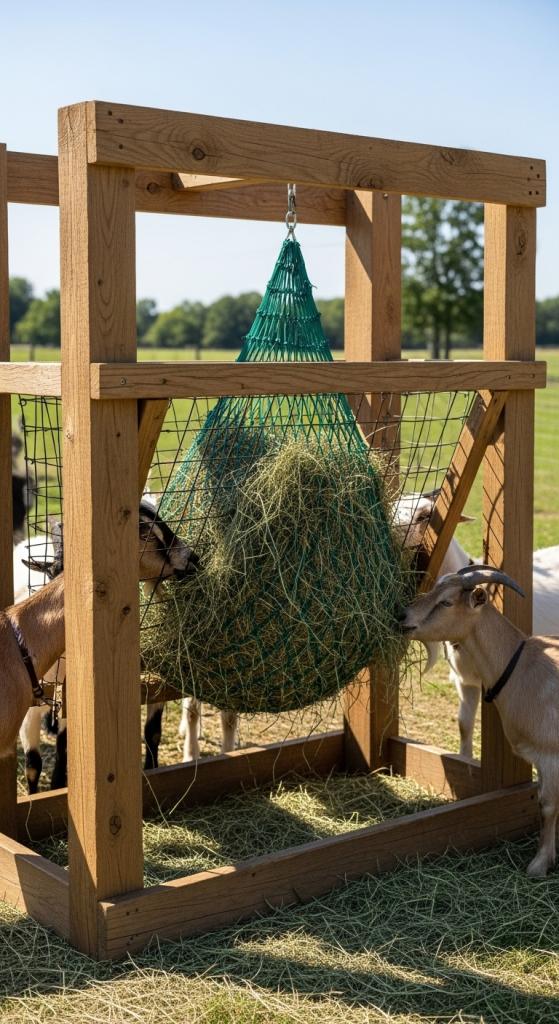
Suspending a hay net inside a wooden frame combines slow feeding with structure and safety.
The frame prevents goats from climbing or tangling in the net.
Slow pulling from the net reduces how fast hay disappears onto the ground.
The outer frame keeps everything contained in one tidy area.
This goat hay feeder DIY hybrid suits both indoor and outdoor pens. Feeding stays controlled without sacrificing accessibility.
Slanted Board Slow Feed Rack
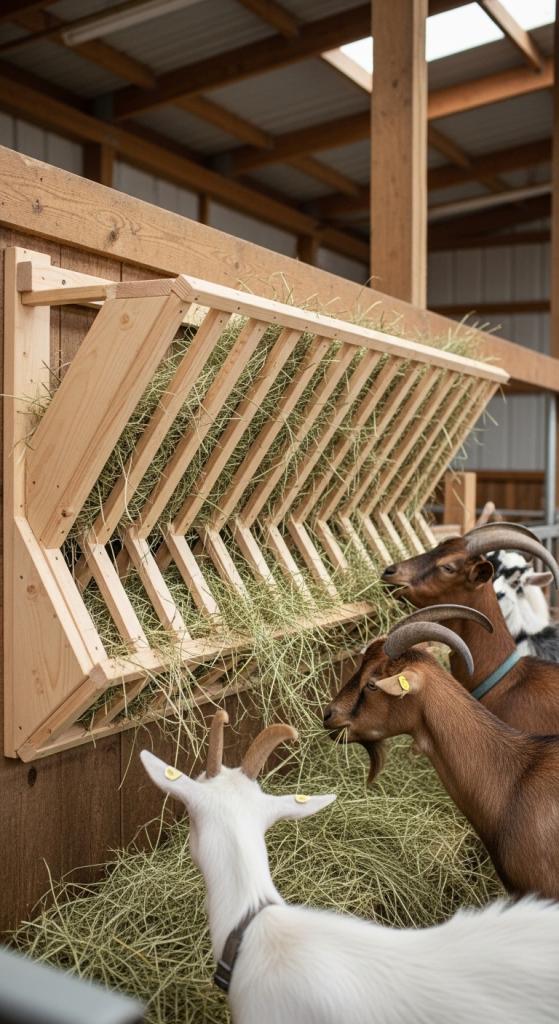
Angled boards forming narrow vertical channels guide hay downward toward the feeding face.
Goats pull strands from the channels rather than grabbing loose flakes.
That guided flow keeps hay organized inside the feeder. Less clump pulling means less dropped waste.
The design looks clean and structured in barns or shelters.
Many owners enjoy how orderly this goat hay feeder DIY style appears.
PVC Pipe Vertical Hay Tube
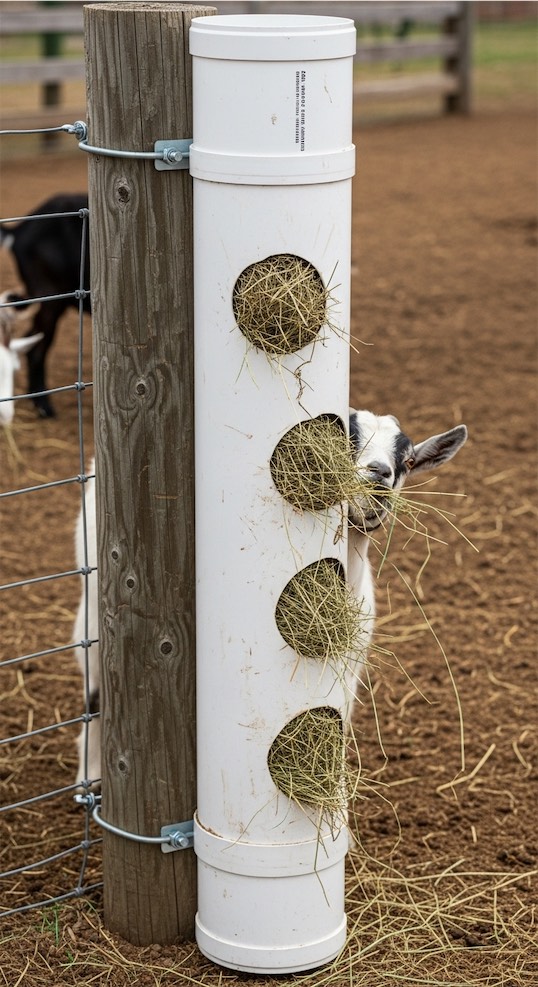
A large vertical PVC pipe with feeding holes acts as a compact hay chamber.
Hay remains compressed inside the tube, limiting how much goats can pull at once.
Small openings control access and reduce overpulling.
PVC resists moisture and chewing, making it long lasting outdoors.
Tubes can be mounted to posts or walls easily. This goat hay feeder DIY option feels modern and highly durable.
Fence Panel Corner Feeder
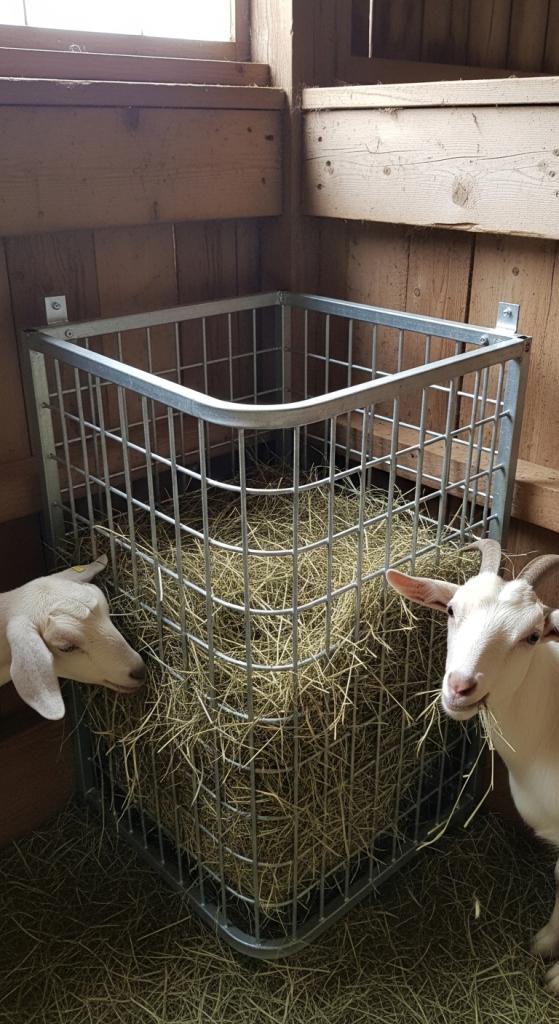
Bending a livestock panel into a corner rack creates a strong metal feeding surface.
Grid spacing controls how goats access hay, reducing aggressive tugging.
Less pulling force keeps more hay inside the feeder.
Metal panels withstand chewing and weather exposure.
Corner positioning stabilizes feeding direction.
This goat hay feeder DIY build suits rugged outdoor environments.
Wooden Ladder Hay Feeder
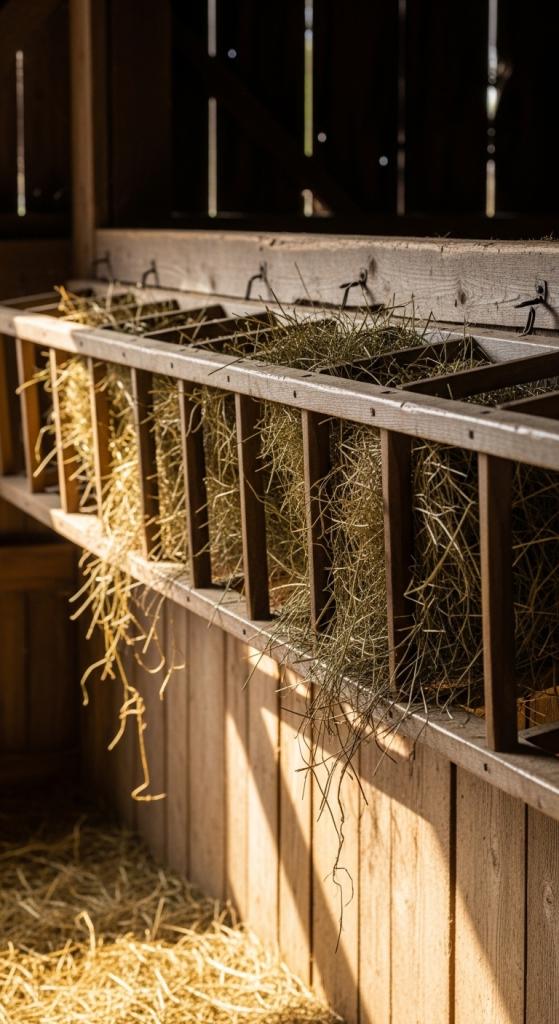
Mounting an old wooden ladder horizontally turns rungs into natural feeding slots.
Hay rests behind the rungs in divided sections.
Divided hay prevents goats from grabbing large clumps.
Smaller pulls reduce what falls beneath the feeder.
Repurposed ladders add rustic charm to barns. It is a creative goat hay feeder DIY reuse idea.
Box Feeder With Bottom Catch Tray
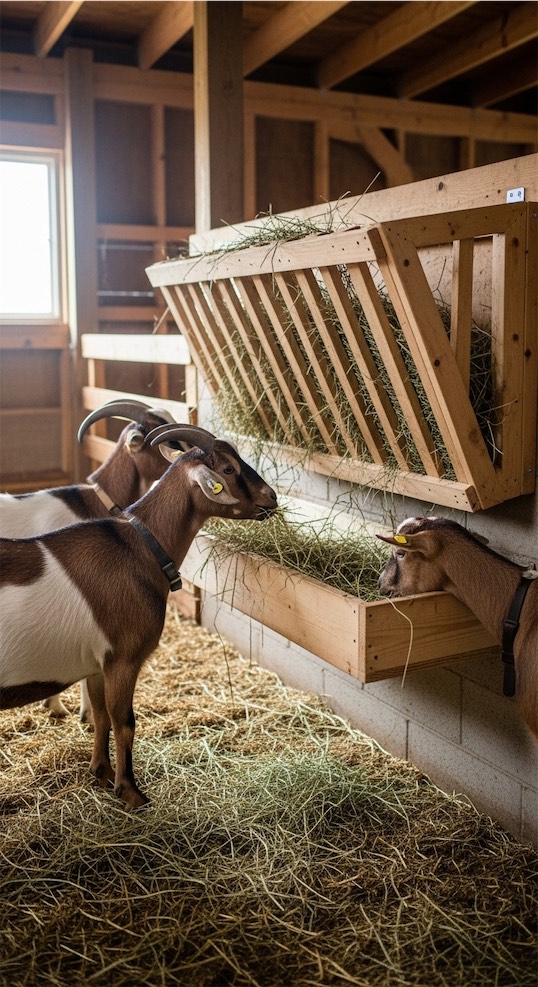
A box feeder paired with a shallow tray underneath captures dropped strands during feeding.
Goats can still reach those pieces instead of stepping them into bedding.
Recovering fallen hay directly reduces waste. Slight tray depth keeps pieces contained yet accessible.
This design works indoors or under shelter.
DIY Barrel Feeder
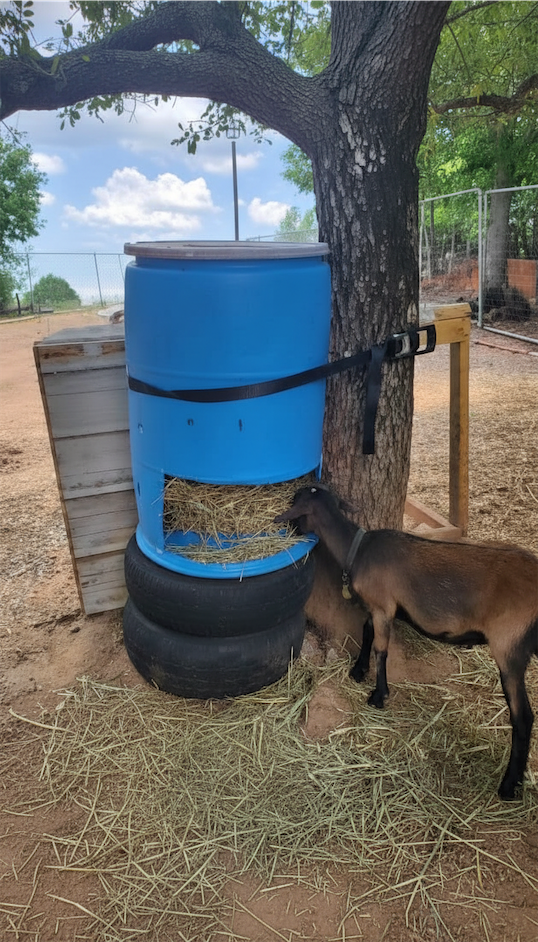
A cut barrel mounted in a corner or tied to a tree is a great DIY goat feeder.
Stable feeding will reduces shaking and scatter. Plus the barrel wall contains hay effectively during pulling. Plastic resists chewing and moisture.
This goat hay feeder DIY layout is compact and efficient.
Covered Pallet Trough Feeder
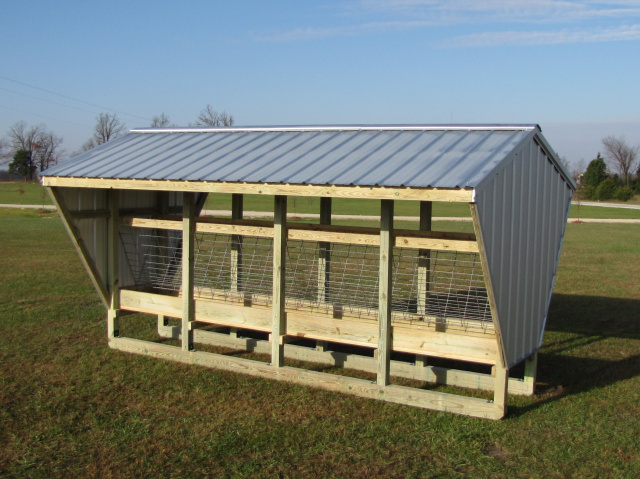
A pallet trough topped with a roof lid protects hay from weather exposure.
Dry hay remains attractive and fully eaten by goats. Hinged lids make refilling fast and convenient.
Covered troughs reduce spoilage in outdoor pens. Pallet construction keeps costs low.
This goat hay feeder DIY option blends accessibility with protection.
Wall Basket Mesh Feeder
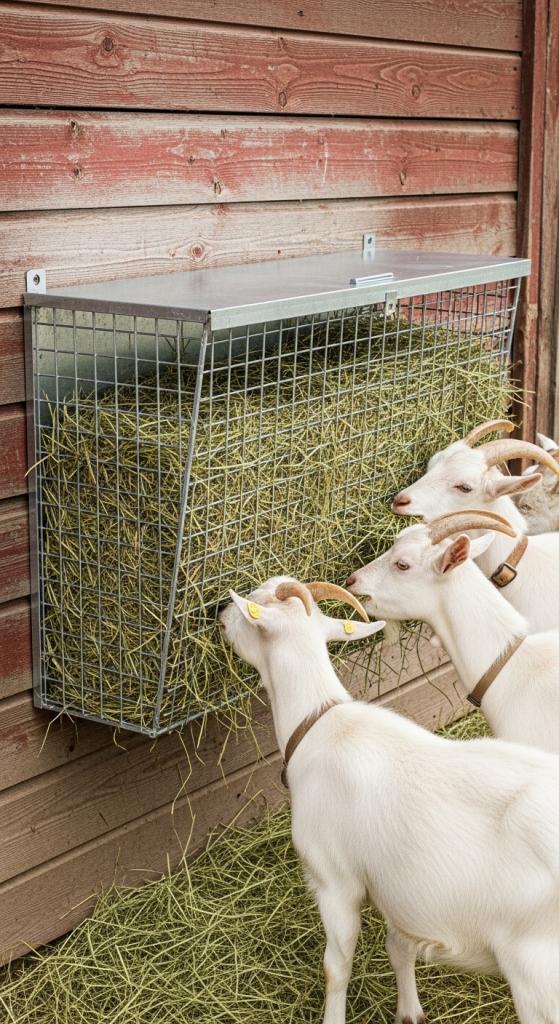
A heavy wire basket fixed to a wall acts as a simple slow-feed hay holder.
Mesh openings control how quickly goats pull strands. Controlled feeding keeps more hay inside the basket.
Metal construction withstands chewing and moisture.
Installation requires minimal tools.
It is a straightforward goat hay feeder DIY solution.
This goat hay feeder DIY design stays useful across seasons and herd growth.