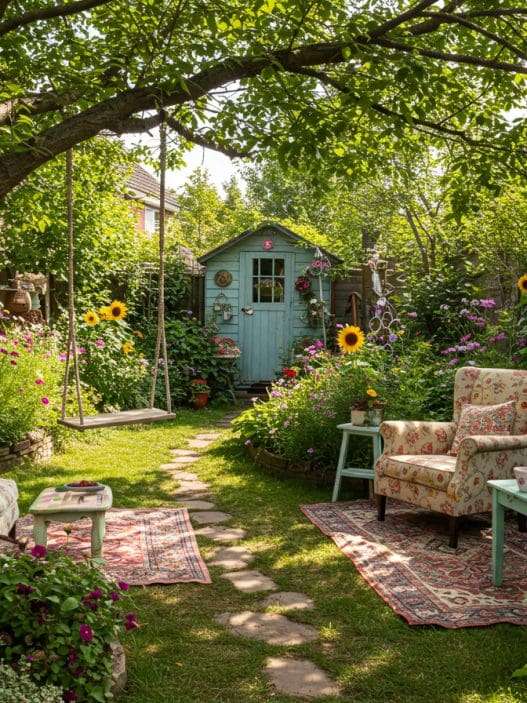









I love how a simple tree swing can completely change the feeling of a backyard, even a really small one. There is something about stepping outside with a cup of coffee, seeing a swing gently moving in the breeze, and instantly feeling calmer. I always notice that small yards feel more special when there is one intentional feature that invites you to slow down and enjoy the space.
If your backyard is on the smaller side, these tree swing ideas for small yards are absolutely doable. You do not need a massive oak tree or acres of land. You just need the right setup, smart placement, and a little creativity. I will walk you through ideas that work visually, practically, and safely, without overwhelming your space.
Below are 18 beginner-friendly DIY tree swing ideas, each one designed with small backyards in mind, plus simple numbered steps so you can actually build them.
1. A Single Plank Tree Swing That Keeps Things Light and Open
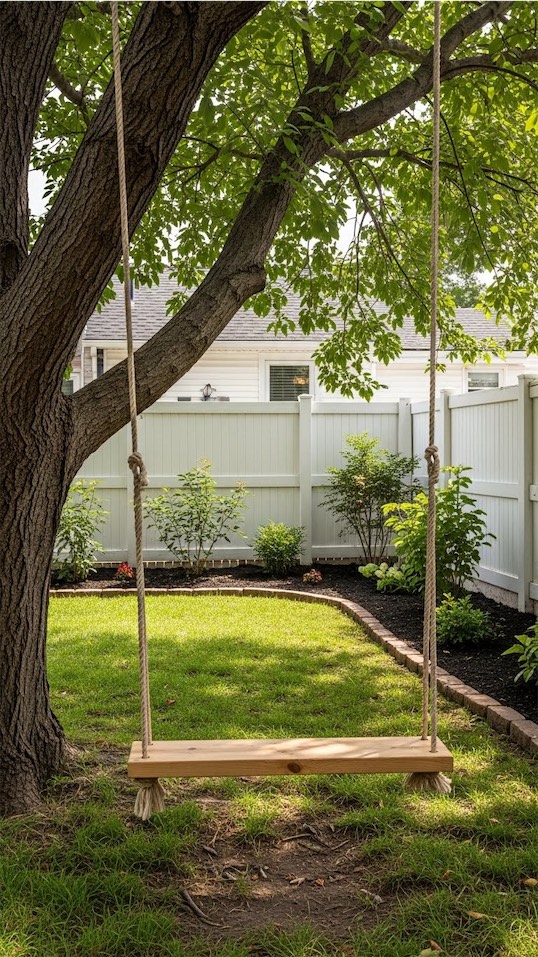
There is something so charming about a classic wooden plank swing, especially in a small yard where bulky furniture can feel overwhelming.
A single plank swing works beautifully for small spaces because it stays visually open. There are no sides, no heavy frames, just clean lines and movement. In a tight backyard, this helps the area feel bigger instead of crowded.
When you choose a lighter wood tone or even paint it white, it blends into the space rather than dominating it.
This type of tree swing also works well because it can be pushed back against the trunk when not in use, keeping walkways clear.
DIY Steps
- Cut a sturdy wooden board about 18 to 24 inches wide.
- Sand all edges and corners until smooth.
- Drill one hole near each corner.
- Thread outdoor rated rope through each hole and knot underneath.
- Loop the rope securely over a strong tree branch.
- Adjust the height so feet lightly touch the ground when seated.
2. A Narrow Rope Swing That Tucks Away Easily
If your yard barely has room for anything extra, a narrow rope swing can be the perfect solution.
This style of tree swing takes up almost no space visually or physically.
It is ideal for narrow side yards or small backyards where you still want a playful element. Because the swing seat is slim, it does not block sightlines, which helps the yard feel more open.
Rope swings are also easy to remove or pull up when not in use, making them great for multi-purpose outdoor areas.
DIY Steps
- Choose a thick, smooth rope rated for outdoor use.
- Cut a small round or rectangular wood seat.
- Drill two holes evenly spaced.
- Thread the rope through the holes and secure with strong knots.
- Toss the rope over a sturdy branch and tie off securely.
- Test gently before full use.
3. A Corner Tree Swing That Uses Otherwise Wasted Space
Corners are often overlooked in small yards, but they are perfect for tree swings.
Placing a swing in a corner keeps the center of your yard open and functional.
This layout works especially well if your tree is near a fence or boundary.
The swing naturally becomes a cozy nook instead of a traffic obstacle.
Visually, it creates depth, making the yard feel layered rather than flat. This is one of the smartest tree swing ideas for small yards because it maximizes space without sacrificing comfort.
DIY Steps
- Identify a tree near a corner with a healthy branch.
- Measure clearance to ensure safe swinging space.
- Choose a compact swing seat.
- Install rope or chain securely over the branch.
- Adjust swing height for limited motion.
- Add mulch or grass underneath for safety.
4. A Low Hanging Tree Swing for Small Children
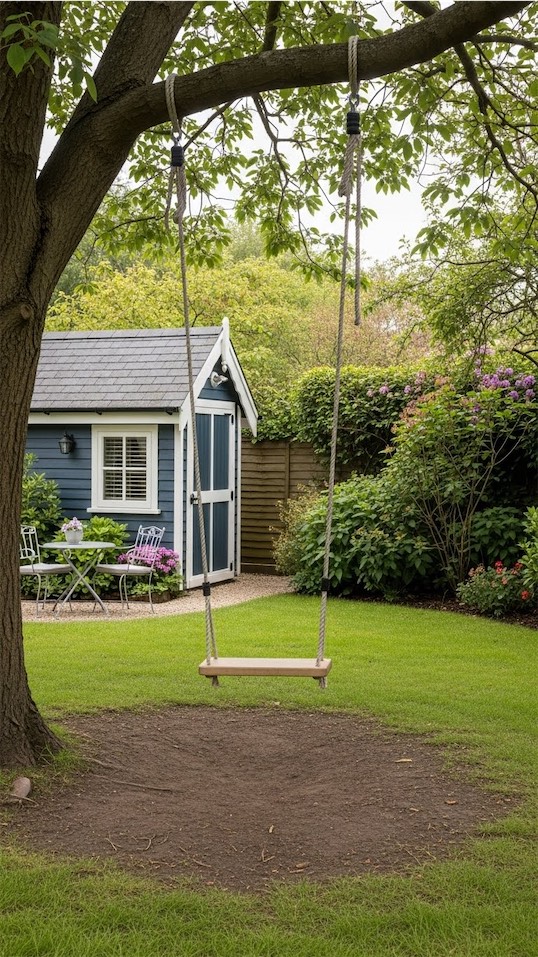
Low swings are perfect when space is limited and safety is a priority.
Keeping the swing close to the ground reduces the swing arc, which is ideal for small yards.
It also makes the swing accessible for young kids without needing constant supervision.
Visually, a low swing feels grounded and calm rather than wild and energetic.
This helps the yard feel peaceful instead of chaotic, which matters in tight spaces.
DIY Steps
- Choose a sturdy branch about 6 feet high.
- Select a flat or bucket style seat.
- Attach ropes with minimal length.
- Secure knots or hardware tightly.
- Test height with light pressure.
- Place soft ground cover below.
5. A Tree Swing with a Backrest for Relaxing Evenings
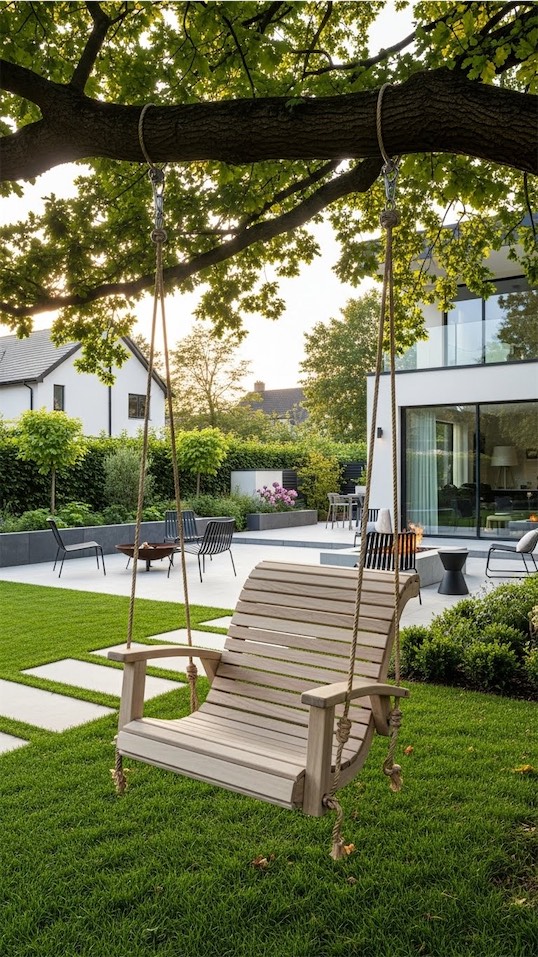
Not every swing has to be for kids.
Adding a simple backrest turns a tree swing into a relaxing retreat.
In small yards, furniture options are limited, so this swing doubles as seating. The backrest provides comfort without adding bulk.
It invites you to sit longer, maybe with a book or a glass of iced tea, without feeling cramped.
This is one of my favorite tree swing ideas for small yards because it feels intentional and adult friendly.
DIY Steps
- Cut a seat board and a backrest board.
- Sand and seal both pieces.
- Attach backrest at a slight angle.
- Drill rope holes through seat.
- Secure rope over tree branch.
- Adjust height for relaxed seating.
6. A Minimalist Round Disc Swing
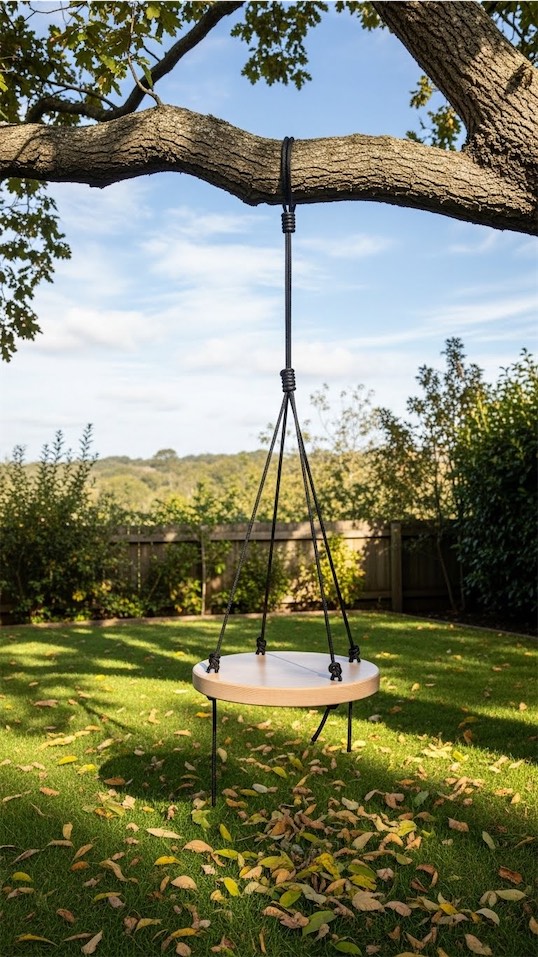
Round disc swings are compact and visually playful.
Because the seat is circular and small, it does not take over the yard. This makes it perfect for tight outdoor spaces.
The round shape also encourages gentle spinning rather than wide swinging, which works better in small backyards.
Visually, it adds interest without clutter, especially if you choose a neutral wood tone.
DIY Steps
- Cut or purchase a wooden disc.
- Sand edges smooth.
- Drill a center hole.
- Thread thick rope through the center.
- Knot securely underneath.
- Hang from a strong branch.
7. A Tree Swing Paired with a Small Gravel Base
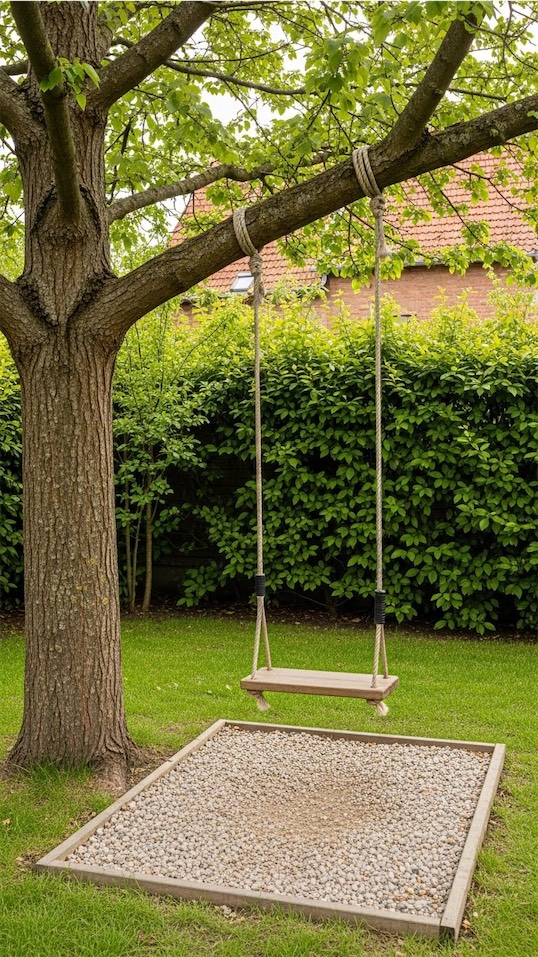
Ground treatment matters in small yards.
Adding a gravel base under your swing visually defines the space without adding bulk.
It keeps the area clean, improves drainage, and creates contrast against grass.
In small yards, defined zones make everything feel more organized and intentional.
This setup makes your tree swing feel like a designed feature rather than an afterthought.
DIY Steps
- Mark a small circle under the swing.
- Remove grass or soil.
- Lay landscape fabric.
- Add decorative gravel.
- Install the swing above.
- Rake gravel smooth.
8. A Tree Swing with Short Chains Instead of Rope
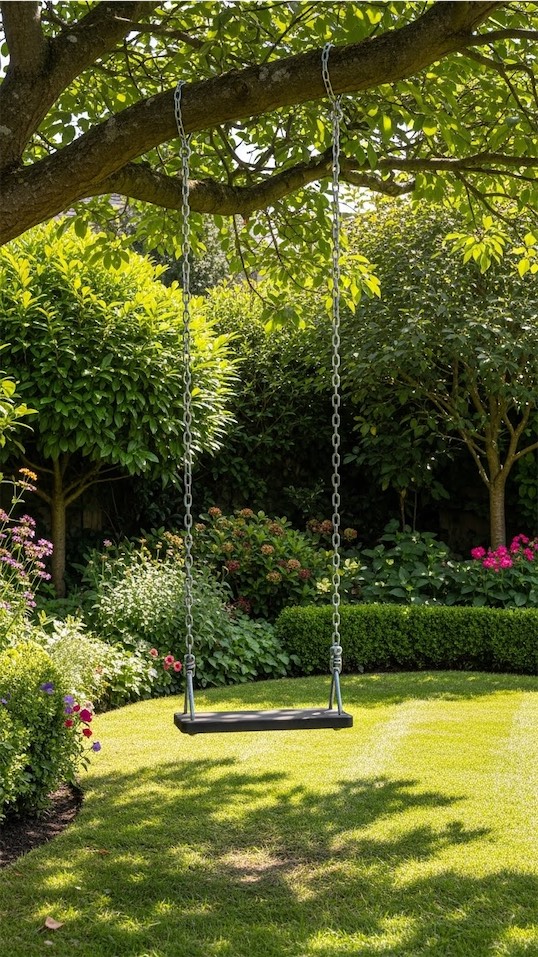
Chains offer durability and a clean look.
In small yards, chains can actually feel less visually messy than thick rope.
They hang straight and neat, which helps the space feel organized.
Chains also allow for precise height adjustment, useful when clearance is tight.
Paired with a wood seat, the look is simple and modern.
DIY Steps
- Choose rust resistant outdoor chain.
- Attach chains to seat corners.
- Use carabiners or eye bolts.
- Secure chains over branch.
- Adjust links for height.
- Test stability carefully.
9. A Tree Swing Painted to Match Your Fence
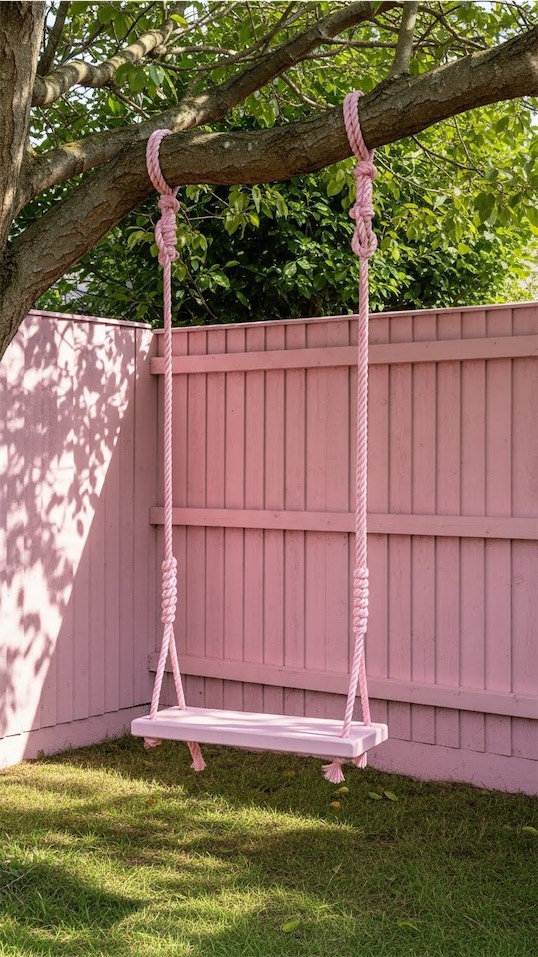
Color coordination can make small yards feel larger.
When your swing matches your fence or house trim, it blends seamlessly into the background.
This reduces visual clutter, which is key in small spaces. Instead of drawing attention to the size of the yard, the swing feels like part of the overall design.
This trick works especially well with white, black, or soft neutral colors.
DIY Steps
- Choose exterior paint color.
- Sand the swing seat.
- Apply primer if needed.
- Paint two coats.
- Let dry fully.
- Install swing hardware.
10. A Tree Swing Hung Closer to the Trunk
Shorter swing distance equals better control.
Hanging the swing closer to the tree trunk limits how far it can move. This makes it safer and more practical in a small yard. It also creates a cozy, tucked in feeling, almost like a hidden nook.
This placement works well for reading or gentle swinging rather than high energy play.
DIY Steps
- Identify a branch near the trunk.
- Measure minimal swing clearance.
- Use shorter rope lengths.
- Secure swing close to bark.
- Test limited motion.
- Adjust as needed.
11. A Fold-Up Swing You Can Store Away
Flexibility is everything in small spaces.
A swing that can be unhooked and stored gives you the best of both worlds. You can enjoy it when you want and remove it when hosting or gardening. This keeps your yard adaptable and clutter free. It is one of the most practical tree swing ideas for small yards.
You will love how easy it is to switch things up.
DIY Steps
- Use carabiners on rope ends.
- Install permanent branch hooks.
- Clip swing on when needed.
- Unclip after use.
- Store seat indoors.
- Inspect hardware regularly.
12. A Tree Swing with Cushioned Outdoor Fabric
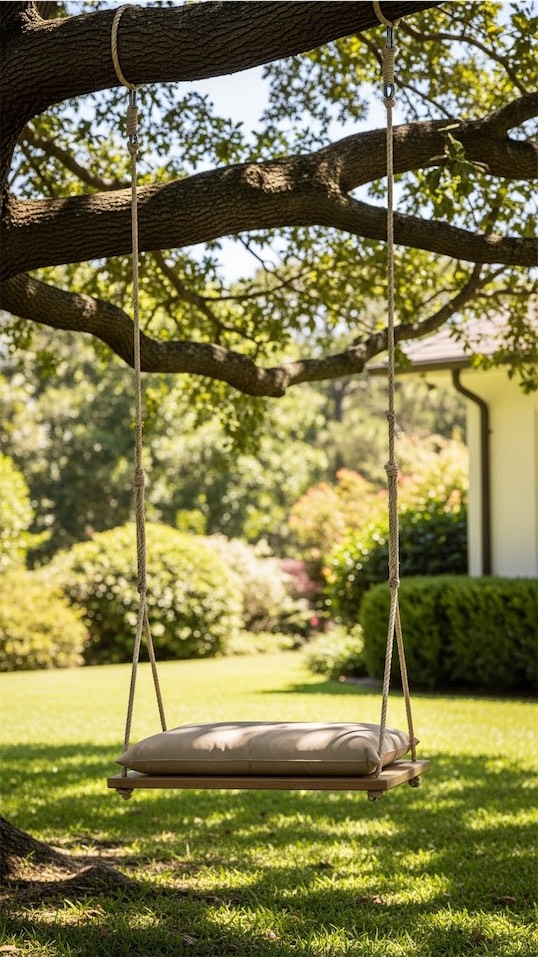
Comfort does not have to mean bulky.
Using a thin outdoor cushion adds softness without taking up extra room. Choose weather-resistant fabric so it stays fresh.
Visually, soft cushions make the swing feel inviting rather than utilitarian. It instantly turns a simple swing into a cozy spot.
DIY Steps
- Measure seat size.
- Choose slim outdoor cushion.
- Attach using ties or Velcro.
- Secure swing normally.
- Test balance with cushion.
- Remove cushion in rain.
13. A Tree Swing Framed by Potted Plants

Plants can define space beautifully.
Placing potted plants around your swing creates a visual frame without permanent construction.
Plants also soften hard edges and add privacy. It is an easy way to create a mini escape.
This setup feels especially lovely in the evening light.
DIY Steps
- Choose two or three planters.
- Place around swing base.
- Use compact plants.
- Install swing as usual.
- Adjust pots for balance.
- Water regularly.
14. A Tree Swing for One Adult Seat Only
Smaller seats equal better fit.
A single adult sized seat avoids overcrowding the space. It sets clear expectations, one person, calm movement. This keeps the swing from feeling chaotic in a small yard. It also allows you to position it more precisely.
Sometimes less really is more.
DIY Steps
- Cut a seat about 16 inches wide.
- Sand and seal wood.
- Drill rope holes.
- Hang from branch.
- Adjust height for comfort.
- Test weight capacity.
15. A Tree Swing with a Natural Wood Finish
Natural finishes blend better outdoors.
In small yards, natural wood tones help the swing fade into the landscape. This creates visual harmony and avoids harsh contrasts. The swing feels like it belongs, rather than standing out awkwardly. This is especially effective if your yard has lots of greenery.
It just feels calm and balanced.
DIY Steps
- Sand wood thoroughly.
- Apply clear outdoor sealant.
- Let dry fully.
- Drill rope holes.
- Install swing hardware.
- Re seal annually.
16. A Swing Positioned for Morning Sun
Placement matters more than size.
Positioning your swing where it catches morning light makes it more enjoyable.
Morning sun feels gentle and inviting, perfect for coffee time. Which turns the swing into a daily ritual rather than decoration.
DIY Steps
- Observe sun patterns.
- Choose branch facing sunrise.
- Install swing there.
- Adjust height.
- Test comfort in morning.
- Make small adjustments.
17. A Tree Swing with Safety in Mind for Tight Spaces
Safety makes everything feel better.
In small yards, controlling swing movement is key.
Limiting rope length and choosing stable seats prevents collisions.
This allows you to relax and enjoy the space instead of worrying. A safe swing feels welcoming, especially when kids are involved.
DIY Steps
- Measure swing clearance.
- Shorten rope length.
- Use sturdy hardware.
- Secure knots tightly.
- Test movement slowly.
- Re check monthly.
18. A Swing That Becomes the Focal Point
Every small yard needs one star feature.
When you treat your tree swing as the main attraction, the rest of the yard falls into place.
Keeping other elements simple lets the swing shine.
This approach makes small yards feel designed rather than cramped. Among all tree swing ideas for small yards, this mindset is often the most effective.
DIY Steps
- Clear clutter around tree.
- Choose your favorite swing style.
- Install securely.
- Add subtle lighting nearby.
- Keep surrounding decor minimal.
- Enjoy the finished space.